

This computer science problem involves algorithmic thinking and programming concepts. The solution below explains the approach, logic, and implementation step by step.
ScanSolve AI Answer
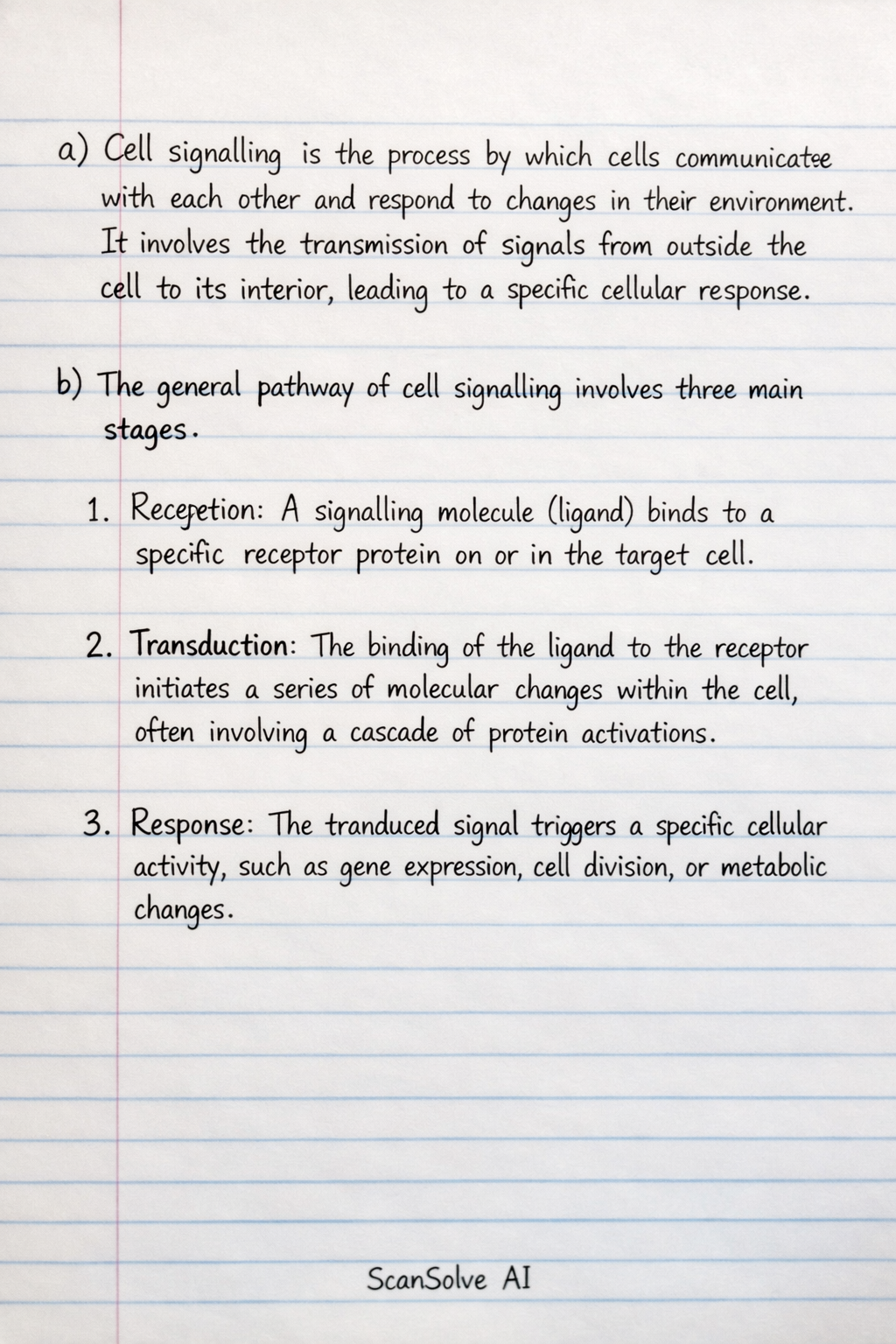
a) Cell signalling is the process by which cells communicate with each other and respond to changes in their environment. It involves the transmission of signals from outside the cell to its interior, leading to a specific cellular response. b) The general pathway of cell signalling involves three main stages: 1. Reception: A signalling molecule (ligand) binds to a specific receptor protein on or in the target cell. 2. Transduction: The binding of the ligand to the receptor initiates a series of molecular changes within the cell, often involving a cascade of protein activations. 3. Response: The transduced signal triggers a specific cellular activity, such as gene expression, cell division, or metabolic changes. Categories of cell signalling include: • Autocrine signalling: A cell secretes a signalling molecule that binds to receptors on its own surface, affecting itself. • Paracrine signalling: Signalling molecules are secreted by one cell and act on nearby target cells. • Endocrine signalling: Hormones are secreted into the bloodstream and travel to distant target cells throughout the body. • Juxtacrine signalling (or contact-dependent signalling): Cells communicate through direct contact, often via molecules on their surfaces. c) Dysregulation of cell signalling pathways is associated with numerous diseases. • Cancer: Uncontrolled cell growth and division often result from mutations in genes encoding signalling proteins, leading to hyperactive growth pathways or inactive tumor suppressor pathways. • Diabetes: Type 2 diabetes involves defects in insulin signalling, where cells become resistant to insulin, impairing glucose uptake and metabolism. • Autoimmune diseases: Conditions like rheumatoid arthritis or lupus can arise from aberrant immune cell signalling, leading to the immune system attacking the body's own tissues. • Neurodegenerative diseases: Disorders such as Alzheimer's and Parkinson's involve impaired neuronal signalling and cell death pathways. Send me the next one 📸