
We read your photo as:
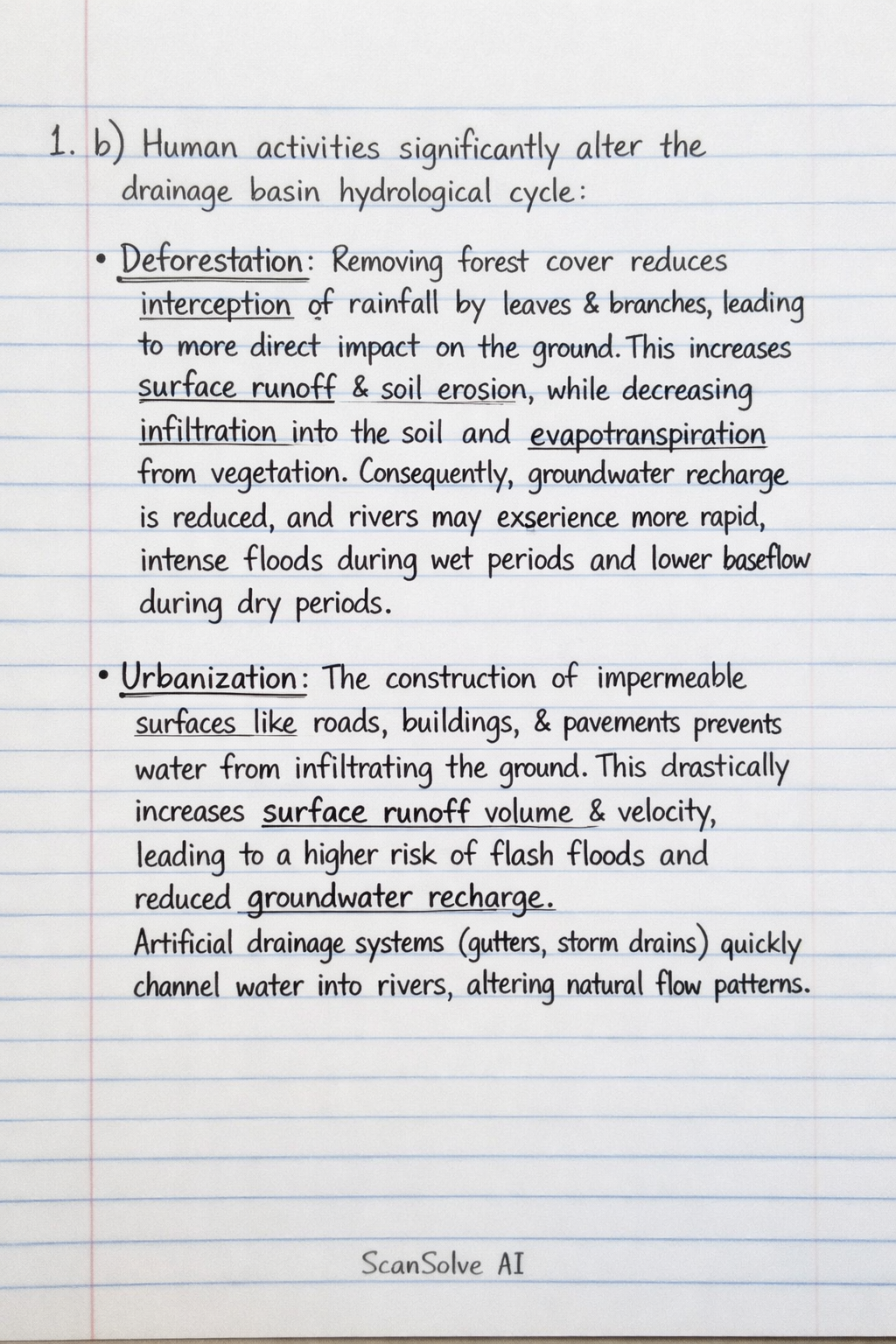
b) Human activities significantly alter the drainage basin hydrological cycle:
Geography
ScanSolve AI Answer
- b) Human activities significantly alter the drainage basin hydrological cycle:
- Deforestation: Removing forest cover reduces interception of rainfall by leaves and branches, leading to more direct impact on the ground. This increases surface runoff and soil erosion, while decreasing infiltration into the soil and evapotranspiration from vegetation. Consequently, groundwater recharge is reduced, and rivers may experience more rapid, intense floods during wet periods and lower baseflow during dry periods.
- Urbanization: The construction of impermeable surfaces like roads, buildings, and pavements prevents water from infiltrating the ground. This drastically increases surface runoff volume and velocity, leading to a higher risk of flash floods and reduced groundwater recharge. Artificial drainage systems (gutters, storm drains) quickly channel water into rivers, altering natural flow patterns.
- Dam Construction: Building dams creates large reservoirs that store vast amounts of water. This alters the natural river regime by regulating flow downstream, often reducing peak flows and increasing baseflow during dry seasons. Reservoirs also increase evaporation from the water surface, leading to a net loss of water from the basin, and can affect groundwater levels in the surrounding area.
Was this helpful?
Still stuck on this one?
Ask a follow-up, and the answer starts from this question.
Got a different question?Ask your own question
More Geography Questions
QA) Explain the following processes involved in the hydrologic/water cycle.QSummarize hydrological patterns observed, relationships between physical factors and water movement…QDescribe the drainage pattern of drainage basin A, its characteristics, the underlying geological…QUsing FIGURE 7.1, outline flood prevention methods that can be implemented to reduce the risk of…QHow do human activities impact freshwater and tropical savanna woodland ecosystems?
Handwritten Step-by-Step Solution
Get this as a handwritten image on WhatsApp — like a tutor wrote it for you.
Try on WhatsApp