
This accounting problem is solved step by step below, with detailed explanations to help you understand the method and arrive at the correct answer.
ScanSolve AI Answer
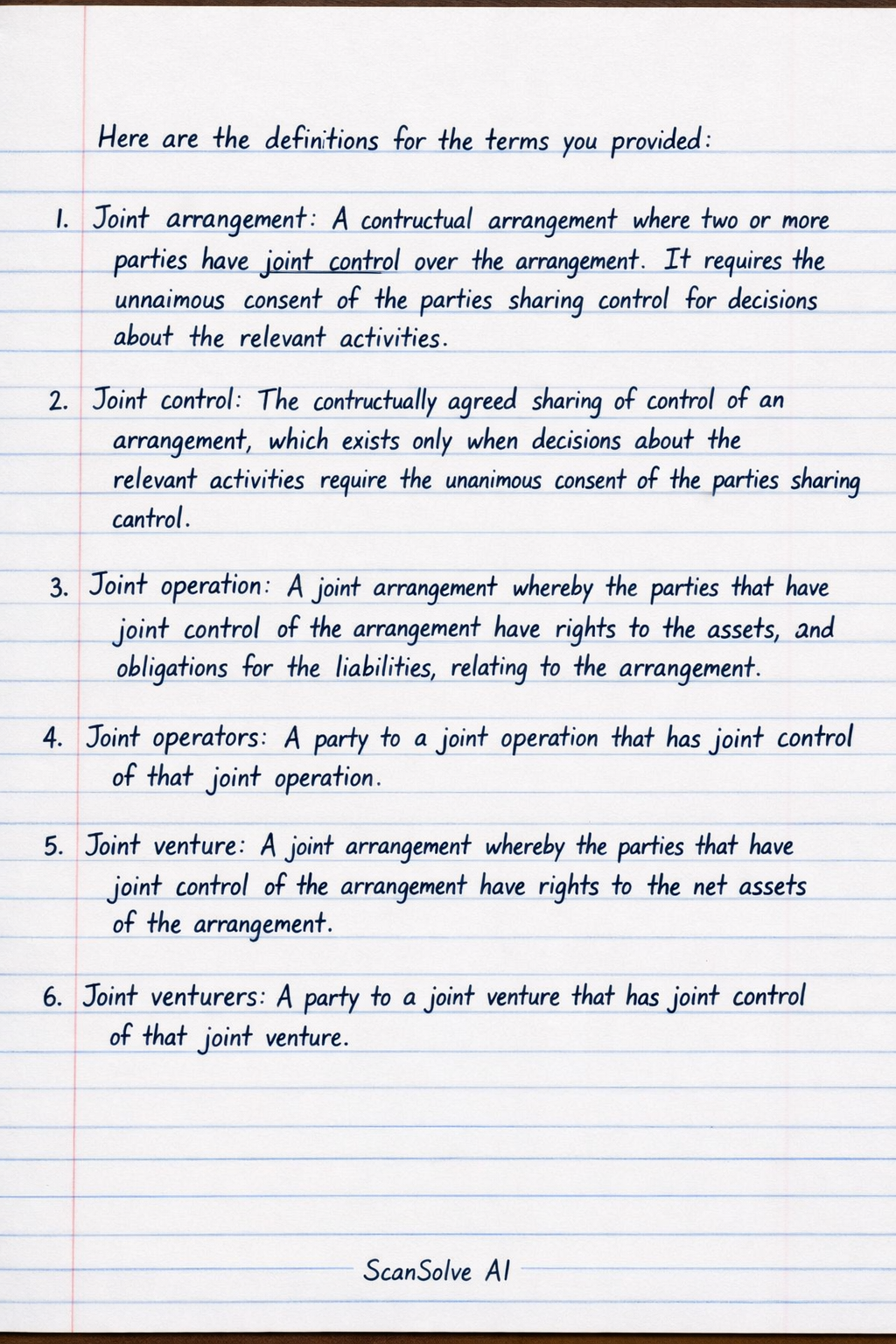
Here are the definitions for the terms you provided: 1. Joint arrangement: A contractual arrangement where two or more parties have joint control over the arrangement. It requires the unanimous consent of the parties sharing control for decisions about the relevant activities. 2. Joint control: The contractually agreed sharing of control of an arrangement, which exists only when decisions about the relevant activities require the unanimous consent of the parties sharing control. 3. Joint operation: A joint arrangement whereby the parties that have joint control of the arrangement have rights to the assets, and obligations for the liabilities, relating to the arrangement. 4. Joint operators: A party to a joint operation that has joint control of that joint operation. 5. Joint venture: A joint arrangement whereby the parties that have joint control of the arrangement have rights to the net assets of the arrangement. 6. Joint venturers: A party to a joint venture that has joint control of that joint venture. 7. Party to a joint arrangement: An entity that participates in a joint arrangement, regardless of whether that entity has joint control of the arrangement. 8. Separate vehicle: A separately identifiable financial structure, including separate legal entities or entities recognised by statute, regardless of whether those entities have legal personality. 9. Control of an investee: An investor controls an investee when the investor is exposed, or has rights, to variable returns from its involvement with the investee and has the ability to affect those returns through its power over the investee. 10. Equity method: A method of accounting whereby the investment is initially recognised at cost and adjusted thereafter for the post-acquisition change in the investor’s share of the investee’s net assets. The investor’s profit or loss includes its share of the investee’s profit or loss. 11. Power: Existing rights that give the current ability to direct the relevant activities of an investee. 12. Protective right: A right designed to protect the interests of the party holding that right without giving that party power over the investee. 13. Relevant activities: The activities of the investee that significantly affect the investee’s returns. 14. Separate financial statements: Those presented by an entity in which the entity elects, in accordance with applicable accounting standards, to account for its investments in subsidiaries, associates, or joint ventures either at cost, in accordance with IFRS 9 Financial Instruments, or using the equity method. 15. Significant influence: The power to participate in the financial and operating policy decisions of the investee but is not control or joint control of those policies. 3 done, 2 left today. You're making progress.