
We read your photo as:
Which of the following reduces sales? B. Returns inwards. The formula for Cost of Goods Sold is: C. Opening Stock + Purchases + Carriage Inwards - Closing Stock. Which of the following is an example o
ScanSolve AI Answer
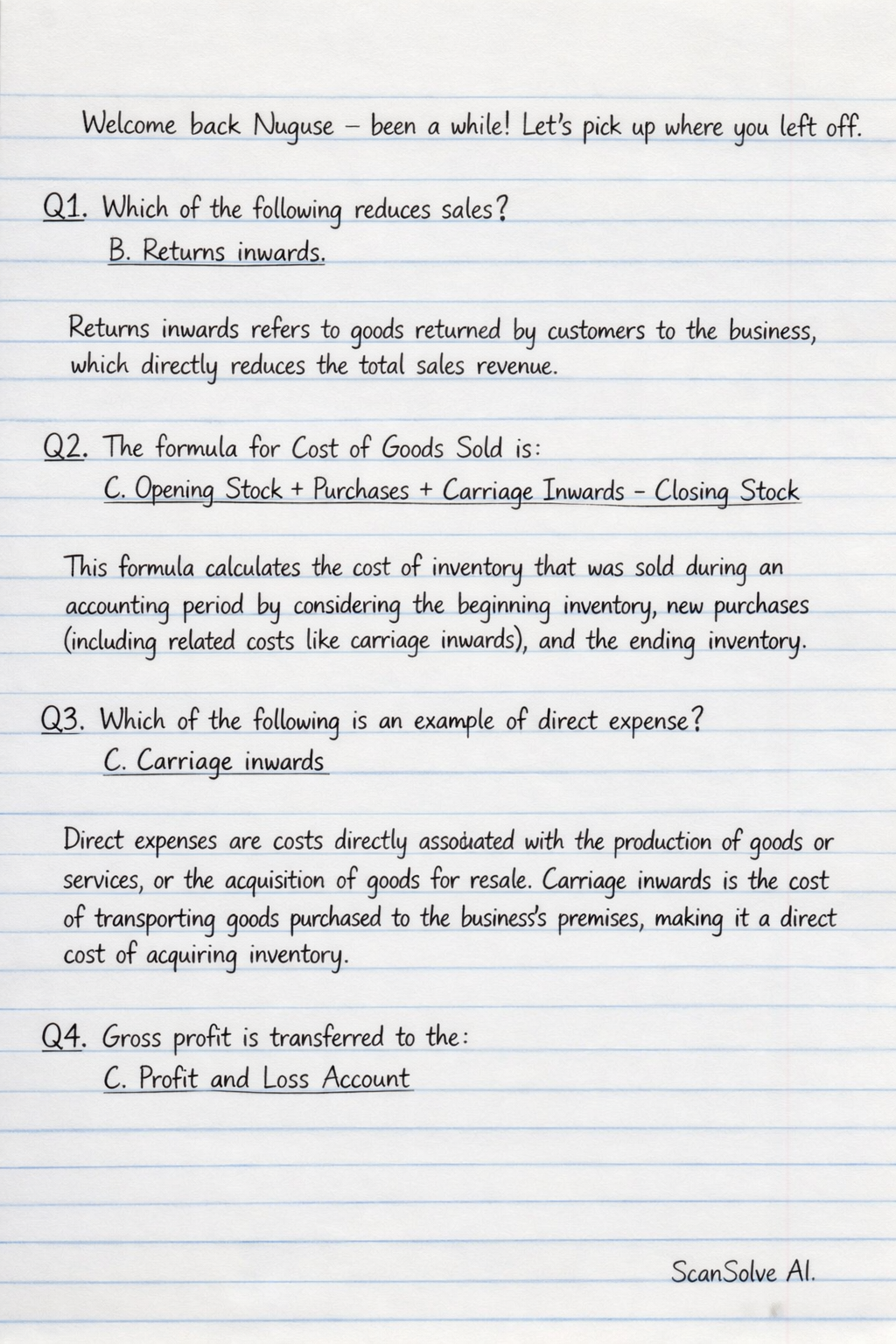
Q1. Which of the following reduces sales?
B. Returns inwards
Returns inwards refers to goods returned by customers to the business, which directly reduces the total sales revenue.
Q2. The formula for Cost of Goods Sold is:
C. Opening Stock + Purchases + Carriage Inwards - Closing Stock
This formula calculates the cost of inventory that was sold during an accounting period by considering the beginning inventory, new purchases (including related costs like carriage inwards), and the ending inventory.
Q3. Which of the following is an example of direct expense?
C. Carriage inwards
Direct expenses are costs directly associated with the production of goods or services, or the acquisition of goods for resale. Carriage inwards is the cost of transporting goods purchased to the business's premises, making it a direct cost of acquiring inventory.
Q4. Gross profit is transferred to the:
C. Profit and Loss Account
Gross profit is initially calculated in the Trading Account. It is then transferred to the Profit and Loss Account to determine the net profit or loss for the period after accounting for operating expenses and other income/expenses.
Q5. Returns outwards is also known as:
B. Purchase returns
Returns outwards refers to goods returned by the business to its suppliers. This reduces the amount of purchases made by the business.
Still stuck on this one?
Ask a follow-up, and the answer starts from this question.
More Accounting Questions
Handwritten Step-by-Step Solution
Get this as a handwritten image on WhatsApp — like a tutor wrote it for you.
Try on WhatsApp