

This biology question covers important biological concepts and processes. The step-by-step explanation below helps you understand the underlying mechanisms and reasoning.
ScanSolve AI Answer
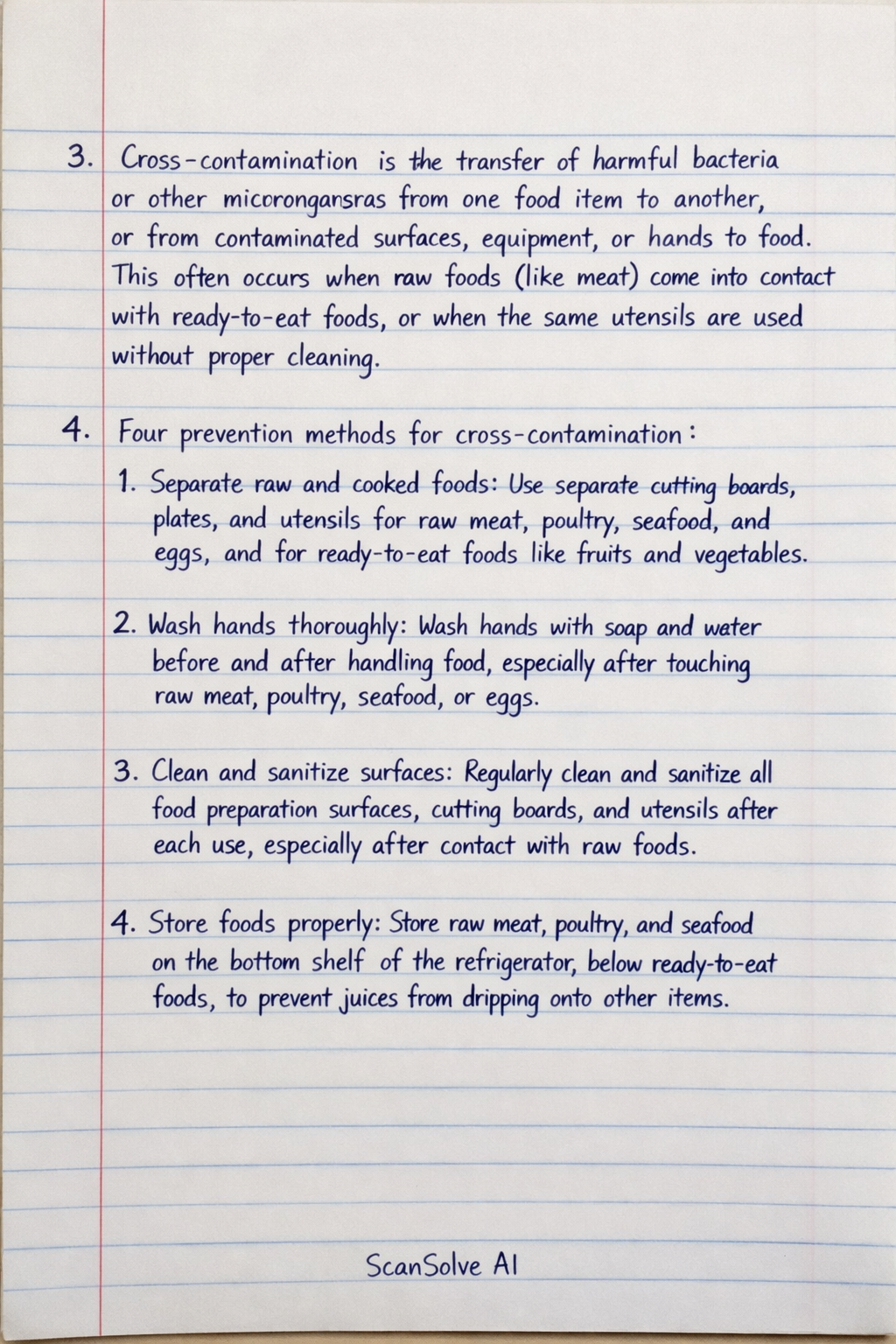
3. Cross-contamination is the transfer of harmful bacteria or other microorganisms from one food item to another, or from contaminated surfaces, equipment, or hands to food. This often occurs when raw foods (like meat) come into contact with ready-to-eat foods, or when the same utensils are used without proper cleaning. 4. Four prevention methods for cross-contamination: 1. Separate raw and cooked foods: Use separate cutting boards, plates, and utensils for raw meat, poultry, seafood, and eggs, and for ready-to-eat foods like fruits and vegetables. 2. Wash hands thoroughly: Wash hands with soap and water before and after handling food, especially after touching raw meat, poultry, seafood, or eggs. 3. Clean and sanitize surfaces: Regularly clean and sanitize all food preparation surfaces, cutting boards, and utensils after each use, particularly after contact with raw foods. 4. Store foods properly: Store raw meat, poultry, and seafood on the bottom shelf of the refrigerator, below ready-to-eat foods, to prevent juices from dripping onto other items. SECTION E: NUTRITIVE VALUE OF FOOD 1. Nutrients are components of food that are essential for the body's growth, development, repair, and maintenance of health. They provide energy, build and repair tissues, and regulate bodily processes. 2. Complete the table: Carbohydrates Function:* Primary source of energy for the body. Sources:* Bread, rice, pasta, potatoes, fruits, cereals. Proteins Function:* Essential for growth and repair of body tissues, building muscles, and producing enzymes and hormones. Sources:* Meat, fish, eggs, dairy products, beans, lentils. Fats & Oils Function:* Concentrated source of energy, insulation, protection of organs, and absorption of fat-soluble vitamins. Sources:* Butter, cooking oils, nuts, seeds, avocado, fatty fish. Vitamins Function:* Regulate various body processes, support immune function, aid in growth and development. Sources:* Fruits, vegetables, dairy, fortified cereals. (Specific vitamins have specific sources, e.g., Vitamin C in citrus, Vitamin A in carrots). Minerals Function:* Build strong bones and teeth, regulate fluid balance, nerve function, and muscle contraction. Sources:* Dairy, leafy green vegetables, meat, nuts, whole grains. (Specific minerals have specific sources, e.g., Calcium in milk, Iron in red meat). 3. A balanced diet is a diet that provides all the essential nutrients (carbohydrates, proteins, fats, vitamins, minerals, and water) in the correct proportions and adequate amounts to meet the body's needs for growth, maintenance, and energy without excess or deficiency. It involves consuming a variety of foods from all food groups. 4. Draw a balanced meal plate. A balanced meal plate typically follows these proportions: Half of the plate: Fruits and vegetables (e.g., leafy greens, broccoli, berries, apples). One-quarter of the plate: Grains (preferably whole grains like brown rice, whole-wheat pasta, or whole-grain bread). One-quarter of the plate: Protein (e.g., lean meat, fish, poultry, beans, lentils, tofu). Alongside the plate: A serving of dairy (e.g., milk, yogurt, or cheese) or a dairy alternative.