

This biology question covers important biological concepts and processes. The step-by-step explanation below helps you understand the underlying mechanisms and reasoning.
ScanSolve AI Answer
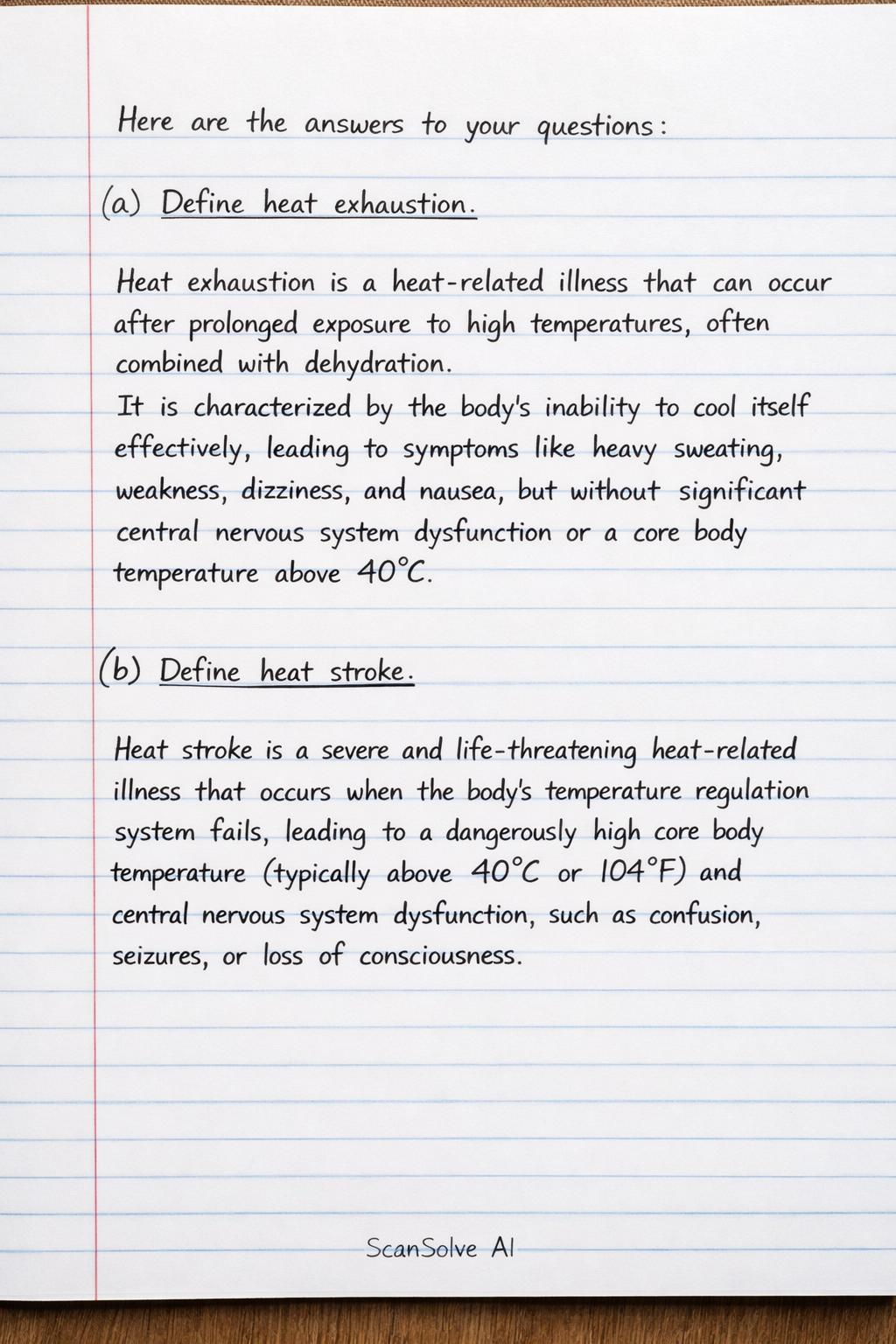
Here are the answers to your questions: 5. A 50 year old construction worker collapses at a site during a hot day. He is confused, has hot dry skin and a temperature of 41^. a) Define heat exhaustion Heat exhaustion is a heat-related illness that can occur after prolonged exposure to high temperatures, often combined with dehydration. It is characterized by the body's inability to cool itself effectively, leading to symptoms like heavy sweating, weakness, dizziness, and nausea, but without significant central nervous system dysfunction or a core body temperature above 40^. b) Define heat stroke Heat stroke is a severe and life-threatening heat-related illness that occurs when the body's temperature regulation system fails, leading to a dangerously high core body temperature (typically above 40^ or 104^) and central nervous system dysfunction, such as confusion, seizures, or loss of consciousness. c) Differentiate between heat stroke and heat exhaustion The key differences between heat stroke and heat exhaustion are: • Core Body Temperature: Heat stroke involves a core body temperature typically above 40^ (104^), while heat exhaustion usually has a temperature below this threshold. • Central Nervous System (CNS) Dysfunction: Heat stroke is characterized by significant CNS dysfunction (e.g., confusion, altered mental status, seizures, coma), which is absent or minimal in heat exhaustion. • Skin Appearance: In heat stroke, the skin can be hot and dry or sometimes moist, whereas in heat exhaustion, the skin is typically cool and clammy due due to profuse sweating. • Severity: Heat stroke is a medical emergency requiring immediate aggressive cooling, while heat exhaustion is less severe but still requires prompt attention to prevent progression. d) Describe the management of the patient with heat stroke Management of a patient with heat stroke involves: • Rapid Cooling: This is the most critical step. Move the patient to a cooler environment. Remove excess clothing. Use methods like immersion in ice water, evaporative cooling (spraying with water and fanning), or applying ice packs to the neck, armpits, and groin. • Airway, Breathing, Circulation (ABC) Support: Ensure a patent airway, provide oxygen if needed, and monitor vital signs. • Intravenous Fluids: Administer cool intravenous fluids to rehydrate and support circulation. • Monitor for Complications: Watch for seizures, kidney failure, and electrolyte imbalances. • Avoid Antipyretics: Medications like acetaminophen are ineffective for heat stroke and can be harmful. 6. A 25 year old woman develop sudden swelling of the lip difficult breathing and a wide spread rash shortly after being stung by a bee. a) Define anaphylactic shock Anaphylactic shock is a severe, life-threatening allergic reaction that occurs rapidly and can cause multiple body systems to fail. It is triggered by the release of inflammatory mediators from mast cells and basophils, leading to widespread vasodilation, bronchoconstriction, and increased vascular permeability, resulting in a sudden drop in blood pressure and impaired breathing. b) List signs and symptoms of anaphylactic shock Signs and symptoms of anaphylactic shock include: • Skin: Hives (urticaria), widespread rash, itching, flushing, swelling (angioedema) of the lips, face, or throat. • Respiratory: Difficulty breathing, wheezing, shortness of breath, tightness in the chest, hoarseness. • Cardiovascular: Dizziness, lightheadedness, rapid or weak pulse, sudden drop in blood pressure (hypotension), loss of consciousness. • Gastrointestinal: Nausea, vomiting, abdominal pain, diarrhea. • Neurological: Confusion, anxiety, feeling of impending doom. c) Describe the management of the patient with allergic reaction and anaphylactic shock due to bee sting Management of a patient with anaphylactic shock due to a bee sting involves: • Immediate Administration of Epinephrine: This is the first-line treatment. Administer intramuscular epinephrine (e.g., 0.3 mg for adults) into the anterolateral thigh. Repeat every 5-15 minutes if symptoms persist. • Airway Management: Assess and maintain a patent airway. If severe swelling or respiratory distress, prepare for intubation. • Oxygen Administration: Provide high-flow oxygen via a non-rebreather mask. • Intravenous Fluids: Administer intravenous fluids (e.g., normal saline) rapidly to treat hypotension and improve circulation. • Antihistamines: Administer H1 blockers (e.g., diphenhydramine) and H2 blockers (e.g., ranitidine) intravenously to help with skin symptoms and reduce vasodilation. • Corticosteroids: Administer corticosteroids (e.g., methylprednisolone) intravenously to prevent protracted or biphasic reactions. • Bronchodilators: If bronchospasm is present, administer inhaled beta-agonists (e.g., albuterol). • Remove Stinger: If the stinger is still present, remove it quickly by scraping it off with a credit card or fingernail, rather than squeezing it. • Monitor: Continuously monitor vital signs and observe for recurrence of symptoms. 3 done, 2 left today. You're making progress.