
We read your photo as:
A nulliparous patient presents with worsening dysmenorrhea, chronic low-level midline cramping, and pain that starts 3 days prior to menses and peaks on day 2 of bleeding. Physical exam reveals a smal
ScanSolve AI Answer
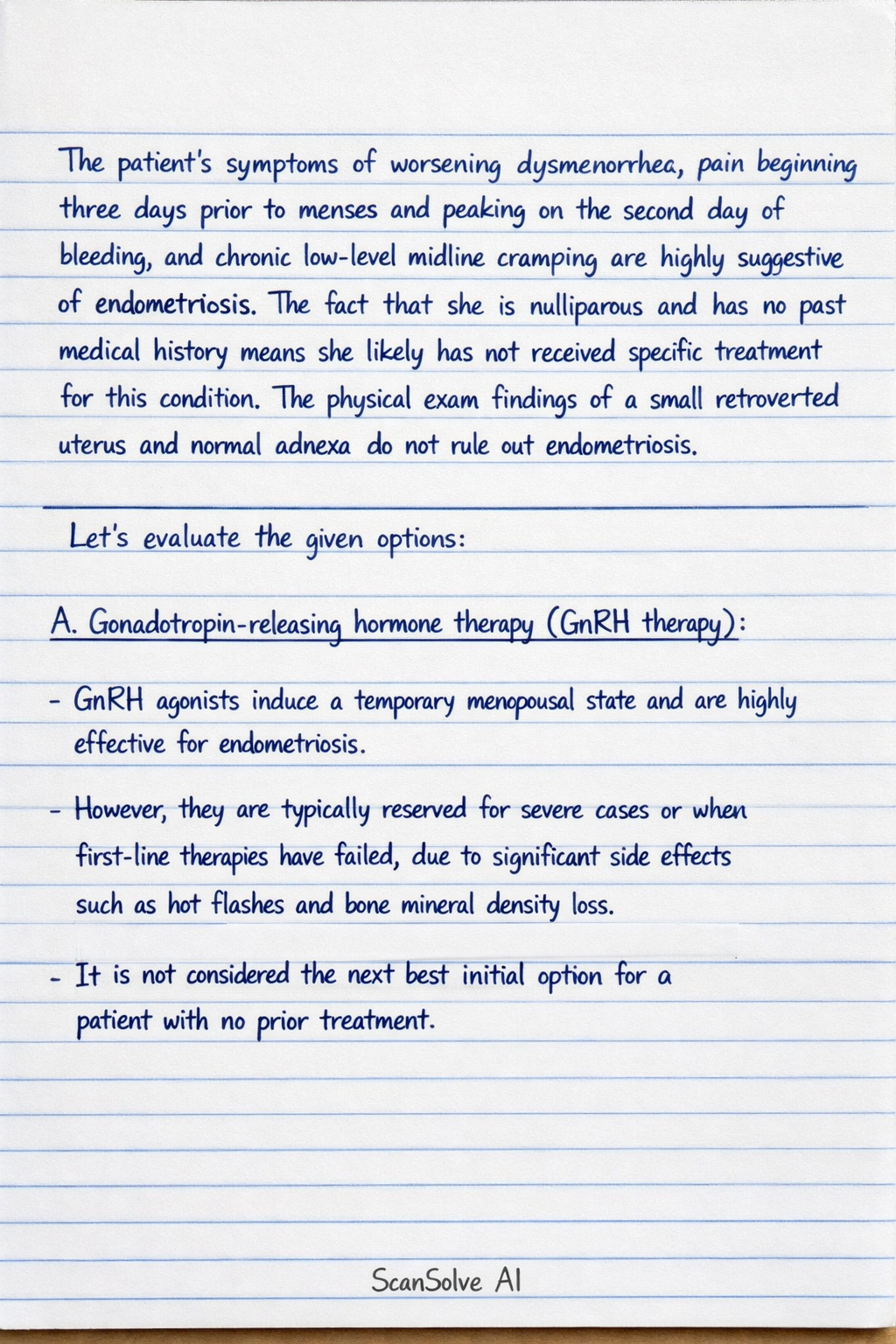
The patient's symptoms of worsening dysmenorrhea, pain beginning three days prior to menses and peaking on the second day of bleeding, and chronic low-level midline cramping are highly suggestive of endometriosis. The fact that she is nulliparous and has no past medical history means she likely has not received specific treatment for this condition. The physical exam findings of a small retroverted uterus and normal adnexa do not rule out endometriosis.
Let's evaluate the given options:
-
A. Gonadotropin-releasing hormone therapy (GnRH therapy): GnRH agonists induce a temporary menopausal state and are highly effective for endometriosis. However, they are typically reserved for severe cases or when first-line therapies have failed, due to significant side effects such as hot flashes and bone mineral density loss. It is not considered the next best initial option for a patient with no prior treatment.
-
B. Continued use of Oral Contraceptive Pill: The patient has "no past medical history," which implies she is not currently on an Oral Contraceptive Pill (OCP). If she is not on an OCP, then "continued
Still stuck on this one?
Ask a follow-up, and the answer starts from this question.
More Biology Questions
Handwritten Step-by-Step Solution
Get this as a handwritten image on WhatsApp — like a tutor wrote it for you.
Try on WhatsApp