

This biology question covers important biological concepts and processes. The step-by-step explanation below helps you understand the underlying mechanisms and reasoning.
ScanSolve AI Answer
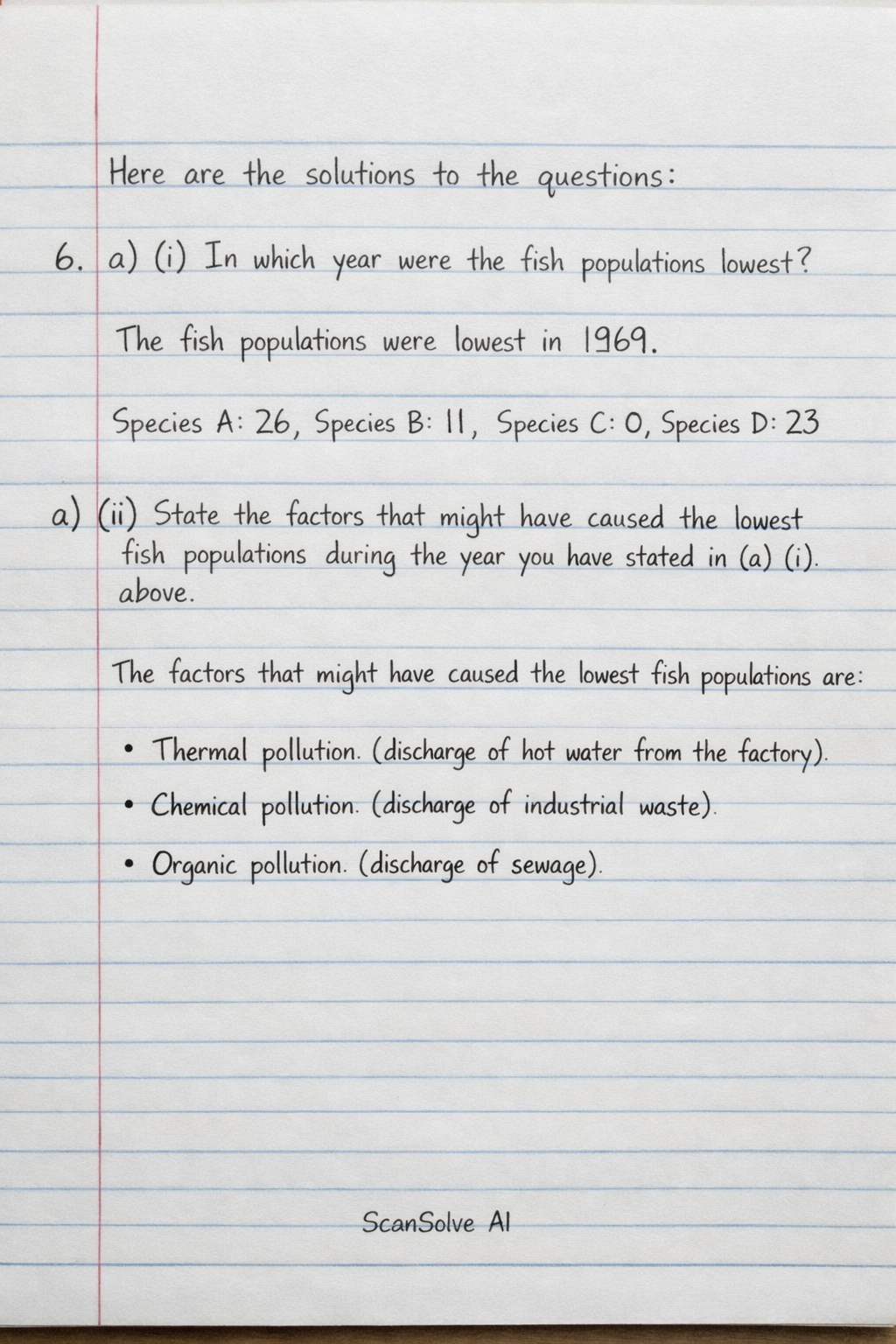
Here are the solutions to the questions: 6. a) (i) In which year were the fish populations lowest? The fish populations were lowest in 1969. (Species A: 26, Species B: 11, Species C: 0, Species D: 23) a) (ii) State the factors that might have caused the lowest fish populations during the year you have stated in (a) (i) above. The factors that might have caused the lowest fish populations are: • Thermal pollution (discharge of hot water from the factory). • Chemical pollution (discharge of industrial waste). • Organic pollution (discharge of sewage). a) (iii) Explain how each factor you have stated in (a) (ii) above could have brought about the changes in fish populations. • Thermal pollution: The factory discharged hot water, increasing the lake's temperature from 25^ to 30^. This elevated temperature can exceed the optimal temperature range for many fish species, causing stress and reducing their survival. Warmer water also holds less dissolved oxygen, which is essential for fish respiration. This reduced oxygen availability, coupled with an increased metabolic rate in warmer water, can lead to suffocation and death, especially for sensitive species. • Chemical pollution: Industrial waste often contains toxic substances like heavy metals or synthetic chemicals. These pollutants can directly poison fish, damaging their organs, impairing their immune systems, and affecting their reproductive capabilities. The accumulation of these toxins in the water and sediment creates a hostile environment, leading to high mortality rates and reduced population sizes. • Organic pollution: Sewage introduces a large amount of organic matter and nutrients into the lake. The decomposition of this organic matter by aerobic bacteria consumes significant amounts of dissolved oxygen in the water. This process, known as eutrophication, can lead to hypoxic (low oxygen) or anoxic (no oxygen) conditions, making it impossible for most fish species to survive. The nutrients can also cause algal blooms, which further deplete oxygen when they die and decompose. b) (i) What is the difference in the rate of population recovery of species A and D? • Species A showed a significantly faster and more substantial rate of population recovery than Species D. Its population increased from 26 in 1969 to 7512 in 1973 (an increase of 7486 individuals). • Species D recovered at a much slower rate, increasing from 23 in 1969 to 617 in 1973 (an increase of 594 individuals).