
We read your photo as:
Analyze the provided patient case, listing four differential diagnoses and justifying the most likely one based on symptoms and lab results.
ScanSolve AI Answer
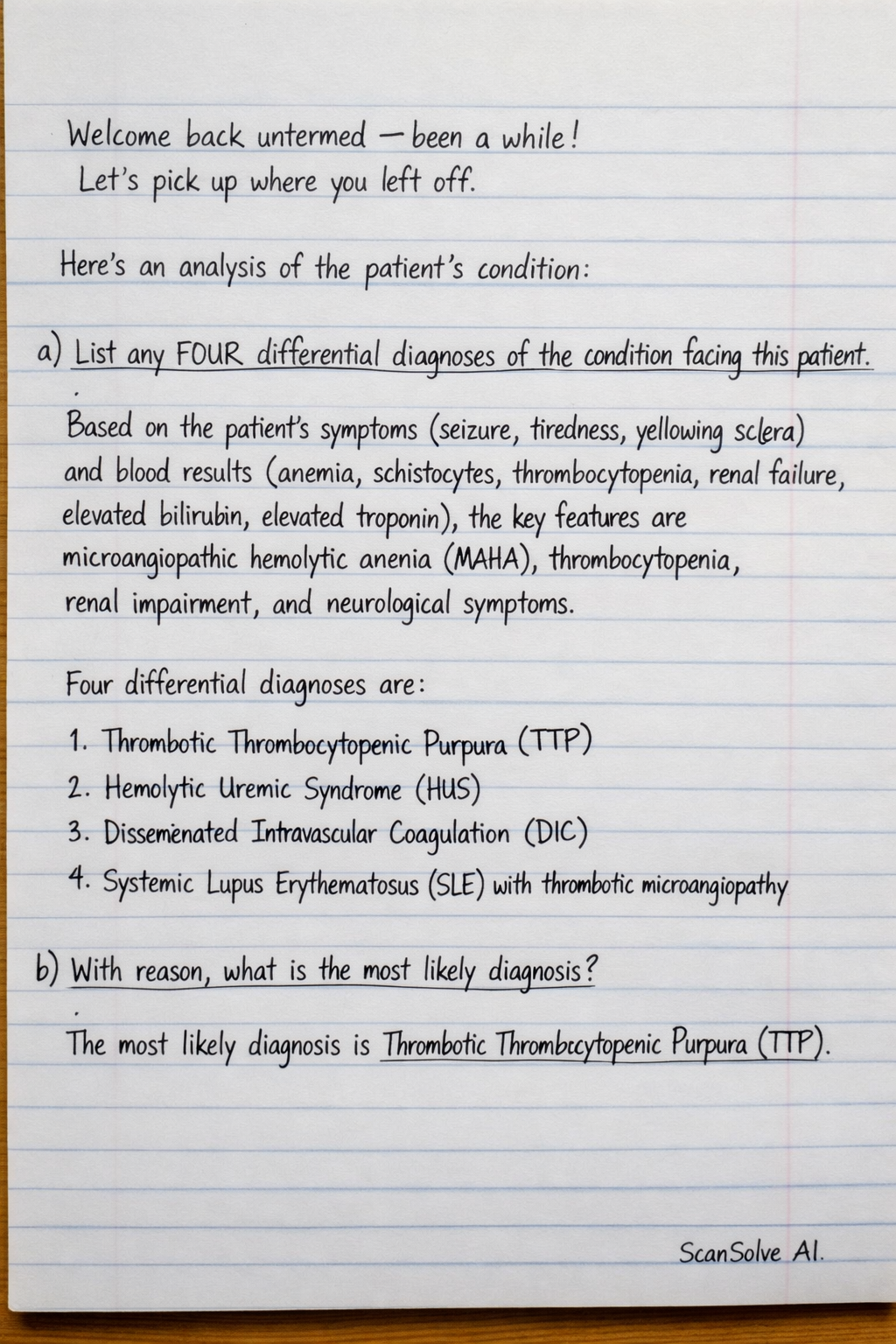
Here's an analysis of the patient's condition:
a) List any FOUR differential diagnoses of the condition facing this patient.
Based on the patient's symptoms (seizure, tiredness, yellowing sclera) and blood results (anemia, schistocytes, thrombocytopenia, renal failure, elevated bilirubin, elevated troponin), the key features are microangiopathic hemolytic anemia (MAHA), thrombocytopenia, renal impairment, and neurological symptoms.
Four differential diagnoses are:
- Thrombotic Thrombocytopenic Purpura (TTP)
- Hemolytic Uremic Syndrome (HUS)
- Disseminated Intravascular Coagulation (DIC)
- Systemic Lupus Erythematosus (SLE) with thrombotic microangiopathy
b) With reason, what is the most likely diagnosis?
The most likely diagnosis is Thrombotic Thrombocytopenic Purpura (TTP).
Reason:
The patient presents with a classic constellation of symptoms and laboratory findings consistent with TTP:
- Neurological symptoms: Witnessed seizure.
- Microangiopathic Hemolytic Anemia (MAHA): Evidenced by low hemoglobin (), presence of schistocytes on blood film, and unconjugated hyperbilirubinemia (total bilirubin with normal direct bilirubin) causing the yellowing sclera.
- Thrombocytopenia: Platelet count of .
- Renal impairment: Elevated creatinine () and severely reduced GFR ().
- Cardiac involvement: Elevated troponin (), indicating myocardial injury, which is a known complication of TTP.
Crucially, the patient's coagulation studies (PT , APTT , FIB ) are all within normal limits, which helps to differentiate TTP from Disseminated Intravascular Coagulation (DIC), where these parameters would typically be abnormal. The elevated D-dimer () suggests some fibrinolysis but is not indicative of widespread consumptive coagulopathy in the presence of normal PT, APTT, and fibrinogen. The patient's age and negative pregnancy test also rule out HELLP syndrome. While HUS shares some features, the prominent neurological symptoms and cardiac involvement in an adult make TTP a more fitting diagnosis.
Still stuck on this one?
Ask a follow-up, and the answer starts from this question.
More Biology Questions
Handwritten Step-by-Step Solution
Get this as a handwritten image on WhatsApp — like a tutor wrote it for you.
Try on WhatsApp