

This biology question covers important biological concepts and processes. The step-by-step explanation below helps you understand the underlying mechanisms and reasoning.
ScanSolve AI Answer
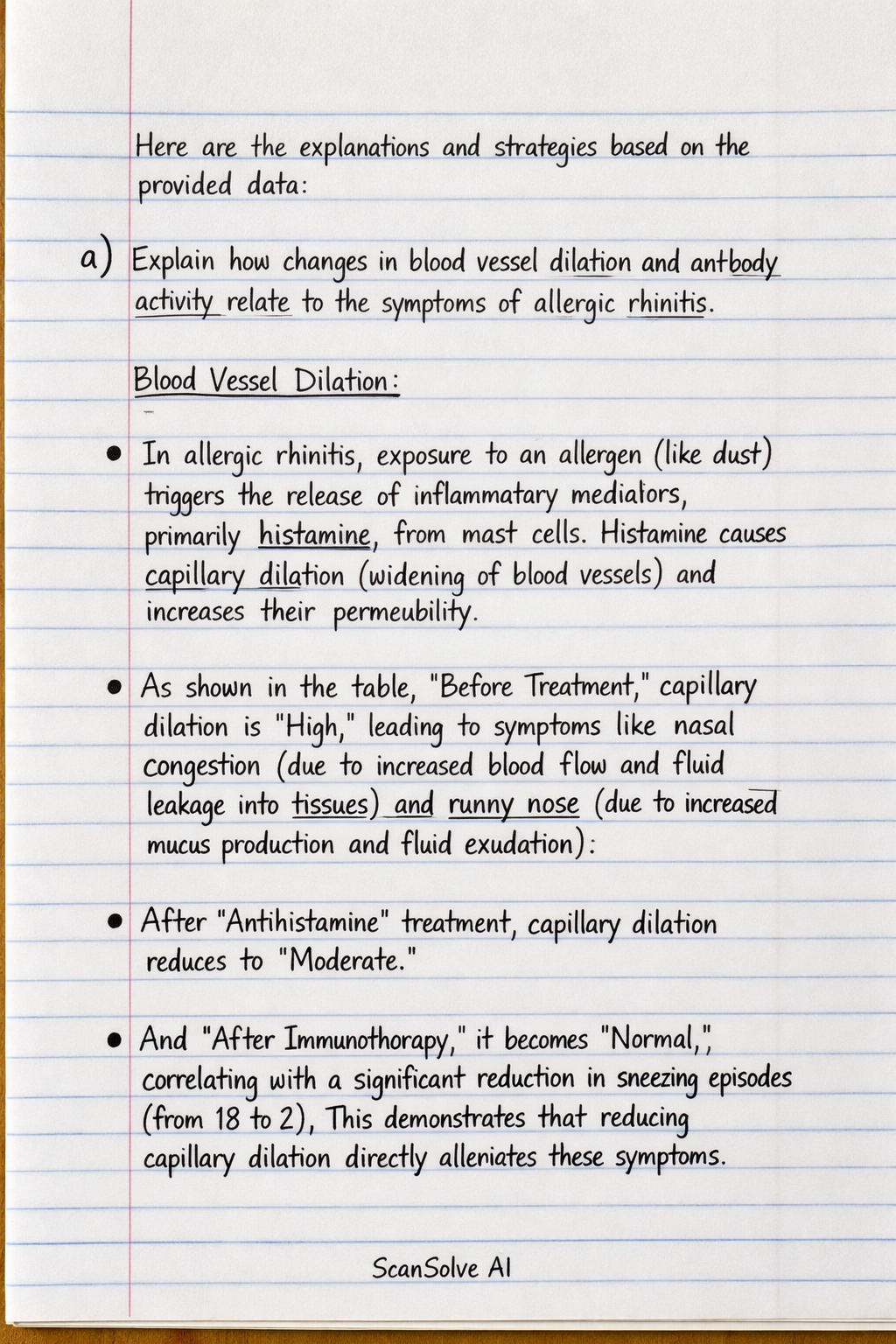
Here are the explanations and strategies based on the provided data: a) Explain how changes in blood vessel dilation and antibody activity relate to the symptoms of allergic rhinitis. Blood Vessel Dilation: In allergic rhinitis, exposure to an allergen (like dust) triggers the release of inflammatory mediators, primarily histamine, from mast cells. Histamine causes capillary dilation* (widening of blood vessels) and increases their permeability. As shown in the table, "Before Treatment," capillary dilation is "High," leading to symptoms like nasal congestion (due to increased blood flow and fluid leakage into tissues) and runny nose* (due to increased mucus production and fluid exudation). After "Antihistamine" treatment, capillary dilation reduces to "Moderate," and "After Immunotherapy," it becomes "Normal," correlating with a significant reduction in sneezing episodes (from 18 to 2). This demonstrates that reducing capillary dilation directly alleviates these symptoms. Antibody Activity: The primary antibody involved in allergic reactions is Immunoglobulin E (IgE)*. When an allergen is encountered, IgE antibodies, which are bound to mast cells, recognize the allergen. This binding triggers the mast cells to degranulate and release histamine and other inflammatory chemicals. The table shows "Serum IgE (IU/mL)" is 320 "Before Treatment," indicating a high level of allergic sensitization. This high IgE activity leads to significant histamine release, causing the severe symptoms of allergic rhinitis, such as frequent sneezing* (18 episodes/day) and high capillary dilation. "After Antihistamine," IgE levels slightly decrease to 280, and "After Immunotherapy," they significantly drop to 120. This reduction in IgE activity, particularly with immunotherapy, leads to fewer allergic triggers, less histamine release, and consequently, a dramatic reduction in symptoms like sneezing and eosinophil count. b) Propose comprehensive strategies combining circulatory, immune, and environmental management to reduce allergic reactions. To effectively reduce allergic reactions, a multi-pronged approach is necessary: Circulatory Management: Antihistamines:* These medications block histamine receptors, reducing the effects of histamine on blood vessels (dilation and permeability) and nerve endings. This helps alleviate symptoms like sneezing, itching, and nasal congestion, as seen in the table where antihistamines reduced sneezing from 18 to 10 episodes/day and capillary dilation from high to moderate. Decongestants:* These drugs constrict blood vessels in the nasal passages, reducing swelling and congestion. Corticosteroid Nasal Sprays:* These reduce inflammation in the nasal lining, which helps to decrease capillary permeability and swelling. Immune Management: Immunotherapy (Allergy Shots/Sublingual Tablets):* This involves gradually exposing the patient to increasing doses of the allergen to desensitize the immune system. As shown in the table, immunotherapy significantly reduced Serum IgE levels (from 280 to 120 IU/mL) and eosinophil count (from 550 to 250 cells/gL), leading to normal capillary dilation and only 2 sneezing episodes/day. This treatment aims to shift the immune response away from IgE production. Leukotriene Modifiers:* These medications block the action of leukotrienes, another group of inflammatory chemicals that contribute to allergic symptoms. Monoclonal Antibodies (e.g., Omalizumab):* These biological drugs target and bind to IgE antibodies, preventing them from initiating allergic reactions. Environmental Management: Allergen Avoidance:* This is crucial for dust allergies. Regular Cleaning: Frequently vacuuming with a HEPA filter, dusting with a damp cloth, and washing bedding in hot water (above 60^) to kill dust mites. Bedding and Furniture: Using allergen-proof covers for mattresses and pillows. Reducing upholstered furniture, heavy drapes, and carpets, which can trap dust. Air Quality: Using HEPA air purifiers to remove airborne allergens. Humidity Control: Maintaining indoor humidity below 50% to inhibit dust mite growth.