
We read your photo as:
Demonstrate the mechanism of breathing using a simple respiratory system model.
ScanSolve AI Answer
Answer
The mechanism of breathing involves the coordinated action of the diaphragm, intercostal muscles, and the structures of the respiratory tract to move air into and out of the lungs.
Step-by-step solution
2 stepsInhalation
During inhalation, the diaphragm contracts and moves downwards, while the external intercostal muscles contract, pulling the rib cage upwards and outwards. This increases the volume of the thoracic cavity, which in turn decreases the pressure inside the lungs (alveoli) relative to the atmospheric pressure. Air then flows from the higher atmospheric pressure, through the nose (or nasal cavity), pharynx, larynx, bronchus, and into the lungs until the pressure equalizes.
Exhalation
During exhalation, the diaphragm relaxes and moves upwards, and the external intercostal muscles relax, allowing the rib cage to move downwards and inwards. This decreases the volume of the thoracic cavity, increasing the pressure inside the lungs (alveoli) above the atmospheric pressure. Air is then forced out of the lungs through the same pathway until the pressure equalizes.
The alveoli are the tiny air sacs where gas exchange (oxygen into blood, carbon dioxide out of blood) occurs.
Still stuck on this one?
Ask a follow-up, and the answer starts from this question.
More Biology Questions
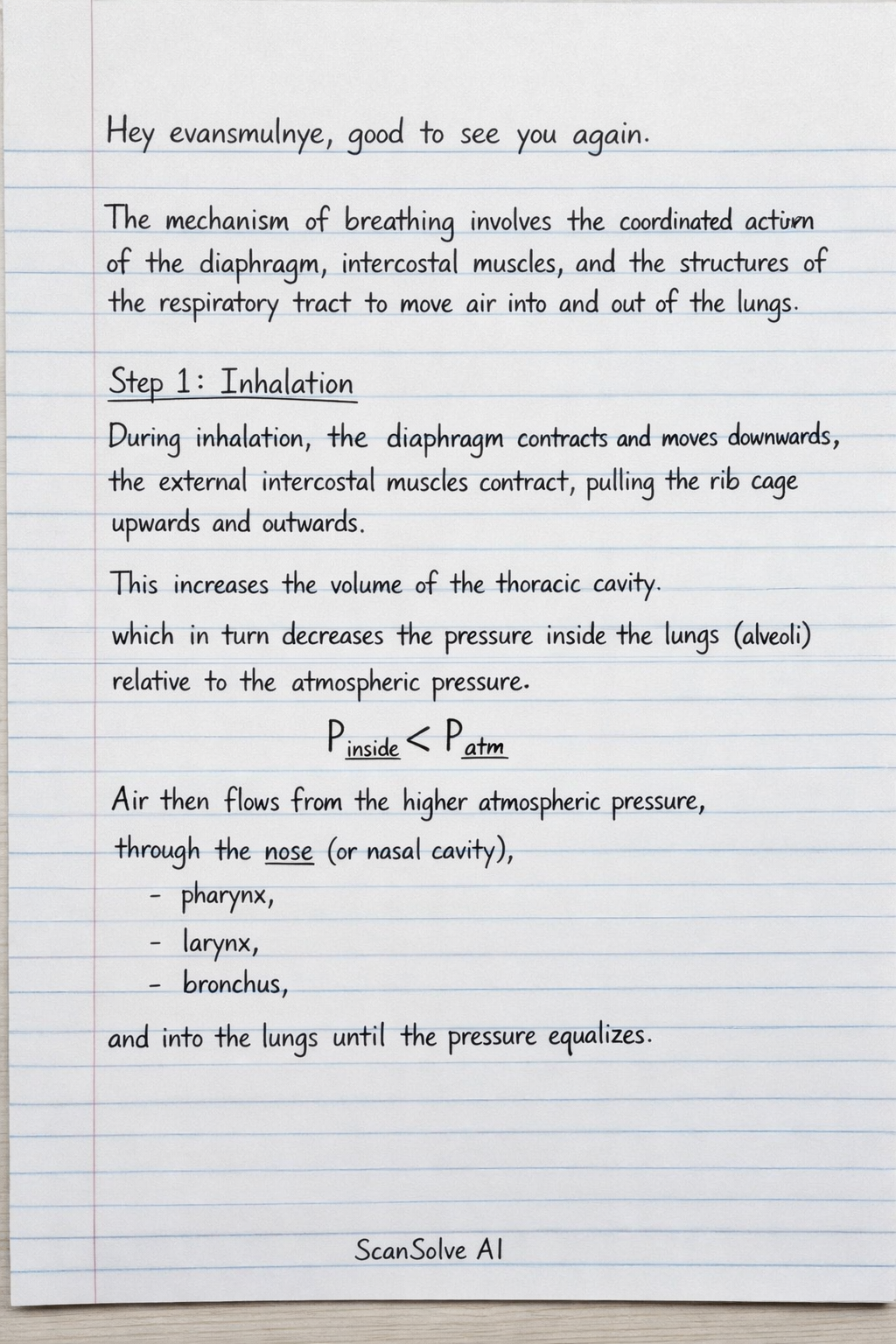
Handwritten Step-by-Step Solution
Get this as a handwritten image on WhatsApp — like a tutor wrote it for you.
Try on WhatsApp