
We read your photo as:
Differentiate between malnutrition and undernutrition. Enumerate five functions of carbohydrate. Outline five dietary guidelines. List and explain three types of kitchen.
ScanSolve AI Answer
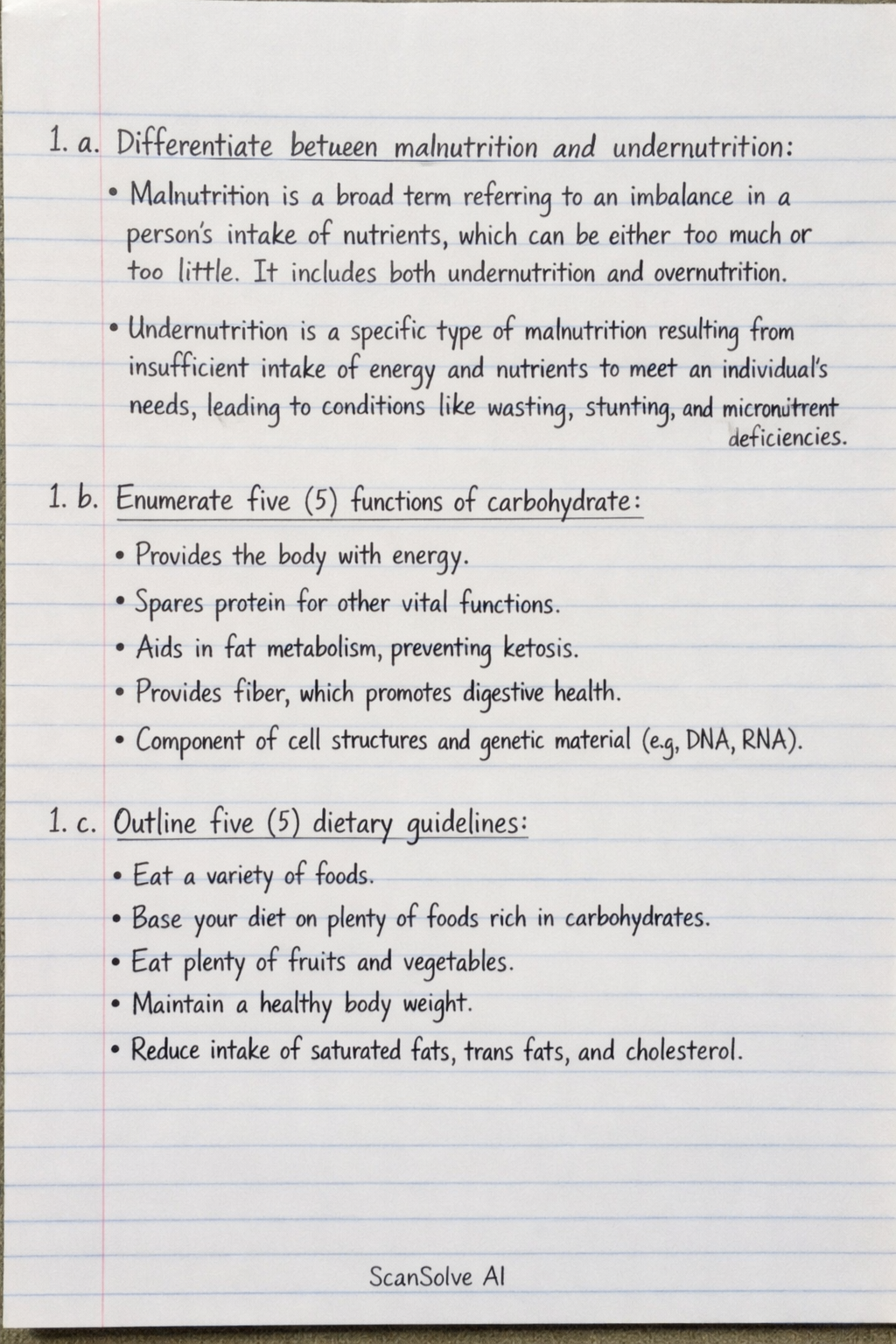
1. a. Differentiate between malnutrition and undernutrition.
- Malnutrition is a broad term referring to an imbalance in a person's intake of nutrients, which can be either too much or too little. It includes both undernutrition and overnutrition.
- Undernutrition is a specific type of malnutrition resulting from insufficient intake of energy and nutrients to meet an individual's needs, leading to conditions like wasting, stunting, and micronutrient deficiencies.
1. b. Enumerate five (5) functions of carbohydrate.
- Provides the body with energy.
- Spares protein for other vital functions.
- Aids in fat metabolism, preventing ketosis.
- Provides fiber, which promotes digestive health.
- Component of cell structures and genetic material (e.g., DNA, RNA).
1. c. Outline five (5) dietary guidelines.
- Eat a variety of foods.
- Base your diet on plenty of foods rich in carbohydrates.
- Eat plenty of fruits and vegetables.
- Maintain a healthy body weight.
- Reduce intake of saturated fats, trans fats, and cholesterol.
1. d. List and explain the three (3) types of kitchen.
- One-wall kitchen: All appliances and cabinets are arranged along a single wall. It is space-efficient for small areas but offers limited counter space.
- Galley kitchen: Features two parallel walls with a walkway in between. It is efficient for cooking as everything is within reach but can feel narrow.
- L-shaped kitchen: Appliances and cabinets are arranged along two adjacent walls, forming an "L" shape. It provides good counter space and an open feel, suitable for small to medium-sized kitchens.
2. a. Highlight seven (7) disadvantages of an unbalanced diet.
- Increased risk of chronic diseases (e.g., heart disease, diabetes).
- Weakened immune system, leading to frequent illness.
- Fatigue and low energy levels.
- Poor concentration and cognitive function.
- Weight gain or obesity (if overnutrition) or weight loss and wasting (if undernutrition).
- Digestive problems (e.g., constipation, indigestion).
- Nutrient deficiencies, leading to specific health issues (e.g., anemia from iron deficiency).
2. b. List five (5) points to consider when choosing fruits.
- Ripeness: Choose fruits that are ripe but not overripe, indicated by color, texture, and aroma.
- Firmness: Select fruits that are firm to the touch, avoiding soft spots or bruises.
- Appearance: Look for fruits with vibrant colors and no signs of mold, cuts, or insect damage.
- Seasonality: Opt for fruits that are in season, as they are often fresher, tastier, and more affordable.
- Weight: Heavier fruits for their size often indicate juiciness.
2. c. Enumerate six (6) uses of eggs in food preparation.
- Binding: Holds ingredients together (e.g., meatballs, casseroles).
- Leavening: Incorporates air to make baked goods light and fluffy (e.g., soufflés, cakes).
- Emulsifying: Helps to combine oil and water (e.g., mayonnaise, hollandaise sauce).
- Thickening: Used to thicken sauces, custards, and puddings.
- Coating: Provides a crust or breading for fried foods.
- Garnishing: Used as a decorative element (e.g., sliced hard-boiled eggs).
2. d. Outline seven (7) points to consider when choosing meat.
- Color: Fresh meat should have a bright, characteristic color (e.g., red for beef, pink for pork, pale pink for chicken).
- Texture: Meat should be firm to the touch and not slimy or sticky.
- Smell: It should have a fresh, mild smell, not sour or off-putting.
- Fat content: Consider the amount of visible fat (marbling) based on preference and cooking method.
- Cut: Choose the appropriate cut for the intended cooking method (e.g., tenderloin for grilling, chuck for stewing).
- Packaging: Ensure packaging is intact, sealed, and free from excessive liquid.
- Expiration date: Always check the "use-by" or "best-before" date.
3. a. Identify five (5) examples of breakfast dishes.
- Pancakes
- Omelette
- Cereal with milk
- Toast with jam/butter
- Porridge (oatmeal)
3. b. Outline five (5) guidelines in catering for an invalid.
- Serve small, frequent meals to avoid overwhelming the patient.
- Ensure food is easily digestible and soft in texture.
- Offer a variety of nutrient-dense foods to support recovery.
- Present food attractively to stimulate appetite.
- Maintain strict hygiene to prevent infections.
3. c. List and explain four (4) types of fried food.
- Deep-fried: Food is completely submerged in hot oil (e.g., French fries, doughnuts). This method creates a crispy exterior.
- Pan-fried: Food is cooked in a small amount of fat in a pan, turning once or twice (e.g., fried eggs, thin cutlets). It results in a browned surface.
- Stir-fried: Small pieces of food are quickly cooked in a wok or large pan with a small amount of oil, constantly stirring (e.g., stir-fry vegetables with meat). This method retains crispness.
- Shallow-fried: Food is cooked in a moderate amount of fat, covering about half the food's thickness (e.g., fish fillets, fritters). It provides a golden-brown crust.
3. d. Enumerate seven (7) reasons why we cook food.
- To make food safe by killing harmful bacteria and pathogens.
- To improve digestibility by breaking down tough fibers and proteins.
- To enhance flavor and aroma.
- To improve texture, making food more palatable.
- To preserve food for longer periods.
- To increase nutrient availability in some foods.
- To add variety to the diet through different cooking methods.
4. a. Define the following terms as used in digestion and absorption.
- i. Digestion: The process by which large, complex food molecules are broken down into smaller, simpler molecules that can be absorbed by the body.
- ii. Absorption: The process by which digested food molecules pass from the digestive tract into the bloodstream or lymphatic system to be transported to cells throughout the body.
- iii. Assimilation: The process by which absorbed nutrients are taken up by cells and converted into energy or used to build and repair tissues.
4. b. State and explain the three (3) methods of heat transfer used in cooking.
- Conduction: Heat is transferred directly from one particle to another through direct contact (e.g., a pan heating food on a stovetop).
- Convection: Heat is transferred through the movement of fluids (liquids or gases). Hotter, less dense fluid rises, and cooler, denser fluid sinks, creating a current (e.g., boiling water, baking in an oven).
- Radiation: Heat is transferred through electromagnetic waves, which do not require a medium (e.g., grilling, toasting bread in a toaster).
4. c. Copy and complete the following table.
| Vitamin | Chemical name | Food source |
|---|---|---|
| Vitamin D | Calciferol | Fatty fish, fortified milk, sunlight exposure |
| Vitamin C | Ascorbic acid | Citrus fruits, berries, broccoli |
| Vitamin A | Retinol | Carrots, sweet potatoes, liver, eggs |
| Vitamin B1 | Thiamine | Whole grains, pork, legumes |
| Vitamin B2 | Riboflavin | Dairy products, leafy greens, meat |
| Vitamin B3 | Niacin | Meat, poultry, fish, nuts |
4. d. List any three (3) characteristics of a traditional kitchen.
- Often features a central hearth or open fire for cooking.
- Typically uses basic, non-electric tools and utensils.
- Emphasizes natural materials like wood, stone, and clay.
5. a. State and explain four (4) methods involved in cake making.
- Creaming method: Fat (butter/margarine) and sugar are beaten together until light and fluffy, incorporating air. Eggs are then added gradually, followed by dry and liquid ingredients alternately. This method produces a fine, even texture.
- Rubbing-in method: Fat is rubbed into flour until the mixture resembles breadcrumbs. Sugar and other dry ingredients are added, then liquid to form a dough. This method is often used for cakes with a crumbly texture or shortcrust pastry.
- All-in-one method: All ingredients (fat, sugar, flour, eggs, liquid, raising agent) are placed in a bowl and beaten together simultaneously until smooth. This is a quick and easy method, often used for lighter cakes.
- Melting method: Fat and sugar are melted together, then cooled slightly before adding eggs and dry ingredients. This method is suitable for moist, dense cakes like gingerbread or fruit cakes.
5. b. i. What are food additives?
- Food additives are substances added to food to preserve flavor or enhance its taste, appearance, or other qualities, often during processing, packaging, or storage.
5. b. ii. State five (5) advantages of breast feeding.
- Provides optimal nutrition for infants, perfectly balanced for their needs.
- Transfers antibodies from mother to baby, boosting the infant's immune system.
- Reduces the risk of various infections and diseases in infants.
- Promotes bonding between mother and baby.
- Aids in the mother's postpartum recovery and reduces the risk of certain cancers.
5. c. Outline five (5) ways in which fruits are important in the diet.
- Rich source of vitamins and minerals essential for bodily functions.
- High in dietary fiber, aiding digestion and preventing constipation.
- Provide antioxidants that protect cells from damage.
- Contribute to hydration due to their high water content.
- Naturally low in calories and fat, supporting healthy weight management.
5. d. Enumerate five (5) reasons why water is important to the body.
- Regulates body temperature.
- Transports nutrients and oxygen to cells.
- Lubricates joints and protects organs and tissues.
- Helps flush out waste products through urine and sweat.
- Aids in digestion and prevents constipation.
6. a. i. Define meal planning.
- Meal planning is the process of deciding in advance what meals will be eaten over a specific period, considering nutritional needs, budget, available ingredients, and time constraints.
6. a. ii. Plan a three course lunch for a pregnant woman.
- Starter: Fresh vegetable soup (e.g., carrot and ginger soup) with whole-wheat bread.
- Main Course: Grilled salmon with brown rice and steamed mixed vegetables (broccoli, spinach, bell peppers).
- Dessert: Greek yogurt with mixed berries and a sprinkle of nuts.
6. b. Give three (3) general rules for good pastry making.
- Use cold ingredients, especially butter/fat, to prevent gluten development and ensure flakiness.
- Handle the dough as little as possible to avoid overworking the gluten, which can make the pastry tough.
- Use cold water when mixing the dough to keep the fat solid and prevent it from melting prematurely.
6. c. State any two (2) importance of labour saving devices.
- Reduces the physical effort and time required for household tasks.
- Increases efficiency and productivity in the kitchen and home.
6. d. Outline 4 points to consider when planning meals for invalids and convalescents.
- Nutritional needs: Focus on nutrient-dense foods to support healing and recovery.
- Digestibility: Choose easily digestible foods that are gentle on the digestive system.
- Texture and consistency: Adjust food texture (e.g., pureed, soft) based on the patient's ability to chew and swallow.
- Appetite and preferences: Consider the patient's likes and dislikes, and serve small, frequent, appealing meals to stimulate appetite.
6. e. Identify three (3) types of raising agents with examples.
- Biological raising agents:
- Example: Yeast (used in bread making).
- Chemical raising agents:
- Example: Baking powder (used in cakes, muffins).
- Example: Bicarbonate of soda (baking soda) (used in cookies, quick breads, often with an acid).
Still stuck on this one?
Ask a follow-up, and the answer starts from this question.
More Biology Questions
Handwritten Step-by-Step Solution
Get this as a handwritten image on WhatsApp — like a tutor wrote it for you.
Try on WhatsApp