

This biology question covers important biological concepts and processes. The step-by-step explanation below helps you understand the underlying mechanisms and reasoning.
ScanSolve AI Answer
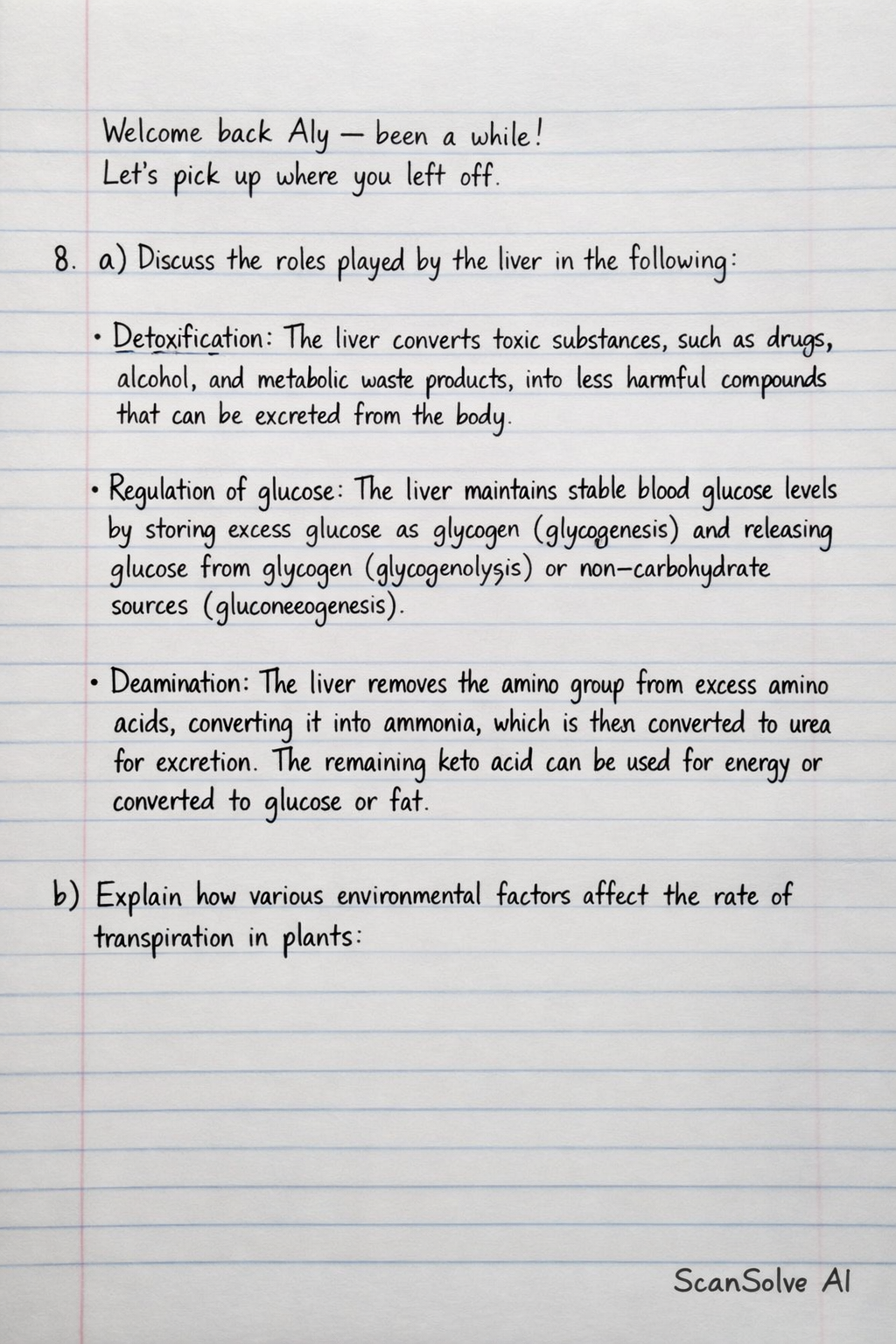
8. a) Discuss the roles played by the liver in the following: Detoxification*: The liver converts toxic substances, such as drugs, alcohol, and metabolic waste products, into less harmful compounds that can be excreted from the body. Regulation of glucose*: The liver maintains stable blood glucose levels by storing excess glucose as glycogen (glycogenesis) and releasing glucose from glycogen (glycogenolysis) or non-carbohydrate sources (gluconeogenesis) when blood glucose is low. Deamination*: The liver removes the amino group from excess amino acids, converting it into ammonia, which is then converted to urea for excretion. The remaining keto acid can be used for energy or converted to glucose or fat. b) Explain how various environmental factors affect the rate of transpiration in plants: Temperature*: An increase in temperature increases the kinetic energy of water molecules, leading to a higher rate of evaporation from the leaf surface and thus a higher rate of transpiration. Humidity*: Low humidity increases the water potential gradient between the inside of the leaf and the surrounding air, causing water to diffuse out of the stomata more rapidly and increasing transpiration. Wind speed*: Increased wind speed removes the humid air layer around the stomata, maintaining a steep water potential gradient and accelerating the rate of water vapor diffusion from the leaf, thereby increasing transpiration. Light intensity*: Higher light intensity promotes photosynthesis, which causes stomata to open wider to allow for carbon dioxide uptake. This also increases the surface area for water vapor to escape, leading to a higher rate of transpiration. Soil water availability*: When soil water is scarce, plants close their stomata to conserve water, which significantly reduces the rate of transpiration.