
We read your photo as:
What is First Aid? State its importance and three first aid measures for electrocution, nose bleeding, and snake bites.
ScanSolve AI Answer
6 a)
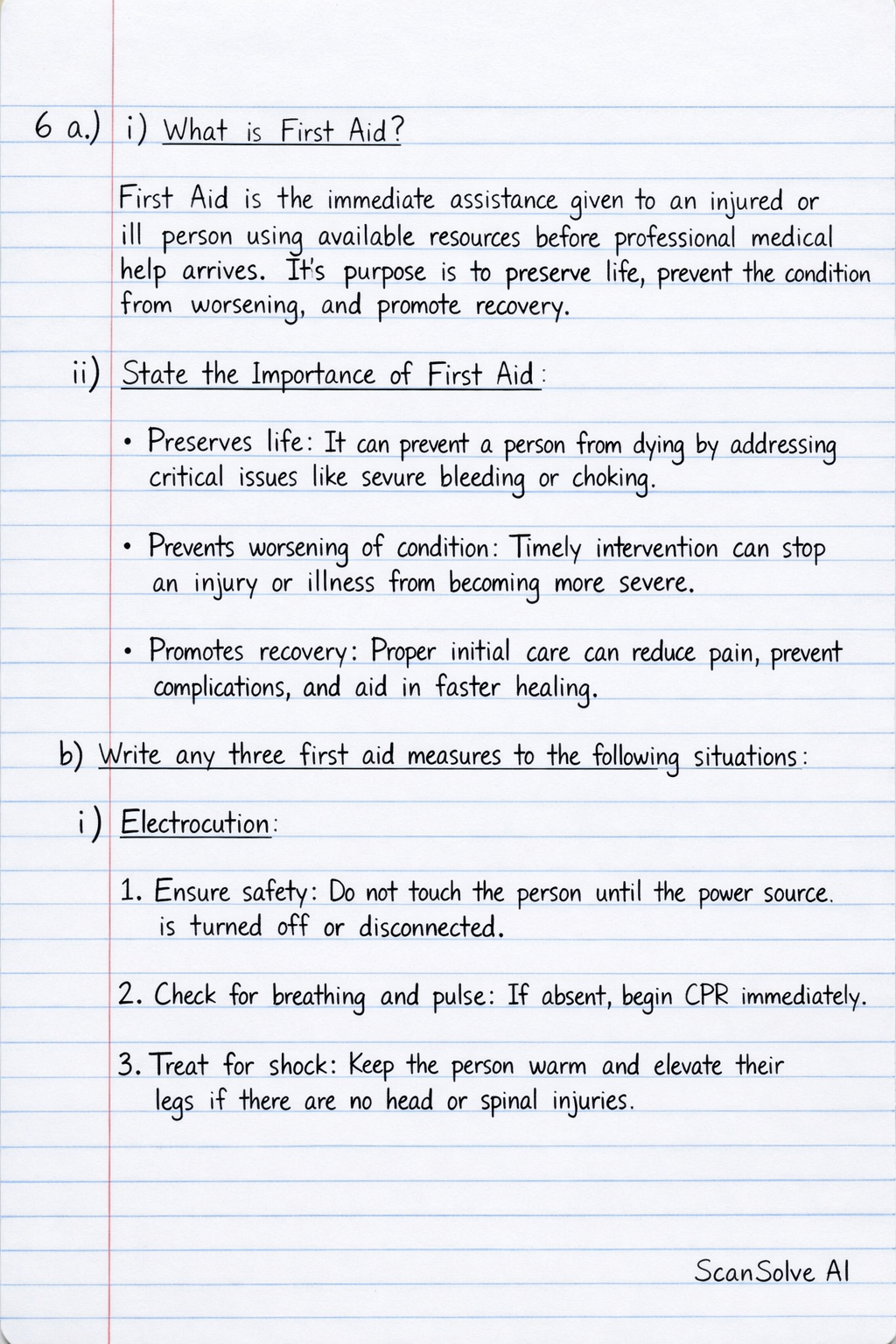
i) What is First Aid?
First Aid is the immediate assistance given to an injured or ill person using available resources before professional medical help arrives. Its purpose is to preserve life, prevent the condition from worsening, and promote recovery.
ii) State the importance of First Aid.
- Preserves life: It can prevent a person from dying by addressing critical issues like severe bleeding or choking.
- Prevents worsening of condition: Timely intervention can stop an injury or illness from becoming more severe.
- Promotes recovery: Proper initial care can reduce pain, prevent complications, and aid in faster healing.
b) Write any three first aid measures to the following situations:
i) Electrocution
- Ensure safety: Do not touch the person until the power source is turned off or disconnected.
- Check for breathing and pulse: If absent, begin CPR immediately.
- Treat for shock: Keep the person warm and elevate their legs if there are no head or spinal injuries.
ii) Nose bleeding
- Sit upright and lean forward: This prevents blood from flowing down the throat.
- Pinch the soft part of the nose: Apply firm pressure for 10-15 minutes.
- Apply a cold compress: Place an ice pack on the bridge of the nose.
iii) Snake bite
- Keep the person calm and still: Movement can spread venom.
- Immobilize the bitten limb: Keep it below the level of the heart.
- Remove tight clothing/jewelry: Swelling may occur. Do not cut the wound or try to suck out venom.
iv) Burns
- Cool the burn: Immediately run the burn under cool (not cold) running water for at least 10-20 minutes.
- Remove jewelry/clothing: Gently remove anything tight around the burned area before swelling occurs.
- Cover the burn: Use a loose, sterile, non-fluffy dressing. Do not apply creams, butter, or ice.
c) Name any three articles found in a first aid box.
- Sterile gauze pads
- Adhesive bandages (plasters)
- Antiseptic wipes or solution
7 a) Name any three sexually transmissible infections and give their causative agents and any one sign or symptom of each disease.
- Disease: Gonorrhea
- Causative Agent: Bacterium, Neisseria gonorrhoeae
- Sign/Symptom: Painful urination, abnormal discharge from the penis or vagina.
- Disease: Syphilis
- Causative Agent: Bacterium, Treponema pallidum
- Sign/Symptom: Painless sore (chancre) on genitals, rectum, or mouth.
- Disease: HIV/AIDS
- Causative Agent: Virus, Human Immunodeficiency Virus
- Sign/Symptom: Flu-like symptoms (fever, sore throat, rash) in early stages; later, weakened immune system leading to opportunistic infections.
b) State any three harmful effects of venereal diseases to man and society.
- Infertility: STIs like gonorrhea and chlamydia can cause pelvic inflammatory disease (PID) in women, leading to infertility.
- Increased risk of other infections: Some STIs, particularly HIV, weaken the immune system, making individuals more susceptible to other infections.
- Social stigma and psychological distress: Individuals with STIs may face discrimination, shame, and mental health issues.
c) Write a concise essay on the useful effects of fungi.
Fungi play crucial roles in ecosystems and human society. As decomposers, they break down dead organic matter, recycling nutrients back into the soil, which is vital for plant growth. In medicine, fungi are sources of important drugs; for example, Penicillium mold produces penicillin, a widely used antibiotic. Many fungi are also essential in the food industry, used in baking (yeast for bread), brewing (yeast for alcohol), and cheese production. Some fungi form mycorrhizal associations with plant roots, enhancing nutrient absorption for plants.
8 a) What measures would you take when building a house to ensure that it is:
i) Rats-free?
- Seal all openings: Close gaps, cracks, and holes in walls, foundations, and around pipes with concrete or metal mesh.
- Install screens: Use wire mesh on vents and windows.
- Elevate foundations: Build foundations high enough to prevent easy access.
ii) Insects-free?
- Install insect screens: Fit screens on all windows and doors.
- Seal cracks and crevices: Fill gaps in walls, floors, and around utility lines to block entry points.
- Ensure proper drainage: Prevent standing water around the house, which can be breeding grounds for mosquitoes.
b) How would you prevent dampness in the house?
- Install a damp-proof course (DPC): A barrier in the walls to prevent moisture rising from the ground.
- Ensure proper ventilation: Install extractor fans in bathrooms and kitchens, and open windows regularly to allow air circulation.
- Maintain gutters and downpipes: Ensure they are clear and direct rainwater away from the foundation.
c) State the advantages of natural lighting over artificial lighting.
- Energy efficiency: Reduces the need for artificial lighting, leading to lower electricity consumption and energy bills.
- Improved well-being and productivity: Natural light can boost mood, reduce eye strain, and enhance concentration and productivity.
- Better color rendition: Natural light provides a full spectrum of colors, allowing for accurate perception of colors compared to artificial light sources.
9 a) Explain the dangers of the following habits:
i) Defecating in Streams
Defecating in streams contaminates water sources with human waste, introducing pathogens like bacteria, viruses, and parasites. This can lead to the spread of waterborne diseases such as cholera, typhoid, dysentery, and giardiasis, posing severe health risks to communities that use the water for drinking, bathing, or irrigation.
ii) Self-medication
Self-medication involves taking medicines without professional medical advice, which can be dangerous. It can lead to incorrect diagnosis, wrong dosage, adverse drug reactions, masking of serious underlying conditions, and the development of antibiotic resistance if antibiotics are misused.
iii) Sexual promiscuity
Sexual promiscuity, having multiple sexual partners, significantly increases the risk of contracting and transmitting Sexually Transmissible Infections (STIs), including HIV, gonorrhea, syphilis, and herpes. It also raises the risk of unintended pregnancies and can lead to emotional and psychological distress.
iv) Bleaching of the skin
Skin bleaching involves using chemicals to lighten skin tone, which can have severe health consequences. It often involves harmful substances like hydroquinone and mercury, leading to skin thinning, hyperpigmentation (darkening of skin), acne, allergic reactions, and increased susceptibility to skin cancer. Mercury can also cause kidney damage and neurological problems.
b) What are the properties of good clothing?
- Comfort: Good clothing should be comfortable to wear, allowing for ease of movement and not causing irritation.
- Durability: It should be made from strong materials that can withstand regular wear and washing without quickly deteriorating.
- Breathability: The fabric should allow air circulation to prevent overheating and promote evaporation of sweat, keeping the wearer dry.
- Absorbency: Good clothing, especially for active wear, should be able to absorb moisture (sweat) away from the skin.
- Insulation (where appropriate): For cold weather, clothing should provide good insulation to retain body heat.
Still stuck on this one?
Ask a follow-up, and the answer starts from this question.
More Biology Questions
Handwritten Step-by-Step Solution
Get this as a handwritten image on WhatsApp — like a tutor wrote it for you.
Try on WhatsApp