
We read your photo as:
What are five differences between organic and inorganic farming?
Biology
ScanSolve AI Answer
Here are five differences between organic farming and inorganic farming:
-
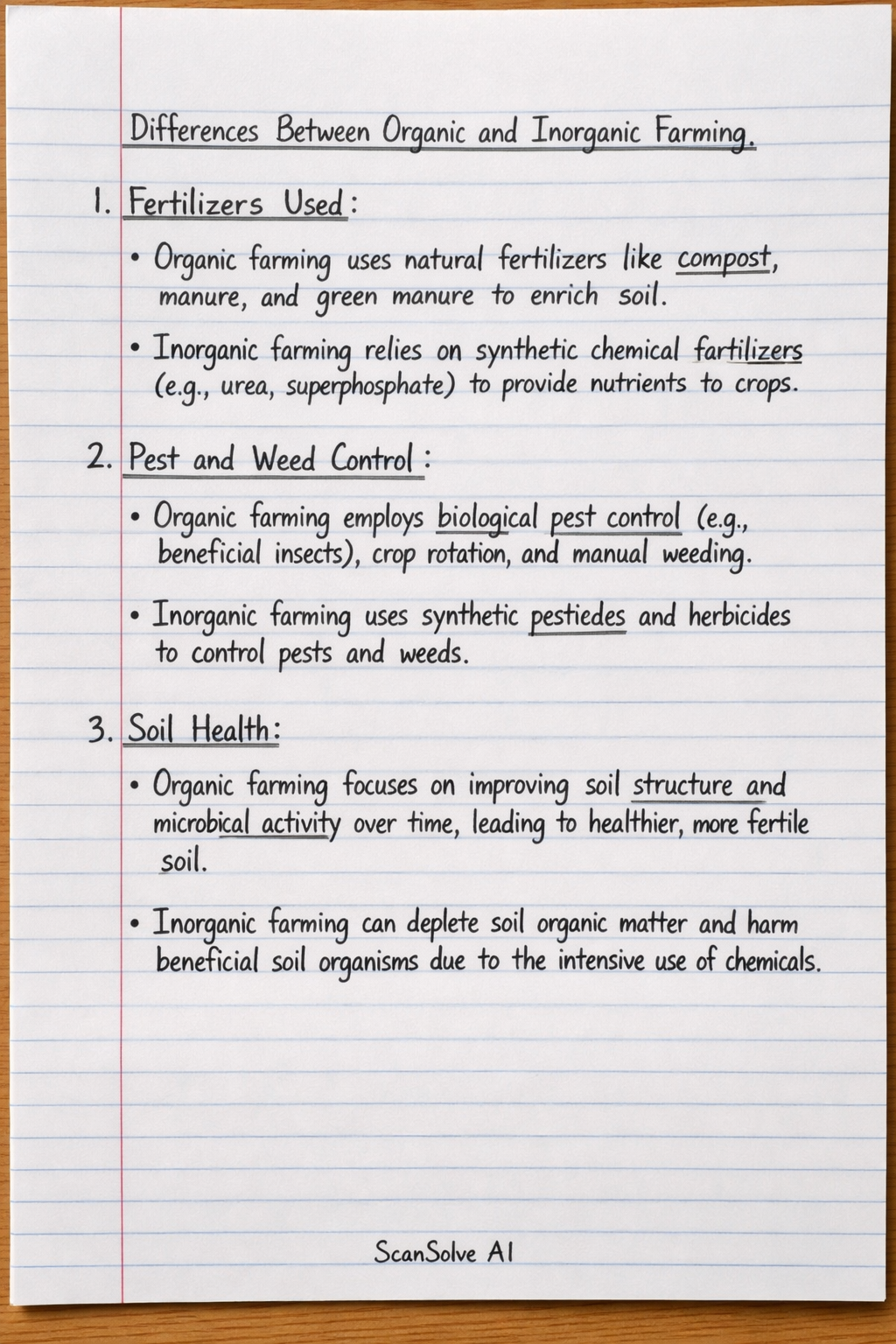
Fertilizers Used:
- Organic farming uses natural fertilizers like compost, manure, and green manure to enrich soil.
- Inorganic farming relies on synthetic chemical fertilizers (e.g., urea, superphosphate) to provide nutrients to crops.
-
Pest and Weed Control:
- Organic farming employs biological pest control (e.g., beneficial insects), crop rotation, and manual weeding.
- Inorganic farming uses synthetic pesticides and herbicides to control pests and weeds.
-
Soil Health:
- Organic farming focuses on improving soil structure and microbial activity over time, leading to healthier, more fertile soil.
- Inorganic farming can deplete soil organic matter and harm beneficial soil organisms due to the intensive use of chemicals.
-
Genetic Modification:
- Organic farming strictly prohibits the use of genetically modified organisms (GMOs).
- Inorganic farming often utilizes GMO crops to enhance yield, pest resistance, or other traits.
-
Environmental Impact:
- Organic farming generally has a lower environmental impact, reducing water pollution, conserving biodiversity, and minimizing greenhouse gas emissions.
- Inorganic farming can contribute to water pollution (from chemical runoff), soil degradation, and loss of biodiversity.
Was this helpful?
Still stuck on this one?
Ask a follow-up, and the answer starts from this question.
Got a different question?Ask your own question
More Biology Questions
Q3.a (i) State two differences between organic and inorganic fertilizer.QExplain mechanized farming and traditional farming. List five differences between them.QWhat are two advantages of using organic fertilizers over chemical fertilizers?QCompare and contrast organic and non-organic farming methods, and state which you believe is…QState four differences between organic and inorganic compounds. Give three examples of carbon…
Handwritten Step-by-Step Solution
Get this as a handwritten image on WhatsApp — like a tutor wrote it for you.
Try on WhatsApp