
We read your photo as:
Define food additives and state their importance in the food processing industry. In what situation may the use of food additives be: i) justified ii) unjustified
ScanSolve AI Answer
SECTION C
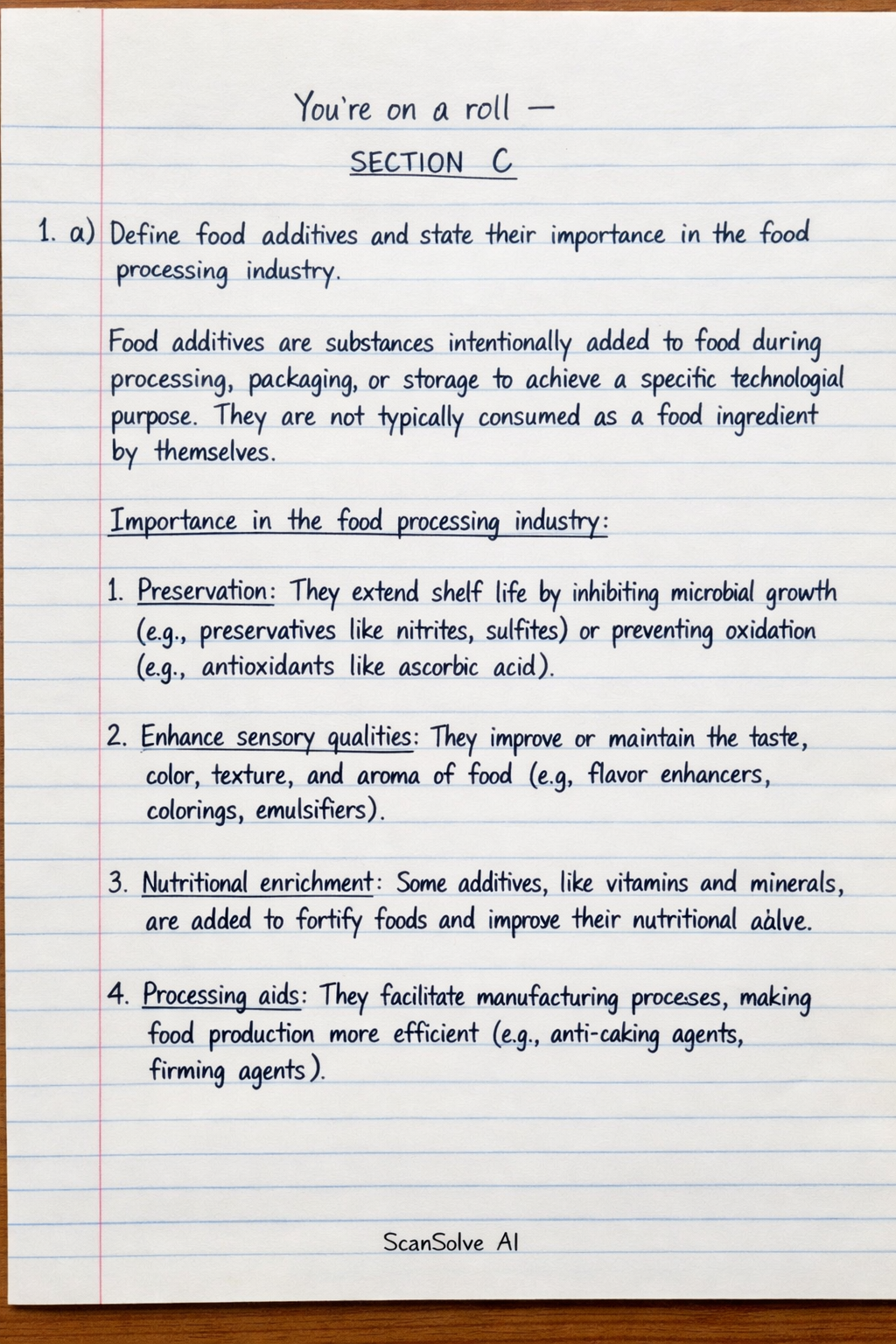
1. a) Define food additives and state their importance in the food processing industry.
Food additives are substances intentionally added to food during processing, packaging, or storage to achieve a specific technological purpose. They are not typically consumed as a food ingredient by themselves.
Importance in the food processing industry:
- Preservation: They extend shelf life by inhibiting microbial growth (e.g., preservatives like nitrites, sulfites) or preventing oxidation (e.g., antioxidants like ascorbic acid).
- Enhance sensory qualities: They improve or maintain the taste, color, texture, and aroma of food (e.g., flavor enhancers, colorings, emulsifiers).
- Nutritional enrichment: Some additives, like vitamins and minerals, are added to fortify foods and improve their nutritional value.
- Processing aids: They facilitate manufacturing processes, making food production more efficient (e.g., anti-caking agents, firming agents).
1. b) In what situation may the use of food additives be: i) justified ii) unjustified
i) Justified:
The use of food additives is justified when they:
- Are necessary to maintain the nutritional quality of the food.
- Enhance the keeping quality or stability of a food or improve its organoleptic properties (taste, smell, appearance) without deceiving the consumer.
- Are used in quantities that do not pose a health risk to consumers.
- Are used for a technological purpose that cannot be achieved by other economically and technologically feasible means.
- For example, preservatives in perishable foods to prevent spoilage and foodborne illness, or vitamins added to fortify staple foods.
ii) Unjustified:
The use of food additives is unjustified when they:
- Are used to disguise faulty ingredients or poor processing practices.
- Are used to deceive the consumer (e.g., making a food appear fresher or more nutritious than it is).
- Result in a substantial decrease in the nutritional value of the food.
- Pose a known or potential health risk to consumers.
- Are used when the desired effect can be achieved by other means that are economically and technologically feasible and do not involve additives.
- For example, adding excessive colorings to mask low-quality ingredients.
1. c) Identify the various classes of food additives giving suitable examples.
- Preservatives: Inhibit microbial growth and prevent spoilage.
- Examples: Sodium benzoate, Sulfites, Nitrites.
- Antioxidants: Prevent oxidation of fats and oils, which causes rancidity, and prevent discoloration.
- Examples: Ascorbic acid (Vitamin C), Tocopherols (Vitamin E), BHA (Butylated hydroxyanisole), BHT (Butylated hydroxytoluene).
- Colorings: Enhance or restore color to food.
- Examples: Caramel, Beta-carotene, Tartrazine (Yellow 5).
- Flavor Enhancers: Improve the existing flavor of food.
- Examples: Monosodium glutamate (MSG), Yeast extract.
- Sweeteners: Provide sweetness without adding significant calories or as sugar substitutes.
- Examples: Aspartame, Sucralose, Stevia.
- Emulsifiers: Help mix ingredients that normally separate (e.g., oil and water) and stabilize emulsions.
- Examples: Lecithin, Mono- and diglycerides.
- Thickeners/Stabilizers: Improve texture and consistency.
- Examples: Gums (e.g., xanthan gum, guar gum), Starch.
- Acids/Acidity Regulators: Control the pH of food, affecting taste, preservation, and texture.
- Examples: Citric acid, Lactic acid, Sodium bicarbonate.
- Anti-caking Agents: Prevent powdered foods from clumping.
- Examples: Silicon dioxide, Calcium silicate.
- Nutrient Fortifiers: Add essential vitamins and minerals to food.
- Examples: Iron, Folic acid, Vitamin D.
2. a) List the different classes of food contaminants and highlight their effects on man and other living organisms.
- Biological Contaminants:
- Description: Microorganisms such as bacteria, viruses, parasites, and fungi (including molds that produce toxins).
- Effects on man: Foodborne illnesses (e.g., salmonellosis, E. coli infection, norovirus), gastroenteritis, fever, vomiting, diarrhea, and in severe cases, organ failure or death.
- Effects on other living organisms: Can cause diseases in livestock, poultry, and fish, leading to reduced productivity, illness, and death in animal populations. Can also contaminate water sources, affecting aquatic life.
- Chemical Contaminants:
- Description: Pesticides, herbicides, heavy metals (e.g., lead, mercury, cadmium), industrial chemicals (e.g., PCBs, dioxins), cleaning agents, veterinary drugs, and natural toxins (e.g., mycotoxins from molds, algal toxins).
- Effects on man: Acute poisoning, chronic diseases (e.g., cancer, neurological disorders, kidney damage, reproductive issues), allergic reactions, and developmental problems.
- Effects on other living organisms: Accumulation in the food chain (bioaccumulation), leading to toxicity in animals that consume contaminated food or water. Can cause reproductive failure, developmental abnormalities, immune suppression, and death in wildlife and livestock.
- Physical Contaminants:
- Description: Foreign objects accidentally introduced into food, such as glass fragments, metal shards, plastic pieces, wood splinters, hair, insects, or jewelry.
- Effects on man: Choking, cuts to the mouth or digestive tract, broken teeth, internal injuries, and psychological distress.
- Effects on other living organisms: Can cause physical injury, choking, or internal damage if ingested by animals, leading to illness or death.
2. b) Comment on the socio-economic impact of food contamination of individuals, family and the nation.
- Individuals:
- Health Costs: Suffer from illness, requiring medical treatment, medication, and potentially hospitalization, leading to significant out-of-pocket expenses.
- Loss of Income: Inability to work due to illness results in lost wages and reduced productivity.
- Reduced Quality of Life: Chronic health issues or long-term complications from contamination can severely diminish an individual's well-being and capacity for daily activities.
- Family:
- Financial Strain: Medical expenses and lost income create economic hardship for the entire family.
- Caregiver Burden: Family members may need to take time off work or school to care for the sick, impacting their own productivity and well-being.
- Emotional Distress: The illness of a family member due to contaminated food causes significant stress, anxiety, and emotional suffering.
- Food Insecurity: Fear of contaminated food can lead to changes in dietary habits, potentially reducing access to nutritious foods.
- Nation:
- Public Health Burden: Increased incidence of foodborne diseases strains national healthcare systems, diverting resources from other public health priorities.
- Economic Losses: Significant economic losses due to reduced productivity of the workforce, decreased tourism, and costs associated with food recalls, investigations, and public health campaigns.
- Trade and Reputation Damage: Contaminated food exports can lead to trade restrictions, damage a nation's reputation for food safety, and reduce international market access, impacting the agricultural and food industries.
- Social Instability: Widespread food contamination can erode public trust in food safety authorities and the food supply chain, potentially leading to social unrest or political instability.
SECTION D
1. a) Briefly explain the following terms: i) food habits ii) food fallacies iii) food fads
- i) Food habits: These are the customary ways in which individuals or groups select, prepare, and consume food. They are influenced by culture, tradition, religion, socioeconomic status, personal preferences, and availability.
- ii) Food fallacies: These are mistaken beliefs or misconceptions about food and nutrition that are not supported by scientific evidence. They often lead to unhealthy dietary practices or unnecessary restrictions.
- iii) Food fads: These are short-lived, intense enthusiasms for particular foods, diets, or eating patterns, often promoted with exaggerated health claims and lacking scientific backing. They tend to be trendy and temporary.
1. b) List and explain 5 factors that affect food security in a community.
- Food Availability: This refers to the physical presence of food, whether from domestic production, imports, or food aid. Factors like climate change, natural disasters, agricultural productivity, and market supply chains directly impact availability.
- Food Access: This relates to the ability of individuals to obtain food, which depends on their economic resources (income, purchasing power), physical access (proximity to markets, transportation), and social factors (gender, ethnicity, social safety nets).
- Food Utilization: This concerns the body's ability to make use of the nutrients in food. It is affected by factors such as sanitation, access to clean water, health status (presence of diseases that impair nutrient absorption), food preparation practices, and nutritional knowledge.
- Stability of Food Supply: This refers to the consistency of food availability and access over time. It is influenced by price volatility, political stability, economic crises, and seasonal variations in food production. Communities need reliable access to food without sudden disruptions.
- Environmental Sustainability: The long-term capacity of the environment to support food production. Factors like soil degradation, water scarcity, biodiversity loss, and climate change can undermine future food security if not managed sustainably.
1. c) List three factors that affect food habits.
- Culture and Tradition: Religious beliefs, ethnic customs, and family traditions heavily influence what foods are considered acceptable, how they are prepared, and when they are eaten.
- Socioeconomic Status: Income level, education, and occupation affect food choices, determining access to diverse foods, cooking facilities, and nutritional knowledge.
- Personal Preferences and Beliefs: Individual tastes, dislikes, ethical considerations (e.g., vegetarianism), and perceived health benefits or risks of certain foods shape dietary patterns.
- Geographic Location and Availability: The types of food available locally, influenced by climate, agricultural practices, and import/export capabilities, directly impact what people consume.
- Media and Marketing: Advertising, social media, and health trends can significantly influence food choices and perceptions, promoting certain foods or dietary patterns.
2. a) What are organic foods?
Organic foods are products that have been produced, processed, and handled according to specific organic standards. These standards generally prohibit the use of synthetic pesticides, herbicides, fertilizers, genetically modified organisms (GMOs), antibiotics, and growth hormones. Organic farming practices emphasize ecological balance, biodiversity, and sustainable resource management.
i) State two advantages and two disadvantages of organic foods.
Advantages:
- Reduced exposure to synthetic chemicals: Organic foods are grown without synthetic pesticides and fertilizers, potentially reducing consumer exposure to these chemicals.
- Environmental benefits: Organic farming practices promote soil health, conserve water, reduce pollution, and support biodiversity.
Disadvantages:
- Higher cost: Organic foods are often more expensive than conventionally grown foods due to higher production costs, smaller scale farming, and stricter certification requirements.
- Shorter shelf life: Without synthetic preservatives, some organic produce may have a shorter shelf life and spoil more quickly.
2. b) Explain five factors that affect food production in your village.
- Climate and Weather Patterns: Unpredictable rainfall, prolonged droughts, or excessive floods directly impact crop yields and livestock health. For example, a severe drought can lead to crop failure and reduced pasture for animals.
- Soil Fertility and Land Degradation: The quality of the soil (e.g., nutrient content, erosion) is crucial. Poor soil management practices or natural erosion can reduce agricultural productivity over time, making it harder to grow sufficient food.
- Access to Technology and Inputs: Availability of modern farming tools, improved seeds, fertilizers, irrigation systems, and pest control methods significantly affects yields. Lack of access to these can limit production to traditional, less efficient methods.
- Market Access and Infrastructure: The ability of farmers to transport their produce to markets, access fair prices, and store surplus food is vital. Poor roads, lack of storage facilities, or limited market opportunities can lead to post-harvest losses and disincentivize production.
- Labor Availability and Skills: A sufficient and skilled workforce is needed for planting, cultivating, harvesting, and processing. Out-migration of youth, aging farming populations, or lack of training in modern agricultural techniques can hinder production.
- Pests and Diseases: Outbreaks of crop pests (e.g., locusts, armyworms) or plant and animal diseases can devastate entire harvests or livestock populations, leading to significant food losses.
2. c) What can people in your village do to improve these factors?
- Adopt Sustainable Farming Practices: Implement techniques like crop rotation, intercropping, organic fertilization (composting), and terracing to improve soil fertility, prevent erosion, and conserve water, making farming more resilient to climate variations.
- Invest in Water Management: Develop and maintain small-scale irrigation systems (e.g., rainwater harvesting, drip irrigation) to ensure water availability for crops during dry spells and reduce reliance on unpredictable rainfall.
- Form Farmer Cooperatives: Villagers can form groups to collectively purchase improved seeds, fertilizers, and tools at lower costs, share knowledge, and access training on modern farming techniques. This also strengthens their bargaining power in markets.
- Improve Local Infrastructure: Advocate for or participate in community projects to improve rural roads, build local storage facilities (e.g., granaries, cold storage), and establish local markets to reduce post-harvest losses and ensure better access to buyers.
- Promote Education and Training: Organize workshops and training sessions on agricultural best practices, pest and disease management, and value addition for farm products. Encourage youth involvement in agriculture through education and incentives.
- Diversify Crops and Livestock: Encourage growing a variety of crops and raising different types of livestock that are resilient to local conditions and market fluctuations, reducing the risk of total loss from a single crop failure or disease outbreak.
Still stuck on this one?
Ask a follow-up, and the answer starts from this question.
More Biology Questions
Handwritten Step-by-Step Solution
Get this as a handwritten image on WhatsApp — like a tutor wrote it for you.
Try on WhatsApp