
We read your photo as:
Explain the functions of the skin regarding protection, temperature regulation, and excretion.
ScanSolve AI Answer
The image shows a question asking to explain how the skin carries out three functions: protection, temperature regulation, and excretion.
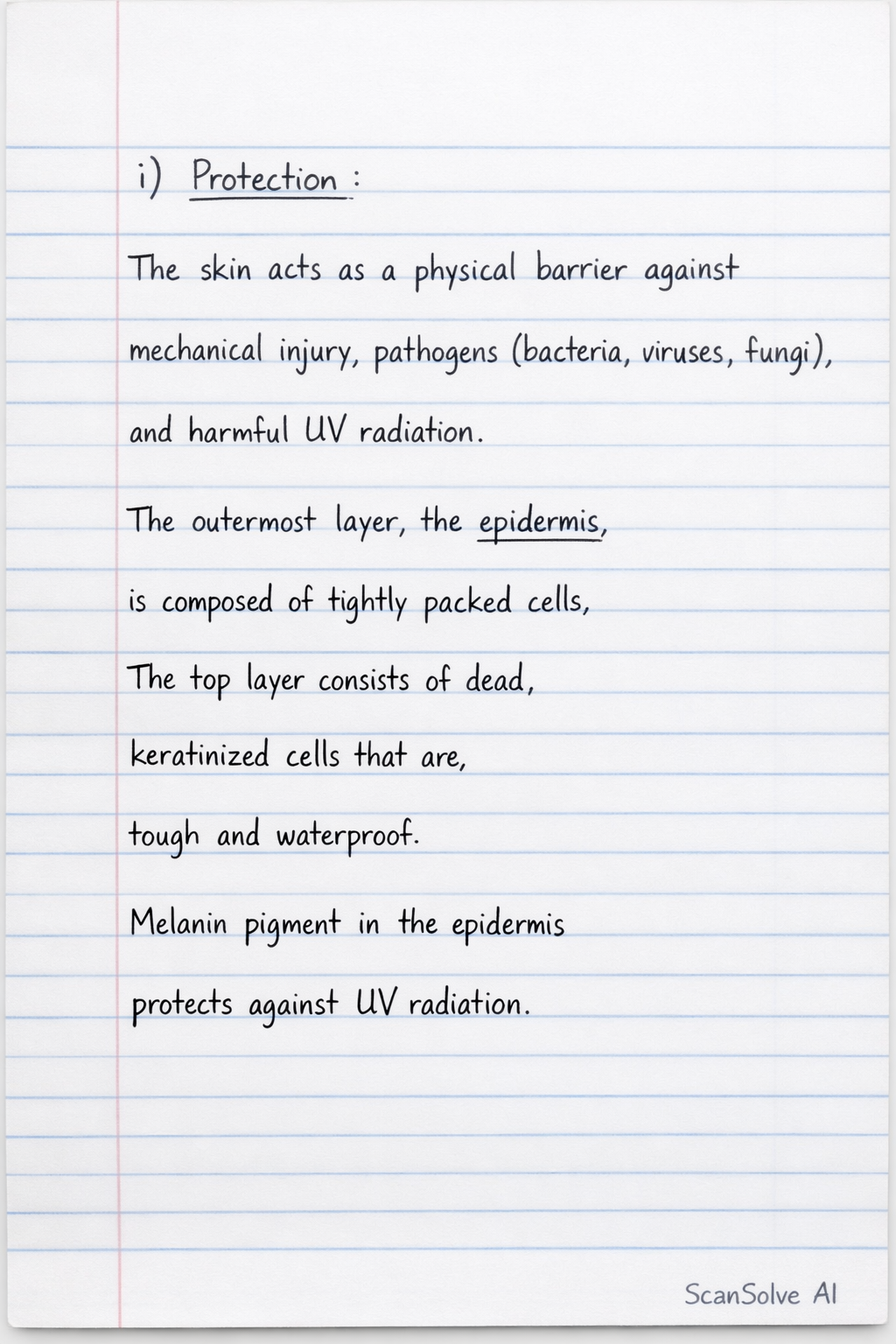
i) Protection:
The skin acts as a physical barrier against mechanical injury, pathogens (bacteria, viruses, fungi), and harmful UV radiation. The outermost layer, the epidermis, is composed of tightly packed cells, with the top layer being dead, keratinized cells that are tough and waterproof. Melanin pigment in the epidermis protects against UV radiation.
ii) Temperature regulation:
The skin helps regulate body temperature through several mechanisms:
- Sweat production: When the body is hot, sweat glands produce sweat, which evaporates from the skin surface, carrying away heat and cooling the body.
- Vasodilation/Vasoconstriction: Blood vessels in the dermis can dilate (widen) to increase blood flow to the skin surface, allowing more heat to radiate away from the body. Conversely, they constrict (narrow) to reduce blood flow and conserve heat when the body is cold.
- Hair erection: In cold conditions, tiny muscles attached to hair follicles contract, causing hairs to stand upright. This traps a layer of air close to the skin, providing insulation.
iii) Excretion:
The skin plays a minor role in excretion through sweat. Sweat primarily consists of water, but it also contains small amounts of metabolic waste products such as urea, salts (like sodium chloride), and lactic acid. While the kidneys are the primary excretory organs, the skin contributes to the removal of these wastes.
Still stuck on this one?
Ask a follow-up, and the answer starts from this question.
More Biology Questions
Handwritten Step-by-Step Solution
Get this as a handwritten image on WhatsApp — like a tutor wrote it for you.
Try on WhatsApp