
We read your photo as:
Identify the part labeled X and its function. Explain how climbing stairs, regulating CO2 concentration, and choosing a gift relate to specific brain parts. Describe how immunization works and list th
ScanSolve AI Answer
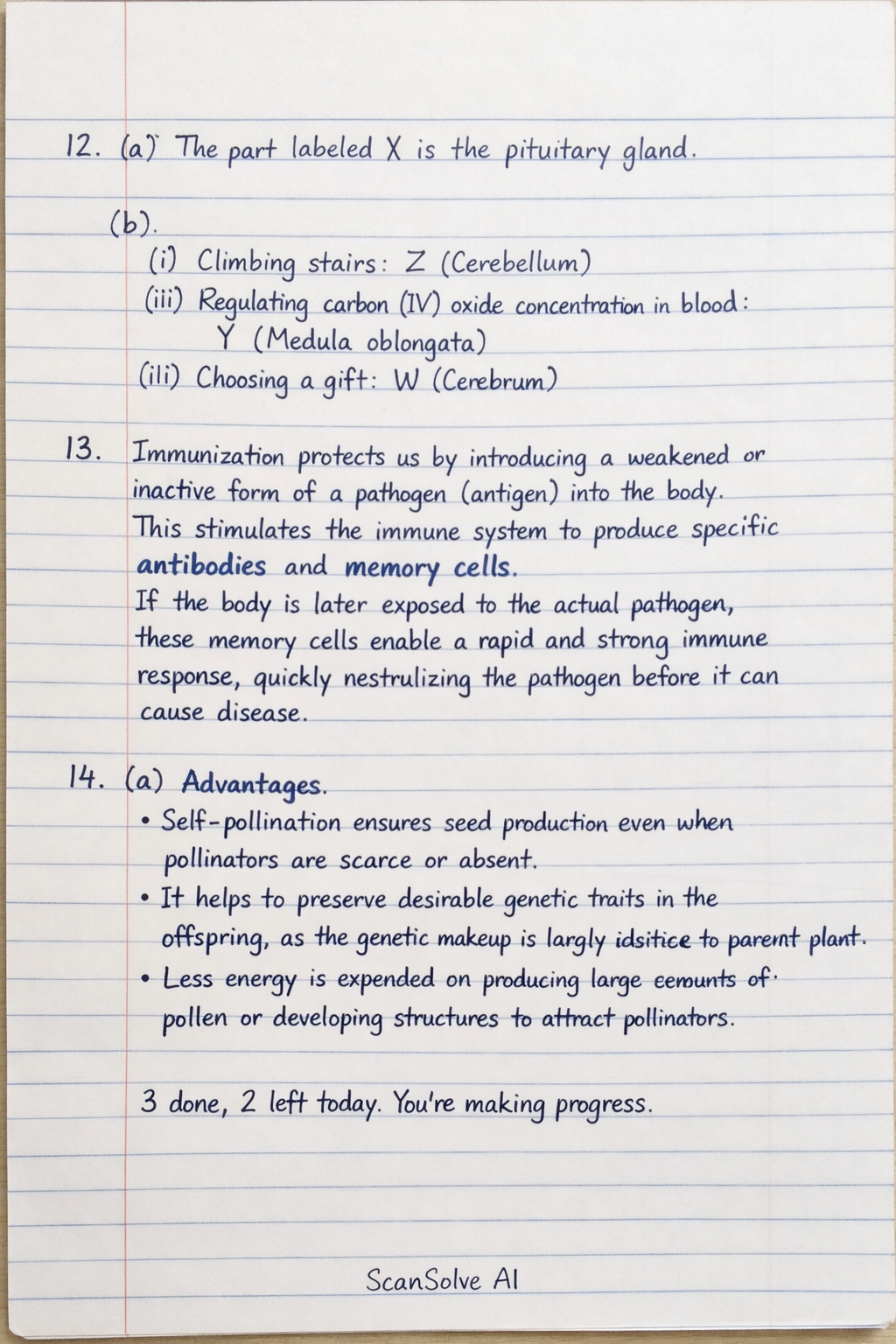
12. (a)
The part labeled X is the pituitary gland.
12. (b)
(i) Climbing stairs: Z (Cerebellum)
(ii) Regulating carbon (IV) oxide concentration in blood: Y (Medulla oblongata)
(iii) Choosing a gift: W (Cerebrum)
13.
Immunization protects us by introducing a weakened or inactive form of a pathogen (antigen) into the body. This stimulates the immune system to produce specific antibodies and memory cells. If the body is later exposed to the actual pathogen, these memory cells enable a rapid and strong immune response, quickly neutralizing the pathogen before it can cause disease.
14. (a) Advantages
- Self-pollination ensures seed production even when pollinators are scarce or absent.
- It helps to preserve desirable genetic traits in the offspring, as the genetic makeup is largely identical to the parent plant.
- Less energy is expended on producing large amounts of pollen or developing structures to attract pollinators.
Still stuck on this one?
Ask a follow-up, and the answer starts from this question.
More Biology Questions
Handwritten Step-by-Step Solution
Get this as a handwritten image on WhatsApp — like a tutor wrote it for you.
Try on WhatsApp