
We read your photo as:
Its a biology paperwork
Biology
ScanSolve AI Answer
a) The specialized cells shown are:
- A: Red blood cells (Erythrocytes)
- B: White blood cells (specifically a Neutrophil)
- C: Sperm cell
b) The cells are modified as follows to perform their specific functions:
- Red blood cells (A) are biconcave discs and lack a nucleus and most organelles. This modification maximizes space for hemoglobin, allowing them to efficiently transport oxygen throughout the body.
- White blood cells (B, specifically neutrophils) have a lobed nucleus and are capable of amoeboid movement. This allows them to squeeze through blood vessel walls and move to sites of infection, where they perform phagocytosis to engulf and destroy pathogens.
- Sperm cells (C) have a long tail (flagellum) for motility, enabling them to swim towards the egg. They also possess an acrosome containing enzymes to penetrate the egg and numerous mitochondria in the midpiece to provide energy for movement.
c) If the blood cells labeled B (white blood cells, specifically neutrophils) are damaged, the patient's immune system would be severely compromised. This would lead to a reduced ability to fight off infections, making the patient highly susceptible to various diseases and illnesses.
d) Plant and animal cells differ in several key ways:
- Cell wall: Plant cells have a rigid cell wall made of cellulose outside the cell membrane, providing structural support and protection. Animal cells lack a cell wall.
- Chloroplasts: Plant cells contain chloroplasts for photosynthesis, allowing them to produce their own food. Animal cells do not have chloroplasts.
- Vacuole: Plant cells typically have one large, central vacuole that stores water, nutrients, and waste, and helps maintain turgor pressure. Animal cells may have small, temporary vacuoles or none at all.
- Shape: Plant cells have a fixed, often rectangular shape due to the cell wall. Animal cells have a more flexible and often rounded or irregular shape.
Was this helpful?
Still stuck on this one?
Ask a follow-up, and the answer starts from this question.
Got a different question?Ask your own question
More Biology Questions
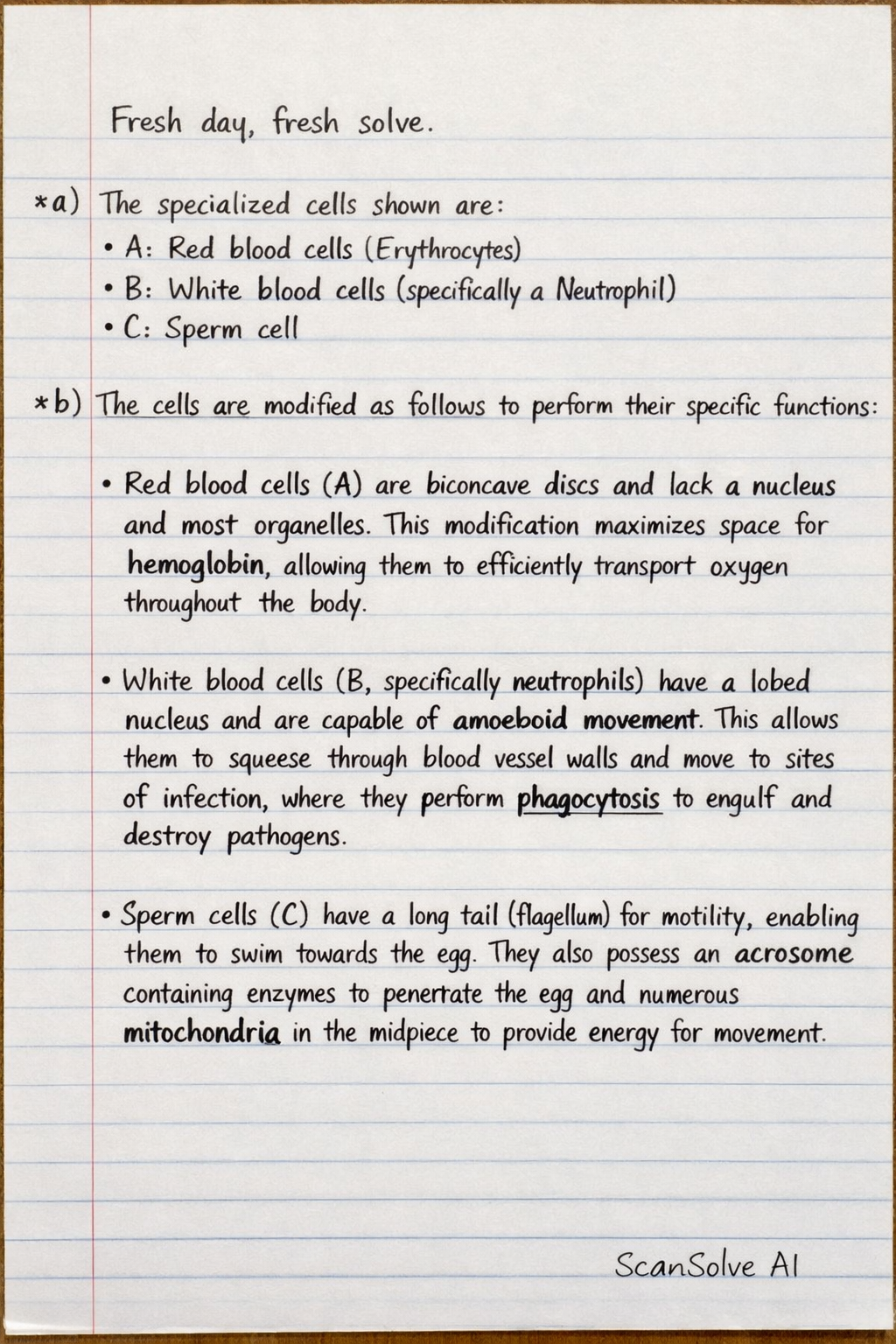
Handwritten Step-by-Step Solution
Get this as a handwritten image on WhatsApp — like a tutor wrote it for you.
Try on WhatsApp