
We read your photo as:
Define late-onset neonatal sepsis, list 5 predisposing factors, and describe the management of baby Luboono using the Sepsis 6 protocol.
ScanSolve AI Answer
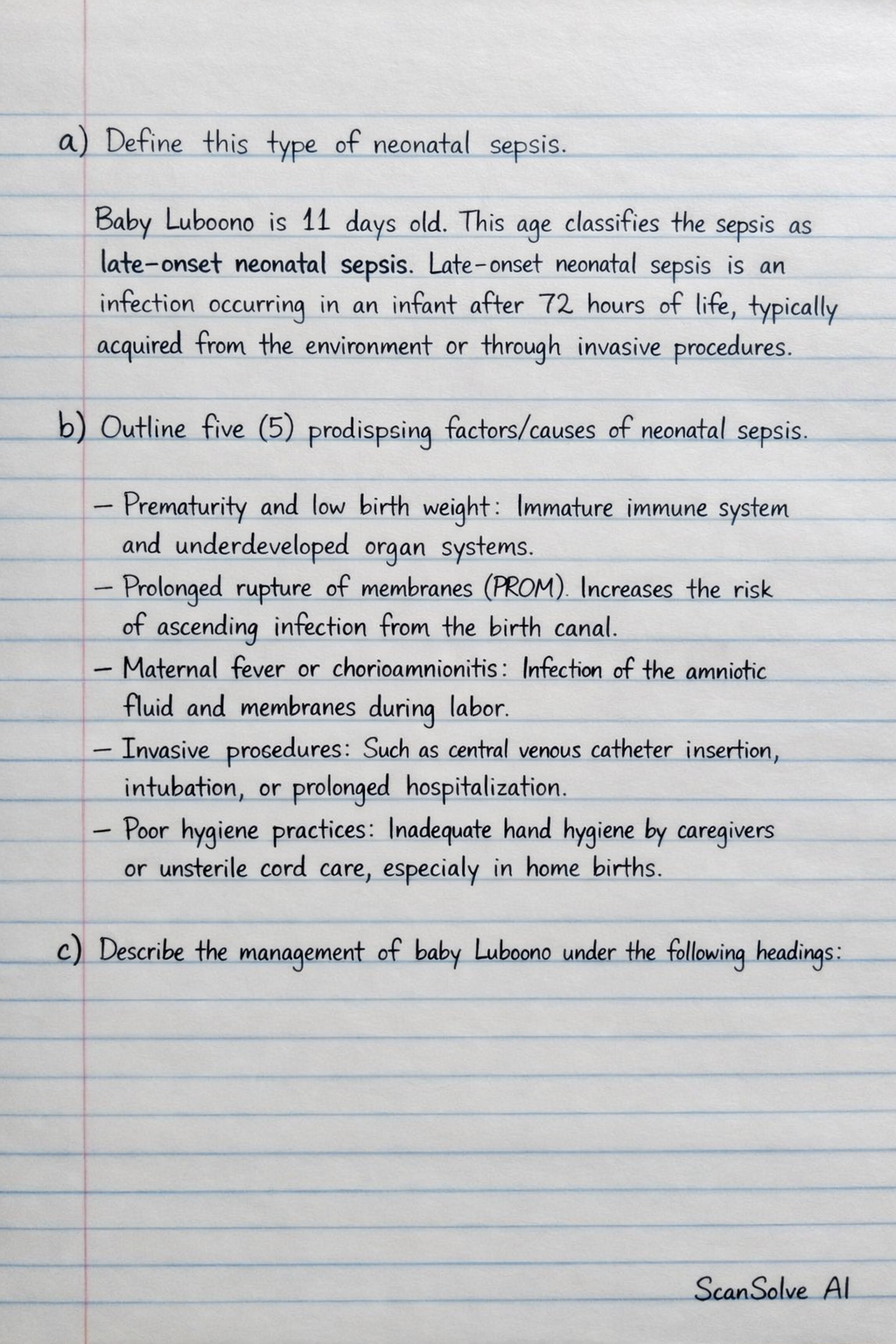
a) Define this type of neonatal sepsis
Baby Luboono is 11 days old. This age classifies the sepsis as late-onset neonatal sepsis. Late-onset neonatal sepsis is an infection occurring in an infant after 72 hours of life, typically acquired from the environment or through invasive procedures.
b) Outline five (5) predisposing factors/causes of neonatal sepsis
Five predisposing factors to neonatal sepsis are:
- Prematurity and low birth weight: Immature immune system and underdeveloped organ systems.
- Prolonged rupture of membranes (PROM): Increases the risk of ascending infection from the birth canal.
- Maternal fever or chorioamnionitis: Infection of the amniotic fluid and membranes during labor.
- Invasive procedures: Such as central venous catheter insertion, intubation, or prolonged hospitalization.
- Poor hygiene practices: Inadequate hand hygiene by caregivers or unsterile cord care, especially in home births.
c) Describe the management of baby Luboono under the following headings
Sepsis 6 protocol
The Sepsis 6 protocol for baby Luboono, adapted for a neonate, would involve:
- Oxygen: Administer oxygen to maintain adequate saturation, especially given cold extremities and unresponsiveness.
- Fluids: Administer an intravenous fluid bolus (e.g., normal saline) to address hypovolemia and improve perfusion.
- Antibiotics: Initiate broad-spectrum intravenous antibiotics immediately after blood cultures are taken, covering common neonatal pathogens (e.g., Ampicillin and Gentamicin).
- Blood cultures: Obtain blood samples for culture to identify the causative organism and guide targeted antibiotic therapy.
- Glucose management: Administer intravenous dextrose immediately to correct severe hypoglycemia (1.1 mmol/L) and maintain normoglycemia.
- Monitor vital signs and urine output: Closely monitor heart rate, respiratory rate, blood pressure, temperature, and urine output to assess response to treatment and organ perfusion.
Neonatal care
General neonatal care for baby Luboono would include:
- Thermal regulation: Place the baby in an incubator or under a radiant warmer to maintain a stable core body temperature and prevent hypothermia.
- Respiratory support: Monitor respiratory effort and oxygen saturation. Provide respiratory support (e.g., nasal cannula oxygen, CPAP, or mechanical ventilation) as needed.
- Cardiovascular support: Monitor for signs of shock. Administer further fluid boluses or inotropic support if hypotension persists despite initial fluid resuscitation.
- Nutritional support: Initiate enteral feeding (breast milk or formula) as soon as the baby is stable and able to tolerate it. If not tolerated, consider parenteral nutrition.
- Electrolyte and acid-base balance: Monitor serum electrolytes and blood gases, correcting any imbalances.
- Infection control: Implement strict hand hygiene and aseptic techniques during all procedures to prevent further infections.
- Monitoring: Continuous monitoring of vital signs, neurological status, and laboratory parameters (e.g., complete blood count, C-reactive protein, electrolytes, bilirubin).
d) Outline the postnatal examination of a male baby weighing 4.5kg at day six (6) after delivery
A postnatal examination of a 6-day-old male baby weighing 4.5 kg (which is large for gestational age) should include:
- General appearance: Assess alertness, activity, skin color (checking for jaundice, pallor, or cyanosis), hydration status, and overall well-being.
- Measurements: Record current weight (comparing to birth weight to assess feeding and hydration), length, and head circumference.
- Head and face: Examine fontanelles (size, tension), sutures, presence of molding, caput succedaneum or cephalohematoma. Check eyes for red reflex, discharge, and symmetry. Examine ears for position and patency. Inspect nose for patency and mouth for palate integrity, tongue tie, and signs of thrush.
- Neck: Palpate for masses and assess range of motion.
- Chest: Observe respiratory rate and effort. Auscultate lung fields for clear breath sounds and heart for rate, rhythm, and presence of murmurs. Check for breast bud development.
- Abdomen: Inspect for distension. Auscultate for bowel sounds. Palpate for organomegaly (liver, spleen) and masses. Examine the umbilical stump for healing and any signs of infection.
- Genitalia: For a male, check for descended testes in the scrotum, position of the urethral meatus (hypospadias/epispadias), and presence of hydrocele.
- Anus: Confirm patency and history of meconium passage.
- Spine: Inspect for any dimples, tufts of hair, or abnormal curvatures along the vertebral column.
- Extremities: Assess symmetry, range of motion, tone, and presence of any deformities. Perform Ortolani and Barlow maneuvers to check for hip stability.
- Neurological assessment: Evaluate muscle tone, primitive reflexes (e.g., Moro, grasp, suck), and response to stimuli.
- Skin: Inspect for rashes, birthmarks, and any signs of infection or injury. Assess for jaundice using Kramer's rule.
Still stuck on this one?
Ask a follow-up, and the answer starts from this question.
More Biology Questions
Handwritten Step-by-Step Solution
Get this as a handwritten image on WhatsApp — like a tutor wrote it for you.
Try on WhatsApp