
We read your photo as:
Match the conditions in Column A with their corresponding descriptions or examples in Column B. Also, list the key risk factors of Non-Communicable Diseases and explain 'swelling' in heart failure.
Biology
ScanSolve AI Answer
Here are the solutions to the questions:
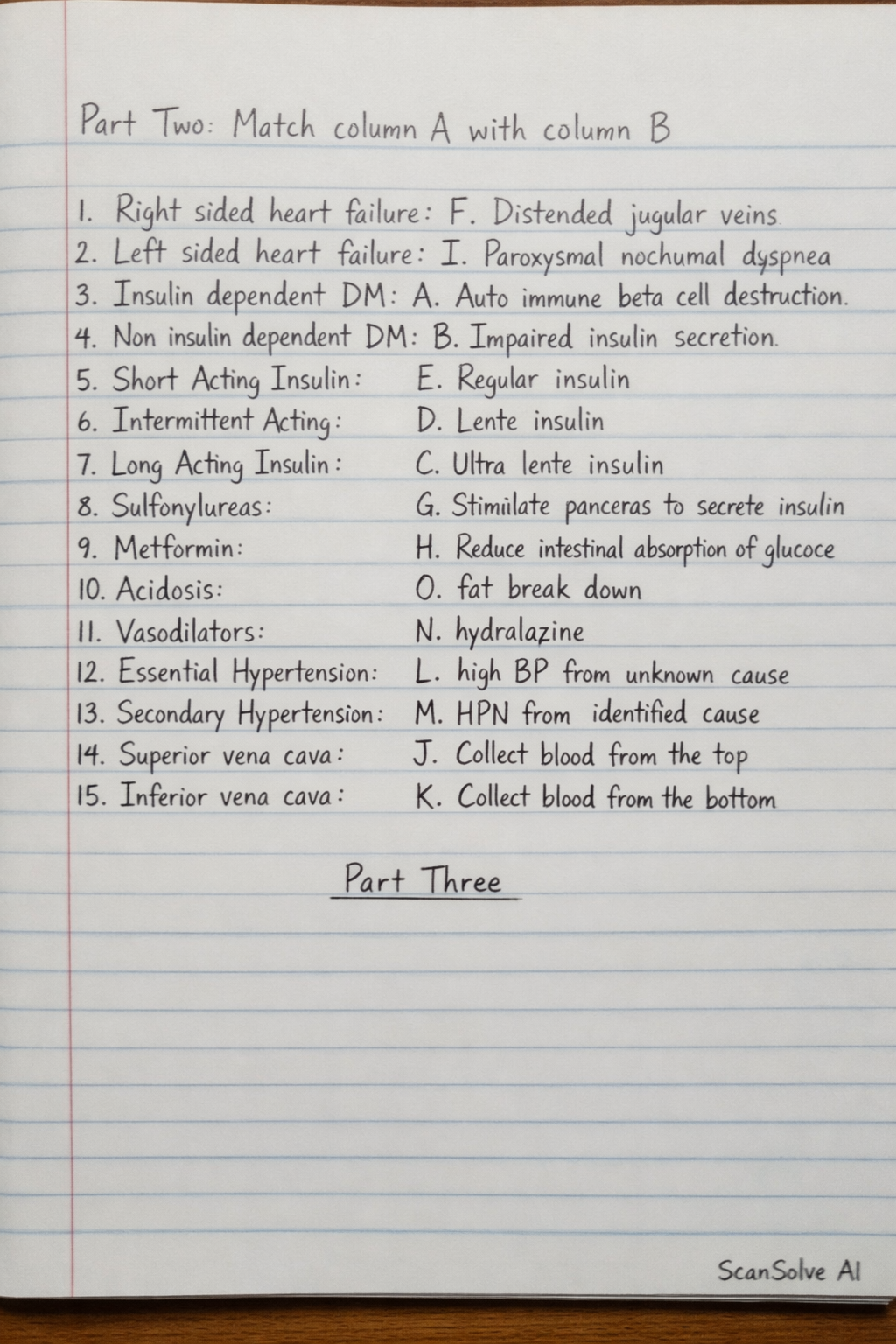
Part Two: Match column A with column B
- Right sided heart failure: F. Distended jugular veins
- Left sided heart failure: I. Paroxysmal nocturnal dyspnea
- Insulindependent DM: A. Auto immune beta cell destruction
- Non insulin dependent DM: B. Impaired insulin secretion
- Short Acting Insulin: E. Regular insulin
- Intermittent Acting: D. Lente insulin
- Long Acting Insulin: C. Ultra lente insulin
- Sulfonylureas: G. Stimulate pancreas to secrete insulin
- Metformin: H. Reduce intestinal absorption of glucose
- Acidosis: O. fat break down
- Vasodilators: N. hydralazine
- essential Hypertension: L. high BP from unknown cause
- Secondary Hypertension: M. HPN from identified cause
- Superior vena cava: J. Collect blood from the top
- Inferior vena Cava: K. Collect blood from the bottom
Part Three
-
Key risk factors of Non-Communicable Diseases (Non-CD) include:
- Lifestyle factors: such as unhealthy diet, physical inactivity, tobacco use, and excessive alcohol consumption.
- Environmental factors: like air pollution and exposure to certain toxins.
- Genetic factors: including a family history of specific diseases.
-
In the context of heart failure:
- SWELLING refers to edema, which is the accumulation of fluid in body tissues, often seen in the legs and ankles (peripheral edema) due to right-sided heart failure, or in the lungs (pulmonary edema) due to left-sided heart failure.
- DROWNING sign refers to severe dyspnea (shortness of breath) or the sensation of suffocating due to fluid buildup in the lungs, known as pulmonary edema, a critical symptom of left-sided heart failure.
-
The connection between Hypertension and Diabetes Mellitus (DM) is significant:
- Both conditions are common and often coexist, sharing risk factors like obesity and sedentary lifestyle.
- DM can damage blood vessels and kidneys, leading to or worsening hypertension.
- Hypertension, in turn, can accelerate the progression of diabetic complications, particularly affecting the kidneys, eyes, and cardiovascular system.
Was this helpful?
Still stuck on this one?
Ask a follow-up, and the answer starts from this question.
Got a different question?Ask your own question
More Biology Questions
QMatch the terms in Column A with their descriptions in Column B.QMatch the descriptions in COLUMN A to the terms in COLUMN B.QMatch the word in column A with the explanation in column B.QMatch the words in Column 'A' with their meanings in Column 'B'.
Browse by topic:Anatomy
Handwritten Step-by-Step Solution
Get this as a handwritten image on WhatsApp — like a tutor wrote it for you.
Try on WhatsApp