
We read your photo as:
Define anaphylaxis, list three signs/symptoms, and explain the use of adrenaline, hydrocortisone, and promethazine in its treatment.
ScanSolve AI Answer
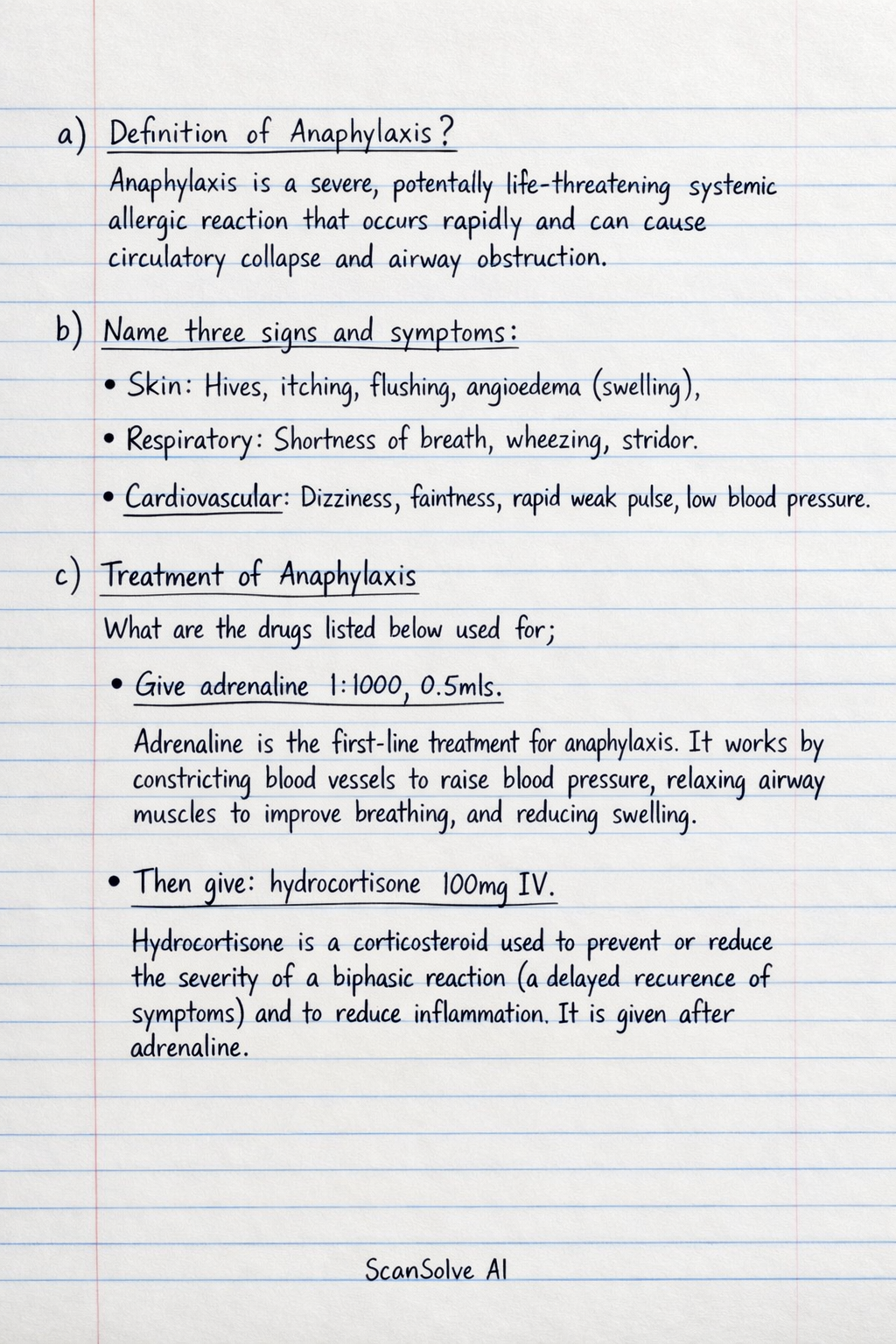
a) Definition of Anaphylaxis?
Anaphylaxis is a severe, potentially life-threatening systemic allergic reaction that occurs rapidly and can cause circulatory collapse and airway obstruction.
b) Name three signs and symptoms:
- Skin: Hives, itching, flushing, angioedema (swelling).
- Respiratory: Shortness of breath, wheezing, stridor.
- Cardiovascular: Dizziness, faintness, rapid weak pulse, low blood pressure.
c) Treatment of Anaphylaxis
What are the drugs listed below used for;
-
Give adrenaline 1:1000, 0.5mls. Adrenaline is the first-line treatment for anaphylaxis. It works by constricting blood vessels to raise blood pressure, relaxing airway muscles to improve breathing, and reducing swelling.
-
Then give; hydrocortisone 100mg IV. Hydrocortisone is a corticosteroid used to prevent or reduce the severity of a biphasic reaction (a delayed recurrence of symptoms) and to reduce inflammation. It is given after adrenaline.
-
Promethazine (Phenergran) 25mg tds for 5 days. Promethazine is an antihistamine used to relieve skin symptoms like itching and hives. It does not treat the life-threatening respiratory or cardiovascular symptoms of anaphylaxis but can be used as an adjunct.
Still stuck on this one?
Ask a follow-up, and the answer starts from this question.
More Biology Questions
Handwritten Step-by-Step Solution
Get this as a handwritten image on WhatsApp — like a tutor wrote it for you.
Try on WhatsApp