
We read your photo as:
Outline the key aspects of a Liver Function Test, including its definition, reasons for performance, and common enzymatic parameters.
ScanSolve AI Answer
This looks like a study outline. Let's break down the first major topic:
Liver Function Test
-
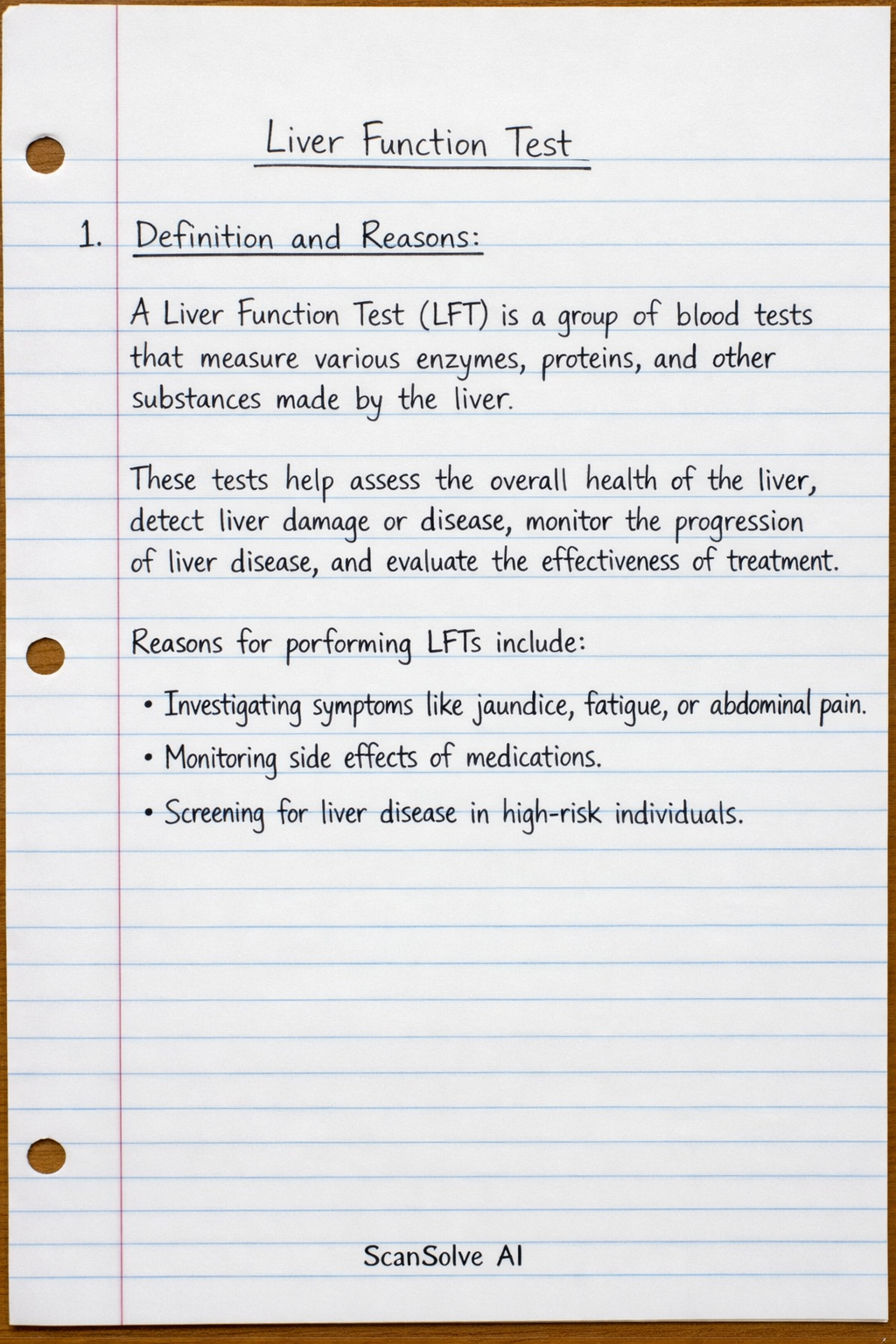
Definition and Reasons: A Liver Function Test (LFT) is a group of blood tests that measure various enzymes, proteins, and other substances made by the liver. These tests help assess the overall health of the liver, detect liver damage or disease, monitor the progression of liver disease, and evaluate the effectiveness of treatment. Reasons for performing LFTs include investigating symptoms like jaundice, fatigue, or abdominal pain, monitoring side effects of medications, and screening for liver disease in high-risk individuals.
-
Enzymatic Parameters: Key enzymatic parameters commonly included in LFTs are:
- Alanine aminotransferase (ALT): Primarily found in the liver; elevated levels often indicate liver cell damage.
- Aspartate aminotransferase (AST): Found in the liver, heart, muscles, and kidneys; elevated levels can indicate liver damage but are less specific than ALT.
- Alkaline phosphatase (ALP): Found in the liver, bone, intestines, and placenta; elevated levels can indicate bile duct obstruction or bone disease.
- Gamma-glutamyl transferase (GGT): Found in the liver, bile ducts, and kidneys; elevated levels often indicate liver or bile duct damage, especially in alcohol-related liver disease.
-
Normal Ranges (Increase and Decrease): Normal ranges for LFT parameters vary slightly between laboratories.
- Increased levels of ALT, AST, ALP, and GGT typically indicate liver cell injury, inflammation, or bile duct obstruction. For example, significantly elevated ALT and AST suggest acute hepatitis, while elevated ALP and GGT often point to cholestasis.
- Decreased levels are less common clinically but can sometimes be seen in conditions like severe liver disease (e.g., very low albumin indicates impaired liver synthesis) or certain genetic disorders.
Still stuck on this one?
Ask a follow-up, and the answer starts from this question.
More Biology Questions
Handwritten Step-by-Step Solution
Get this as a handwritten image on WhatsApp — like a tutor wrote it for you.
Try on WhatsApp