

This biology question covers important biological concepts and processes. The step-by-step explanation below helps you understand the underlying mechanisms and reasoning.
ScanSolve AI Answer
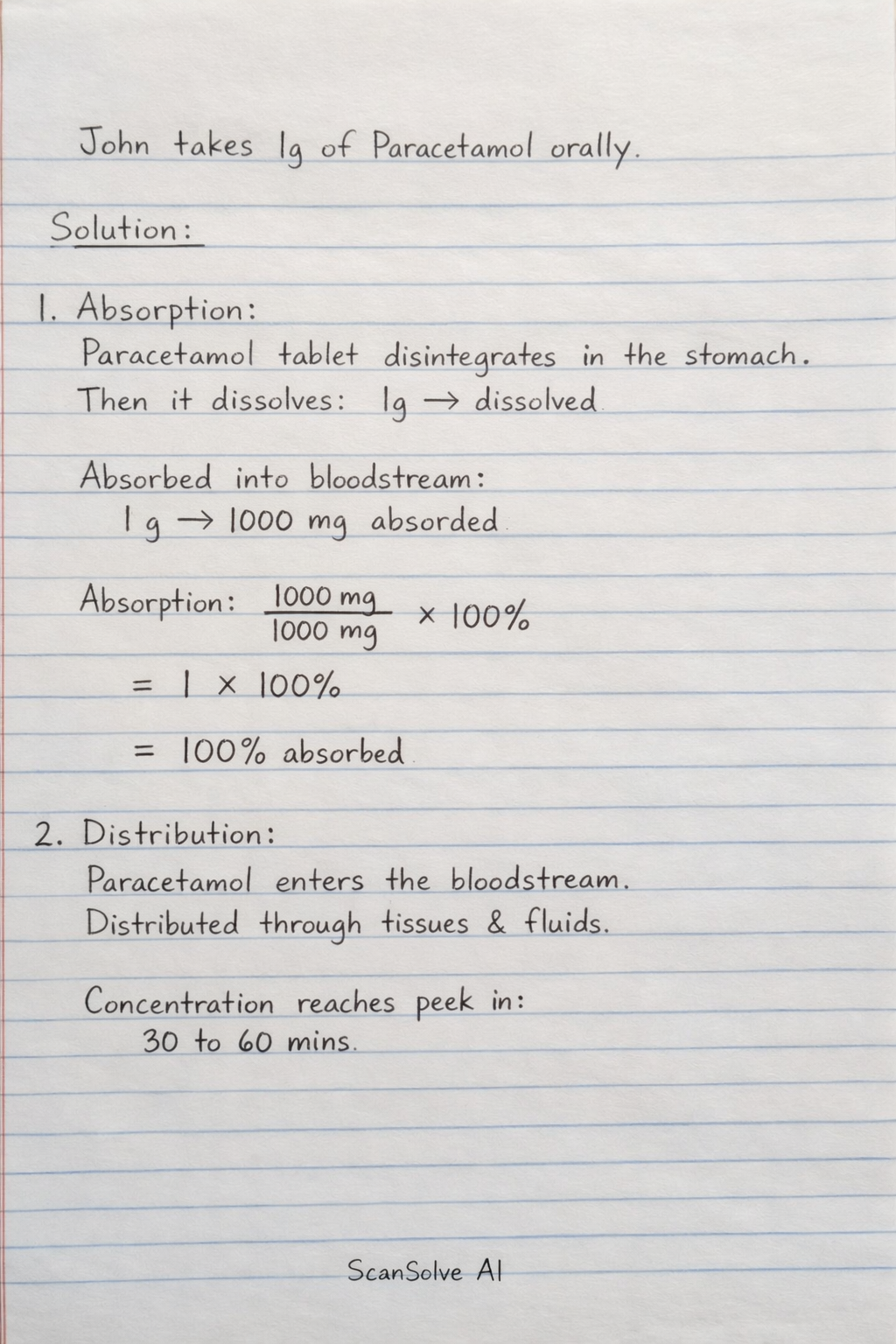
Hey — ready when you are. When John takes 1g Paracetamol orally, it undergoes several breakdown processes in his body: 1. Absorption: The paracetamol tablet first disintegrates in the stomach and then dissolves. The active drug is then rapidly and almost completely absorbed from the gastrointestinal tract, primarily the small intestine, into the bloodstream. 2. Distribution: Once in the bloodstream, paracetamol is distributed throughout the body's tissues and fluids, reaching its target sites to exert its pain-relieving effects. Peak concentrations in the blood are typically reached within 30-60 minutes. 3. Metabolism (Biotransformation): The primary site of paracetamol breakdown is the liver. The majority (85-90%) is metabolized through conjugation reactions, mainly glucuronidation and sulfation, forming inactive, water-soluble metabolites. A small portion (5-10%) is metabolized by the cytochrome P450 enzyme system to a highly reactive and potentially toxic intermediate called N-acetyl-p-benzoquinone imine (NAPQI). Under normal doses, NAPQI is quickly detoxified by conjugation with glutathione to form non-toxic compounds. 4. Excretion: The inactive, water-soluble metabolites (glucuronide, sulfate, and glutathione conjugates) are then primarily excreted from the body via the kidneys in the urine. A very small amount of unchanged paracetamol is also excreted. Send me the next one 📸