
We read your photo as:
Describe the role of the kidneys in the regulation of the following occurrences: i. Low blood volume and pressure ii. High blood volume pressure
ScanSolve AI Answer
A. Describe the role of the kidneys in the regulation of the following occurrences:
-
i. Low blood volume and pressure When blood volume and pressure are low, the kidneys release renin from the juxtaglomerular apparatus. Renin initiates the Renin-Angiotensin-Aldosterone System (RAAS), leading to the production of angiotensin II. Angiotensin II causes vasoconstriction, increasing blood pressure, and stimulates the release of aldosterone and Antidiuretic Hormone (ADH). Aldosterone promotes sodium and water reabsorption, while ADH promotes water reabsorption, both increasing blood volume and pressure.
-
ii. High blood volume and pressure When blood volume and pressure are high, the kidneys respond by increasing the glomerular filtration rate (GFR) to excrete more fluid. The heart also releases Atrial Natriuretic Peptide (ANP), which inhibits renin, aldosterone, and ADH release. ANP promotes vasodilation and increases sodium and water excretion (natriuresis and diuresis), thereby reducing blood volume and pressure.
B. Mr. Asante, a 53-year-old farmer has been diagnosed with hypertension secondary to dysuria and has been admitted for three days. On the day of discharge, nurse Abigail advises him on his dietary intake and lifestyle. She focuses more on the reduction of salt intake and avoidance of stress.
-
i. What is the physiologic relationship between dysuria and hypertension Dysuria, or painful urination, can be a symptom of underlying kidney issues or urinary tract infections. Chronic kidney conditions can impair the kidneys' ability to regulate fluid and electrolyte balance, leading to increased blood volume and activation of the RAAS, which contributes to the development or worsening of hypertension.
-
ii. Explain why Mr. Asante is advised by the nurse to reduce stress and salt intake Reducing salt intake is crucial because high sodium levels cause the body to retain more water, increasing blood volume and consequently elevating blood pressure. Avoiding stress is important as stress activates the sympathetic nervous system, leading to the release of hormones like adrenaline that cause vasoconstriction and increased heart rate, both of which raise blood pressure and exacerbate hypertension.
C.
-
i. Explain the two major ways by which the nephron of a healthy person prevents drastic changes in the glomerular filtration rate (GFR) when blood pressure rises. The nephron uses renal autoregulation to maintain a stable GFR.
- Myogenic mechanism: When blood pressure rises, the afferent arteriole stretches, causing its smooth muscle to constrict. This constriction reduces blood flow into the glomerulus, preventing a drastic increase in GFR.
- Tubuloglomerular feedback: Increased blood pressure leads to a faster flow of filtrate through the renal tubule, which is detected by the macula densa cells. These cells release vasoconstrictors that cause the afferent arteriole to constrict, thereby reducing GFR back to normal levels.
-
ii. What is the role of the net filtration pressure (NFP)? The net filtration pressure (NFP) is the total pressure that drives fluid and solutes from the glomerular capillaries into Bowman's capsule. It represents the sum of all hydrostatic and oncotic pressures acting across the glomerular membrane, determining the rate of filtrate formation.
-
iii. What does creatinine clearance evaluate in a patient or healthy person? Creatinine clearance is a measure used to estimate the glomerular filtration rate (GFR). It assesses how efficiently the kidneys are filtering waste products, specifically creatinine, from the blood, thereby providing an indication of overall kidney function.
Still stuck on this one?
Ask a follow-up, and the answer starts from this question.
More Biology Questions
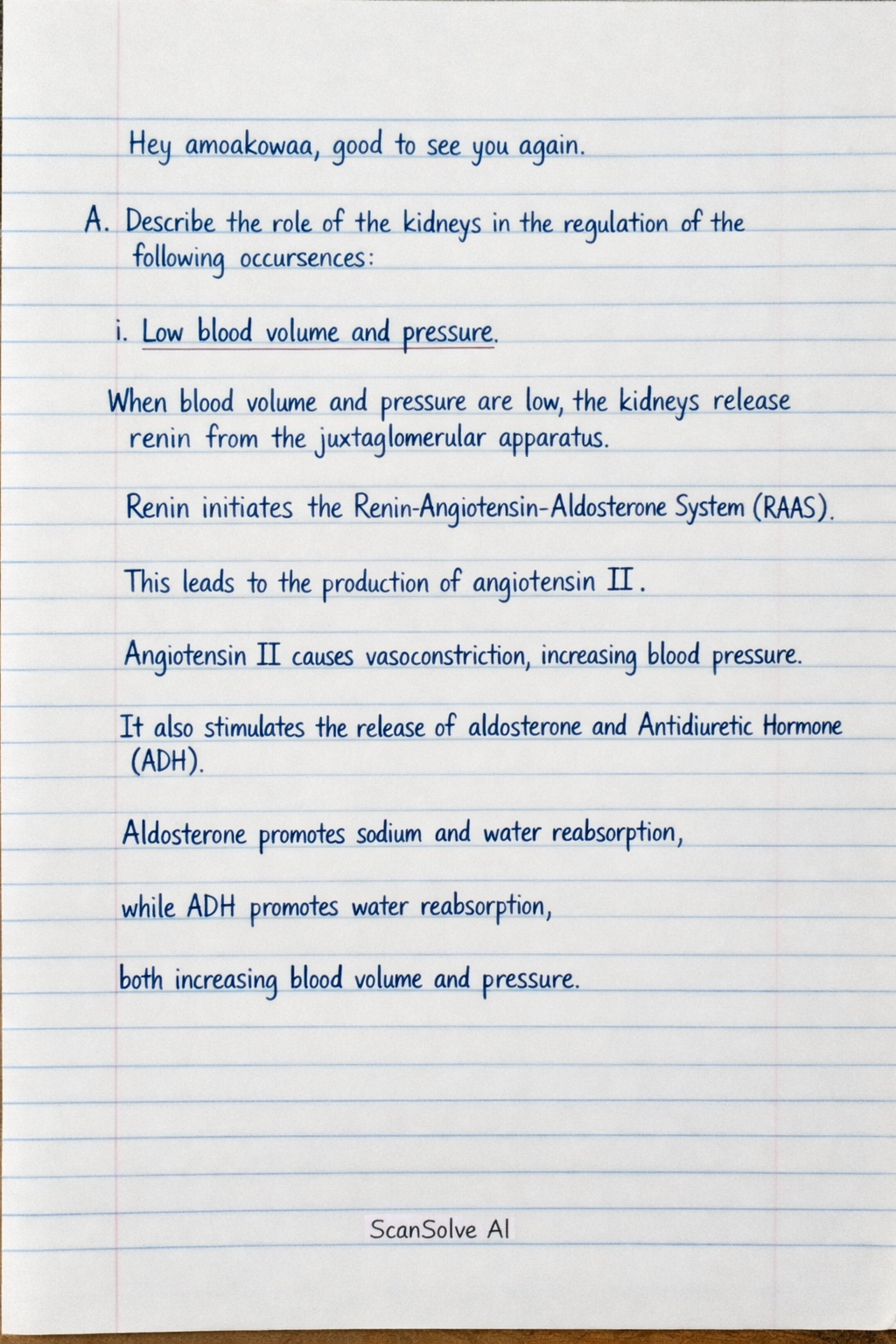
Handwritten Step-by-Step Solution
Get this as a handwritten image on WhatsApp — like a tutor wrote it for you.
Try on WhatsApp