
We read your photo as:
Explain the roles and importance of soil organisms, and list human activities that affect them.
ScanSolve AI Answer
Step-by-step solution
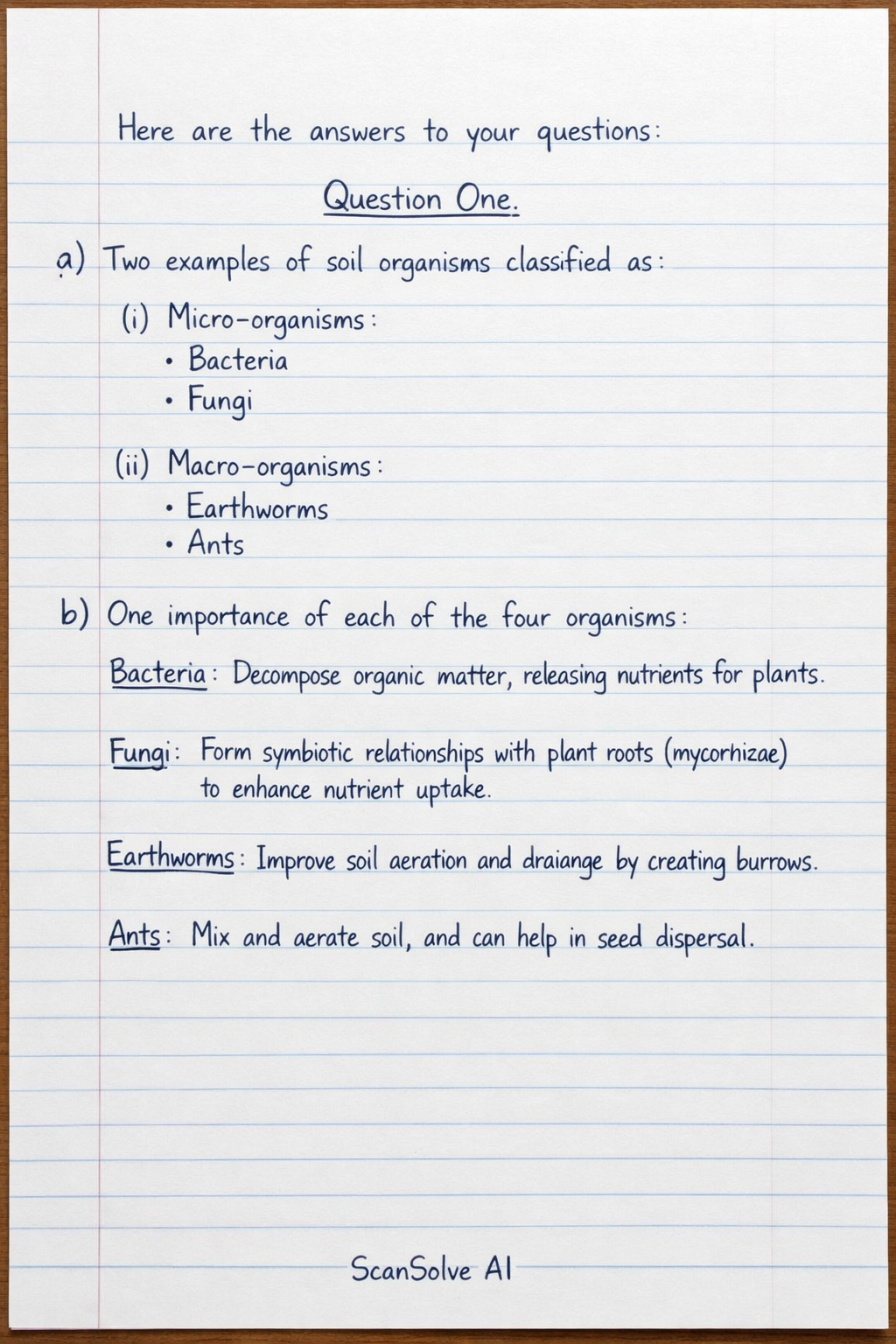
4 stepsHere are the answers to your questions:
Question One
a) Two examples of soil organisms classified as:
- (i) Micro-organisms:
- Bacteria
- Fungi
- (ii) Macro-organisms:
- Earthworms
- Ants
b) One importance of each of the four organisms:
- Bacteria: Decompose organic matter, releasing nutrients for plants.
- Fungi: Form symbiotic relationships with plant roots (mycorrhizae) to enhance nutrient uptake.
- Earthworms: Improve soil aeration and drainage by creating burrows.
- Ants: Mix and aerate soil, and can help in seed dispersal.
c) Six human activities that affect the diversity and population of soil organisms:
- Use of pesticides and herbicides: These chemicals can directly kill beneficial soil organisms, reducing their populations and diversity.
- Intensive tillage: Frequent and deep plowing disrupts soil structure, destroys habitats, and exposes organisms to predators and harsh environmental conditions.
- Deforestation and land clearing: Removal of vegetation exposes soil to erosion and alters the microclimate, negatively impacting soil organisms.
- Application of synthetic fertilizers: Excessive use can alter soil pH and nutrient balance, favoring certain species while harming others, thus reducing diversity.
- Pollution from industrial and domestic waste: Introduction of heavy metals, plastics, and other toxins into the soil can be lethal to many soil organisms.
- Monoculture farming: Growing a single crop repeatedly reduces the diversity of plant residues, which in turn limits the food sources and habitats for a wide range of soil organisms.
Question Two
a) Two elements required by plants in:
- (i) Large quantities (Macronutrients):
- Nitrogen (N)
- Phosphorus (P)
- (ii) Small quantities (Micronutrients):
- Iron (Fe)
- Boron (B)
b) Two fertilizers which can supply each of the following elements in soil:
- (i) Nitrogen:
- Urea
- Ammonium Sulfate
- (ii) Phosphorus:
- Triple Superphosphate (TSP)
- Diammonium Phosphate (DAP)
c) Given that Urea (()) contains 47.7% Nitrogen and is applied at a rate of 0.05kg/m, calculate:
- (i) The amount of nitrogen in 20kgs of Urea fertilizer.
Calculate the percentage of nitrogen in the urea.
$$ \text{Nitrogen amount} = 47.7\% \times 20\, \text{kg} $$Convert the percentage to a decimal and multiply.
$$ \text{Nitrogen amount} = \frac{47.7}{100} \times 20\, \text{kg} = 0.477 \times 20\, \text{kg} = \boxed{\text{9.54 kg}} $$- (ii) Amount of urea to be applied in a crop field measuring 5m by 10m.
Calculate the area of the crop field.
$$ \text{Area} = \text{length} \times \text{width} = 10\, \text{m} \times 5\, \text{m} = 50\, \text{m}^2 $$Calculate the total amount of urea needed based on the application rate.
$$ \text{Amount of urea} = \text{Area} \times \text{Application rate} = 50\, \text{m}^2 \times 0.05\, \text{kg/m}^2 = \boxed{\text{2.5 kg}} $$- (iii) Other than nitrogen, list three elements supplied by urea.
- Carbon (C)
- Oxygen (O)
- Hydrogen (H)
Question Three
a) One cause of anaemia in pregnant women:
- Iron deficiency (due to increased demand for iron during pregnancy).
b) Explain three effects of anaemia:
- Fatigue and weakness: Reduced oxygen-carrying capacity of blood leads to less energy for body functions, causing persistent tiredness.
- Pale skin and mucous membranes: Lower levels of hemoglobin, which gives blood its red color, result in a noticeable paleness of the skin, gums, and inner eyelids.
- Shortness of breath and dizziness: The body tries to compensate for reduced oxygen by increasing breathing and heart rate, leading to breathlessness, especially during exertion, and lightheadedness.
c) Recommend four foodstuffs for prevention of anaemia:
- Red meat (e.g., beef, lamb)
- Leafy green vegetables (e.g., spinach, kale)
- Legumes (e.g., lentils, beans)
- Citrus fruits (e.g., oranges, lemons) – rich in Vitamin C, which aids iron absorption.
d) Besides anaemia, explain four health challenges faced in your community:
- Malaria: A parasitic disease transmitted by mosquitoes, causing fever, chills, and flu-like illness, leading to significant morbidity and mortality, especially among children and pregnant women.
- HIV/AIDS: A chronic, life-threatening condition caused by the Human Immunodeficiency Virus, which weakens the immune system, making individuals susceptible to opportunistic infections and cancers.
- Diarrheal diseases: Often caused by contaminated food and water, these diseases lead to severe dehydration and are a major cause of death, particularly in young children, due to poor sanitation and hygiene.
- Tuberculosis (TB): A bacterial infection primarily affecting the lungs, spread through the air, causing chronic cough, fever, and weight loss, and remains a significant public health concern due to its infectious nature.
- (iii) Other than nitrogen, list three elements supplied by urea.
Still stuck on this one?
Ask a follow-up, and the answer starts from this question.
More Biology Questions
Handwritten Step-by-Step Solution
Get this as a handwritten image on WhatsApp — like a tutor wrote it for you.
Try on WhatsApp