Study the diagram of a flower below and answer the questions that follow. Write down the LETTER and NAME of the part that produces egg cells.

Biology
Study the diagram of a flower below and answer the questions that follow. Write down the LETTER and NAME of the part that produces egg cells.

ScanSolve AI Answer

Here are the answers to the questions about the flower diagram:

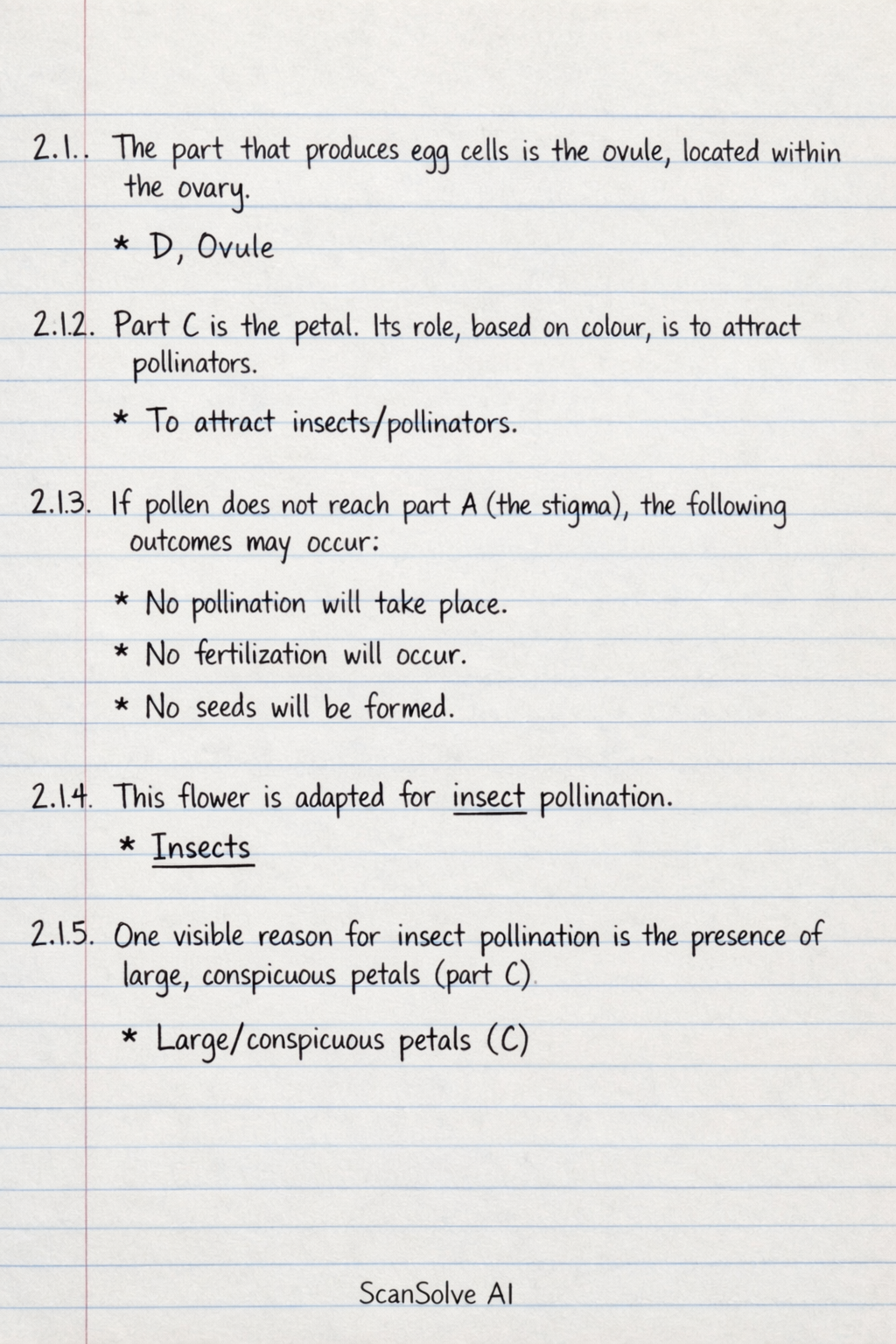
2.1.1 The part that produces egg cells is the ovule, located within the ovary.

  • D, Ovule

2.1.2 Part C is the petal. Its role, based on colour, is to attract pollinators.

  • To attract insects/pollinators.

2.1.3 If pollen does not reach part A (the stigma), the following outcomes may occur:

  • No pollination will take place.
  • No fertilization will occur.
  • No seeds will be formed.

2.1.4 This flower is adapted for insect pollination.

  • Insects

2.1.5 One visible reason for insect pollination is the presence of large, conspicuous petals (part C).

  • Large/conspicuous petals (C)

Send me the next one 📸

Was this helpful?

Need help with your own homework?

Get instant step-by-step solutions to any question. Free to start.

Ask Your Question
Handwritten step-by-step solution preview

Handwritten Step-by-Step Solution

Get this as a handwritten image on WhatsApp — like a tutor wrote it for you.

Try on WhatsApp

Still have questions?

Quick Answer

2.1.1 The part that produces egg cells is the ovule, located within the ovary. D, Ovule 2.1.2 Part C is the petal.

Study the diagram of a flower below and answer the questions that follow. Write down the LETTER and NAME of the part that produces egg cells.
Biology

This biology question covers important biological concepts and processes. The step-by-step explanation below helps you understand the underlying mechanisms and reasoning.

ScanSolve AI Answer
Here are the answers to the questions about the flower diagram: 2.1.1 The part that produces egg cells is the ovule, located within the ovary. D, Ovule 2.1.2 Part C is the petal. Its role, based on colour, is to attract pollinators. To attract insects/pollinators. 2.1.3 If pollen does not reach part A (the stigma), the following outcomes may occur: No pollination will take place. No fertilization will occur. No seeds will be formed. 2.1.4 This flower is adapted for insect pollination. Insects 2.1.5 One visible reason for insect pollination is the presence of large, conspicuous petals (part C). Large/conspicuous petals (C) Send me the next one 📸