
We read your photo as:
What are the answers to questions 39-43, and the explanations for each?
ScanSolve AI Answer
Here are the answers to the multiple-choice questions:
39. Fertilization in animals results directly in the formation of
- B. a zygote
- Fertilization is the fusion of male and female gametes, which directly forms a single cell called a zygote.
40. The biological importance of reproduction in plants is that it
- C. ensures continuity of the species
- Reproduction is the process by which organisms produce offspring, ensuring the survival and continuation of their species.
41. Animals depend on green plants mainly because photosynthesis
- B. produces food and oxygen
- Green plants perform photosynthesis, converting light energy into chemical energy (food) and releasing oxygen, both of which are vital for animal life.
42. Which sequence correctly shows the movement of food through the mammalian alimentary canal?
- B. Mouth oesophagus stomach small intestine
- Food enters through the mouth, passes down the oesophagus to the stomach, and then moves into the small intestine for further digestion and absorption.
43. When a torchlight is switched on, the energy transformation involved is
- A. chemical electrical light
- The batteries in a torch store chemical energy, which is converted into electrical energy. This electrical energy then powers the bulb, converting it into light energy (and some heat).
44. Which property of sound enables us to distinguish between high and low notes?
- D. Frequency
- The pitch of a sound (whether it is high or low) is determined by its frequency. Higher frequency corresponds to a higher pitch, and lower frequency to a lower pitch.
45. The time required for one complete vibration of a wave is called
- D. period
- The period of a wave is defined as the time taken for one complete oscillation or vibration.
46. Which device converts electrical energy to sound energy using an electromagnet?
- C. Loudspeaker
- A loudspeaker uses an electromagnet (voice coil) to move a diaphragm, which vibrates to produce sound waves from electrical signals. An electric bell also uses an electromagnet to produce sound, but a loudspeaker is a more general device for converting electrical signals into varying sound.
47. Gaps are left between railway tracks mainly to
- D. allow for expansion
- Materials expand when heated and contract when cooled. Gaps are left to prevent the tracks from buckling or deforming due to thermal expansion on hot days.
48. Which set of elements represents the major nutrients required by plants for healthy growth?
- A. Nitrogen, phosphorus and potassium
- Nitrogen (N), Phosphorus (P), and Potassium (K) are the three primary macronutrients (often referred to as NPK) that plants require in large quantities for healthy growth.
49. Which property of water involves a chemical change?
- D. Reaction with sodium
- Freezing, boiling, and evaporation are physical changes (changes of state). The reaction of water with sodium involves the formation of new substances (sodium hydroxide and hydrogen gas), which is a chemical change.
50. Which sequence best represents the stages in water treatment?
- A. Sedimentation filtration chlorination
- A common sequence for water treatment involves sedimentation (allowing heavy particles to settle), followed by filtration (removing suspended particles), and finally chlorination (disinfection to kill microorganisms).
Still stuck on this one?
Ask a follow-up, and the answer starts from this question.
More Biology Questions
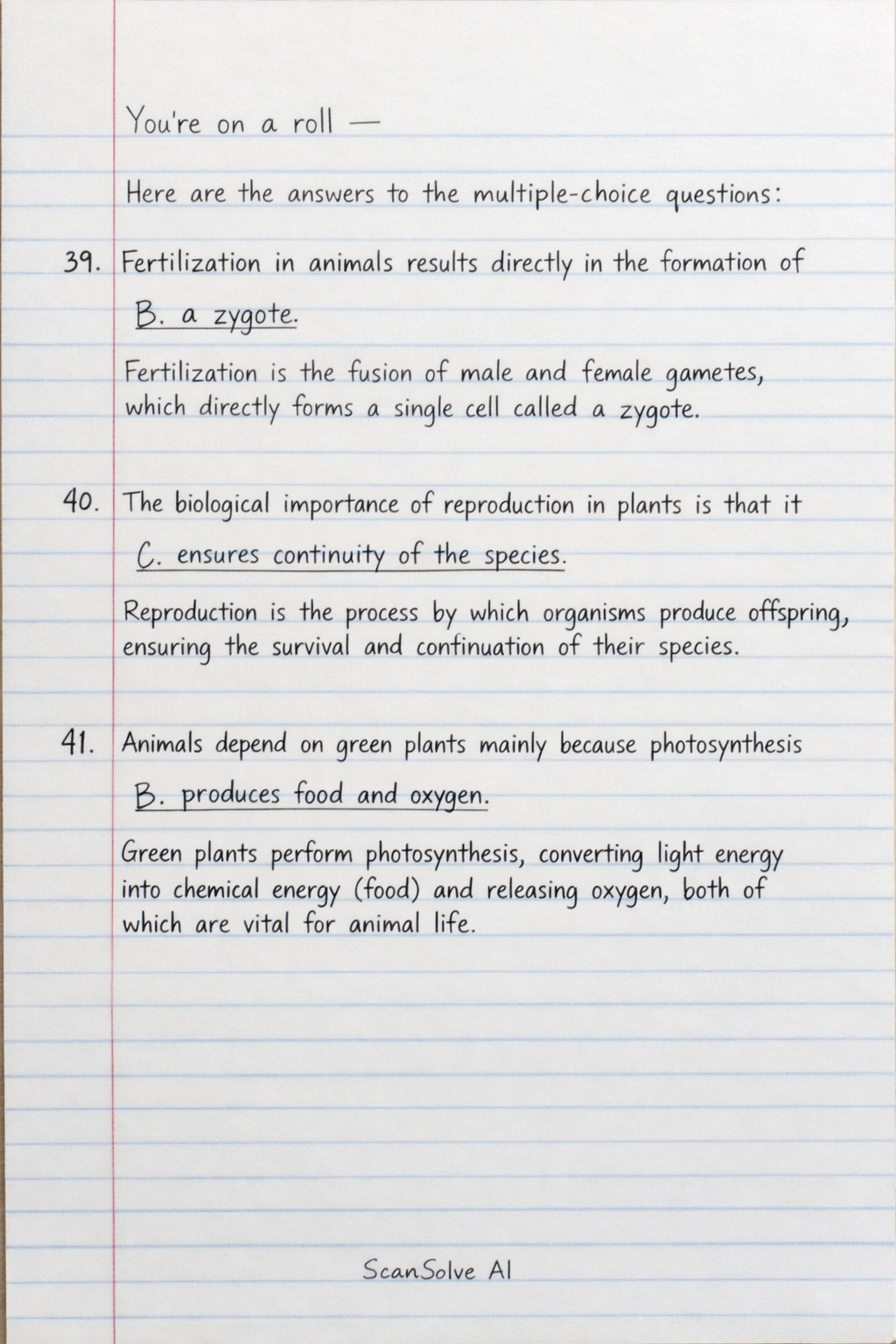
Handwritten Step-by-Step Solution
Get this as a handwritten image on WhatsApp — like a tutor wrote it for you.
Try on WhatsApp