

This law problem is solved step by step below, with detailed explanations to help you understand the method and arrive at the correct answer.
ScanSolve AI Answer
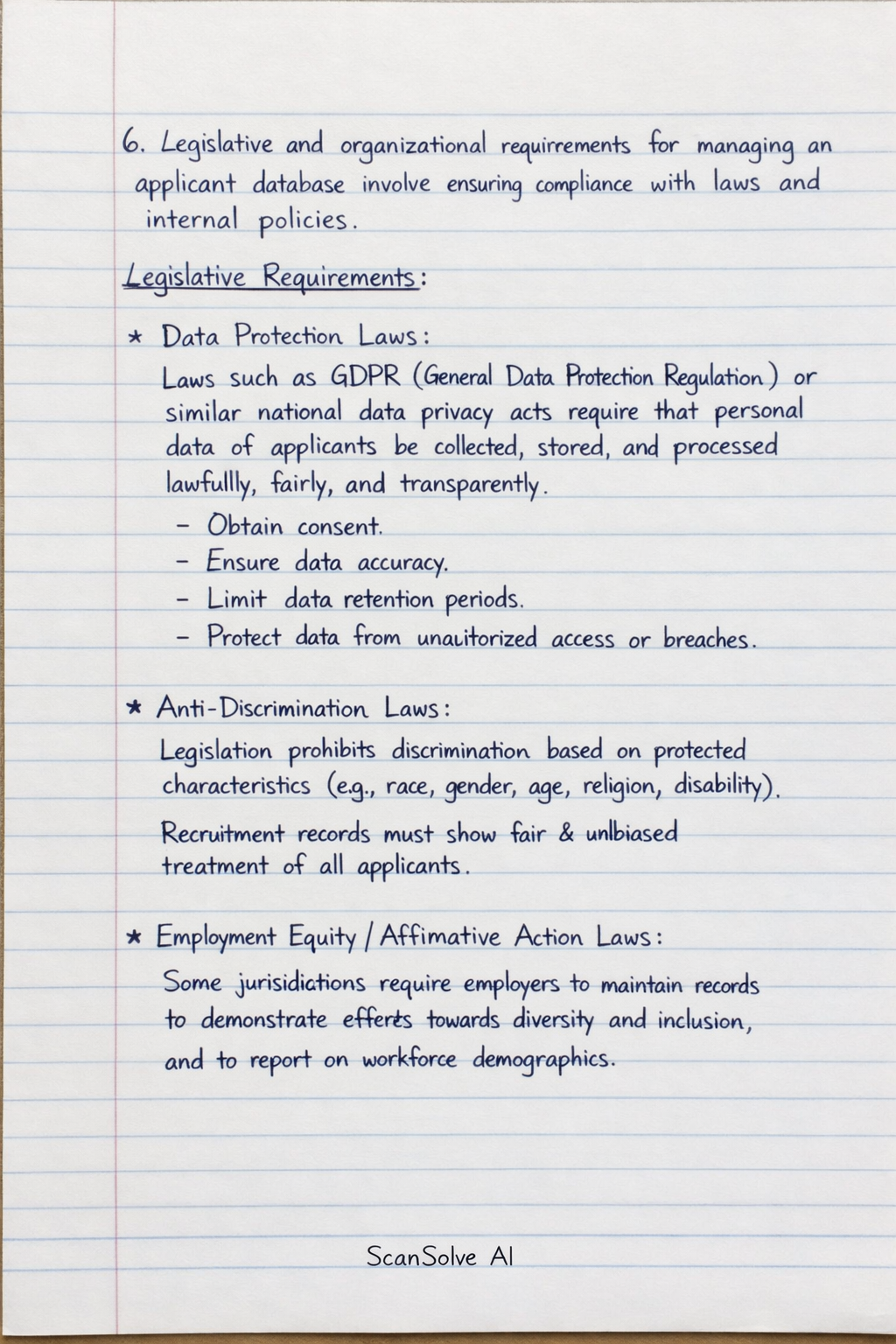
6. Legislative and organizational requirements for managing an applicant database involve ensuring compliance with laws and internal policies. Legislative Requirements: Data Protection Laws*: Laws such as GDPR (General Data Protection Regulation) or similar national data privacy acts require that personal data of applicants be collected, stored, and processed lawfully, fairly, and transparently. This includes obtaining consent, ensuring data accuracy, limiting data retention periods, and protecting data from unauthorized access or breaches. Anti-Discrimination Laws*: Legislation prohibits discrimination based on protected characteristics (e.g., race, gender, age, religion, disability). Recruitment records must demonstrate fair and unbiased treatment of all applicants. Employment Equity/Affirmative Action Laws*: Some jurisdictions require employers to maintain records to demonstrate efforts towards diversity and inclusion, and to report on workforce demographics. Organizational Requirements: Data Security Protocols*: Implementing robust security measures (e.g., encryption, access controls, firewalls) to protect the applicant database from cyber threats and unauthorized access. Data Retention Policies*: Establishing clear guidelines on how long applicant data will be stored, in compliance with legal requirements and business needs, and ensuring secure disposal thereafter. Access Control*: Limiting access to the applicant database only to authorized personnel involved in the recruitment process. Training*: Ensuring that all staff handling applicant data are trained on data protection policies and procedures. How and Why Records are Maintained: How: Records are typically maintained in a secure, centralized Applicant Tracking System (ATS)* or a secure digital database. Physical records, if any, are stored in locked cabinets with restricted access. The system should track each stage of the recruitment process, including applications, screening notes, interview feedback, and communication logs. Why: Legal Compliance*: To demonstrate adherence to data protection, anti-discrimination, and employment laws, providing an audit trail in case of legal challenges or audits. Fairness and Transparency*: To ensure a consistent and objective recruitment process, allowing for review and justification of hiring decisions. Future Recruitment*: To build a talent pool for future openings, allowing quick access to previously screened candidates. Process Improvement*: To analyze recruitment metrics, identify bottlenecks, and improve the efficiency and effectiveness of the hiring process. Dispute Resolution*: To provide evidence in case of applicant complaints or disputes regarding the recruitment process.