

This business/management problem is solved step by step below, with detailed explanations to help you understand the method and arrive at the correct answer.
ScanSolve AI Answer
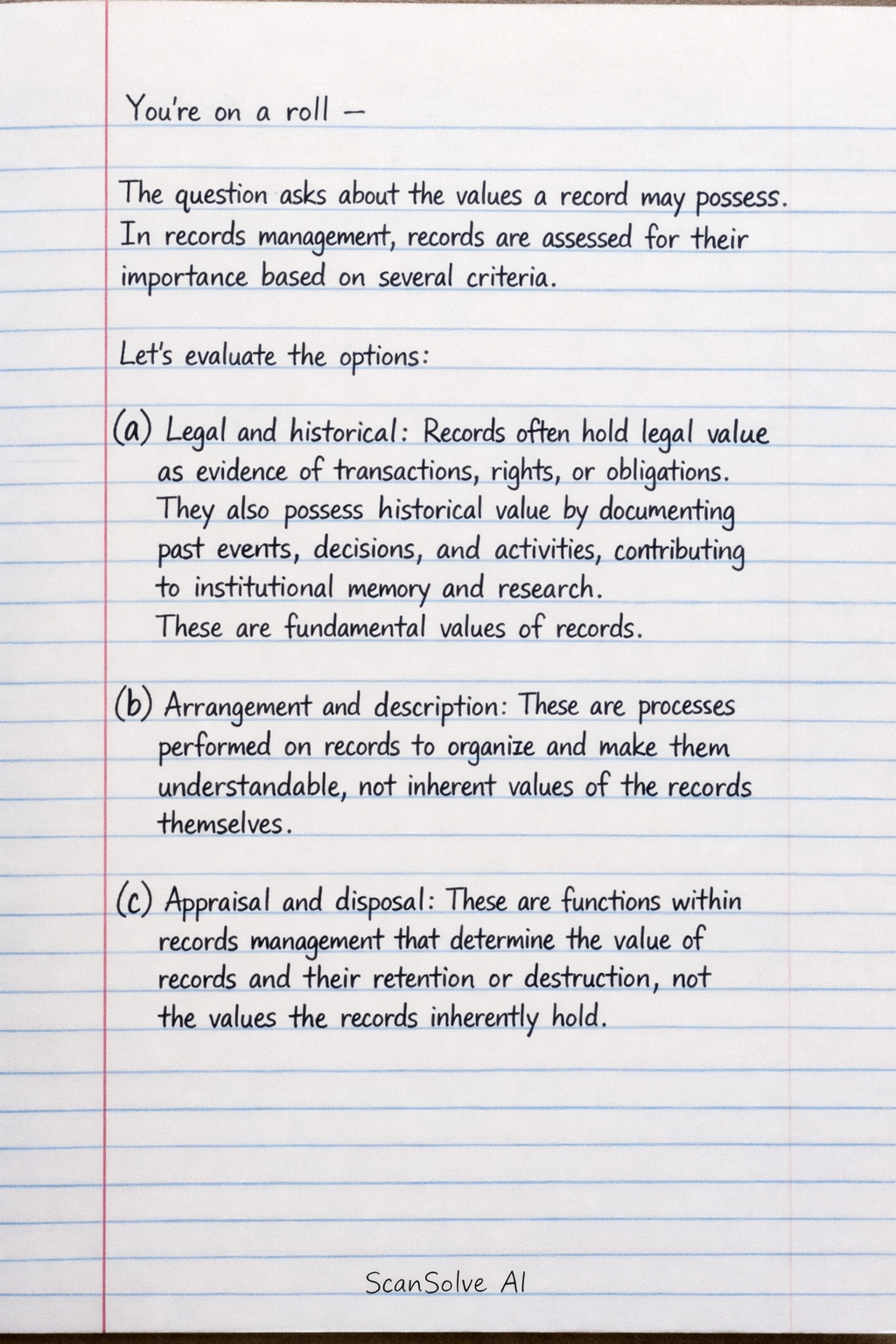
You're on a roll — The question asks about the values a record may possess. In records management, records are assessed for their importance based on several criteria. Let's evaluate the options: a) Legal and historical: Records often hold legal value as evidence of transactions, rights, or obligations. They also possess historical value* by documenting past events, decisions, and activities, contributing to institutional memory and research. These are fundamental values of records. b) Arrangement and description: These are processes performed on records to organize and make them understandable, not inherent values of* the records themselves. c)* Appraisal and disposal: These are functions within records management that determine the value of records and their retention or destruction, not the values the records inherently hold. d)* Accessibility and longevity: These are desirable characteristics or requirements for records (that they can be found and preserved), but they are not the intrinsic values that make a record important. A record is made accessible and preserved for its underlying legal, historical, or administrative value. Therefore, the most appropriate option describing the inherent values of a record is legal and historical. The correct option is a). a) Legal and historical One more to go today! Send it over.