
We read your photo as:
Analyze FreshMart's vulnerabilities to external and internal threats, process failures, and common employee theft methods. Suggest countermeasures.
ScanSolve AI Answer
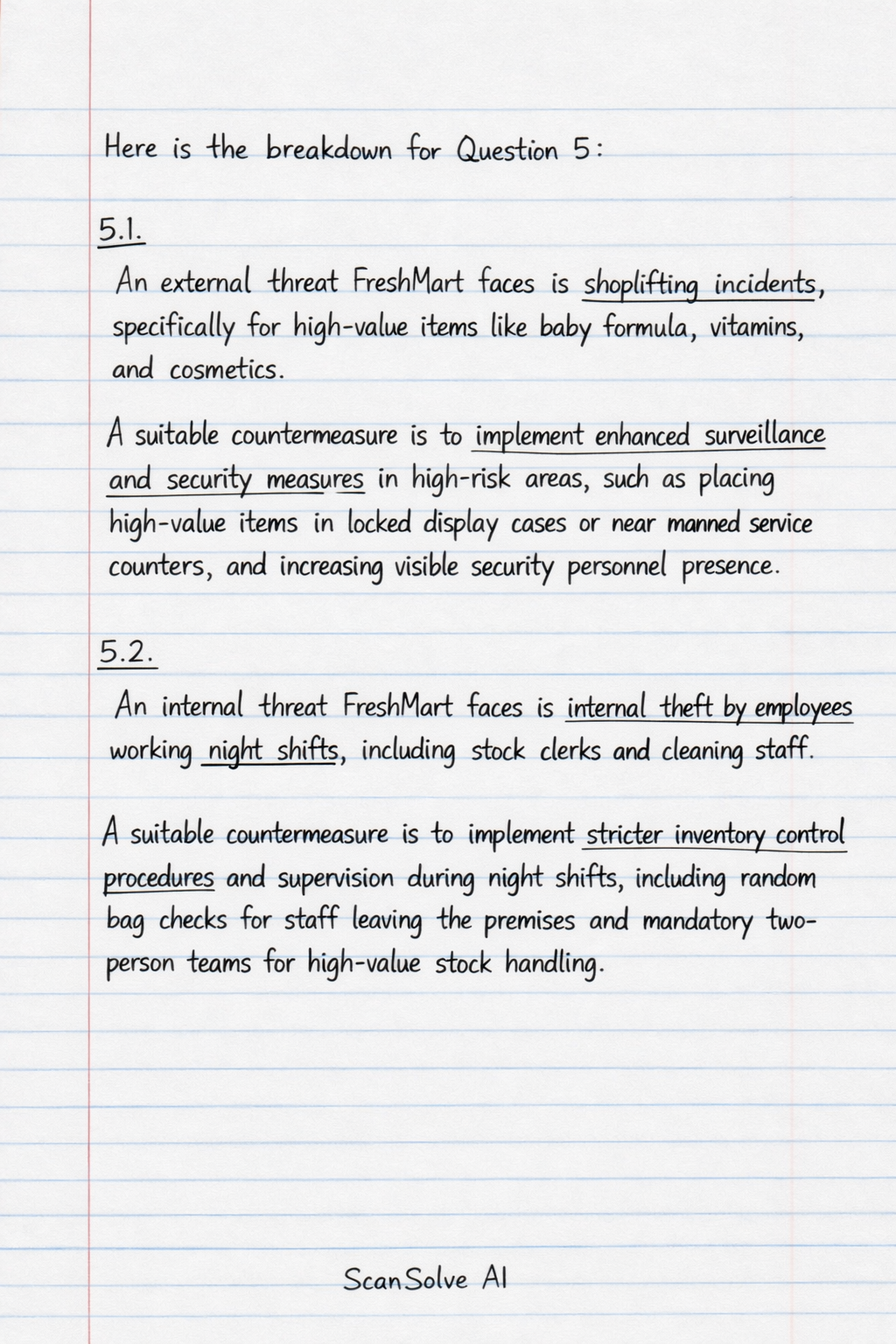
Here is the breakdown for Question 5:
5.1
An external threat FreshMart faces is shoplifting incidents, specifically for high-value items like baby formula, vitamins, and cosmetics.
A suitable countermeasure is to implement enhanced surveillance and security measures in high-risk areas, such as placing high-value items in locked display cases or near manned service counters, and increasing visible security personnel presence.
5.2
An internal threat FreshMart faces is internal theft by employees working night shifts, including stock clerks and cleaning staff.
A suitable countermeasure is to implement stricter inventory control procedures and supervision during night shifts, including random bag checks for staff leaving the premises and mandatory two-person teams for high-value stock handling.
5.3
An example of process failure at FreshMart is improper handling of deliveries and incomplete documentation. This contributes to shrinkage because it leads to products expiring or becoming damaged while in stock, which then must be discarded. These discarded items represent a direct loss of saleable inventory, increasing the overall shrinkage figures.
5.4
Two methods employees commonly use to commit theft are:
- Direct removal of merchandise: Employees physically take items from the store, often concealing them in their personal belongings, waste bins, or by colluding with external parties.
- Sweethearting: This involves cashiers intentionally failing to scan items or providing unauthorized discounts to friends, family, or even other employees, effectively giving away merchandise without payment.
5.5
Two reasons why employees commit theft are:
- Opportunity due to weak controls: The scenario indicates incomplete CCTV coverage, untrained monitoring staff, and a lack of structured training in shrinkage policies. These weaknesses create an environment where employees perceive a low risk of being caught, making theft easier and more tempting.
- Financial pressure or personal need: Employees may be facing personal financial difficulties, such as debt, unexpected expenses, or insufficient income, which can motivate them to steal goods or cash to alleviate their economic strain.
5.6
The impact of internal theft on both the retailer and the consumer is significant:
- Impact on the retailer: Internal theft directly reduces profitability by increasing shrinkage, leading to financial losses. It also necessitates increased operational costs for security measures, investigations, and potential legal fees. Furthermore, it can damage employee morale and trust within the organization.
- Impact on the consumer: Consumers ultimately bear the cost of internal theft through higher prices for goods, as retailers often pass on these losses to maintain profit margins. It can also lead to reduced product availability if stolen items are not quickly restocked, and potentially a decline in service quality if resources are diverted from customer service to security.
Still stuck on this one?
Ask a follow-up, and the answer starts from this question.
More Business/Management Questions
Handwritten Step-by-Step Solution
Get this as a handwritten image on WhatsApp — like a tutor wrote it for you.
Try on WhatsApp