
Assignment. Using real-life examples, analyse how challenges in applying creativity and innovation can impact the personal growth and well-being of individuals and families. Evaluate how these challenges may influence their ability to manage resources effectively. Based on your analysis, propose and justify three realistic strategies that individuals and families can use to overcome these challenges and enhance their creative, innovative and entrepreneurial practices in resource management.
ScanSolve AI Answer
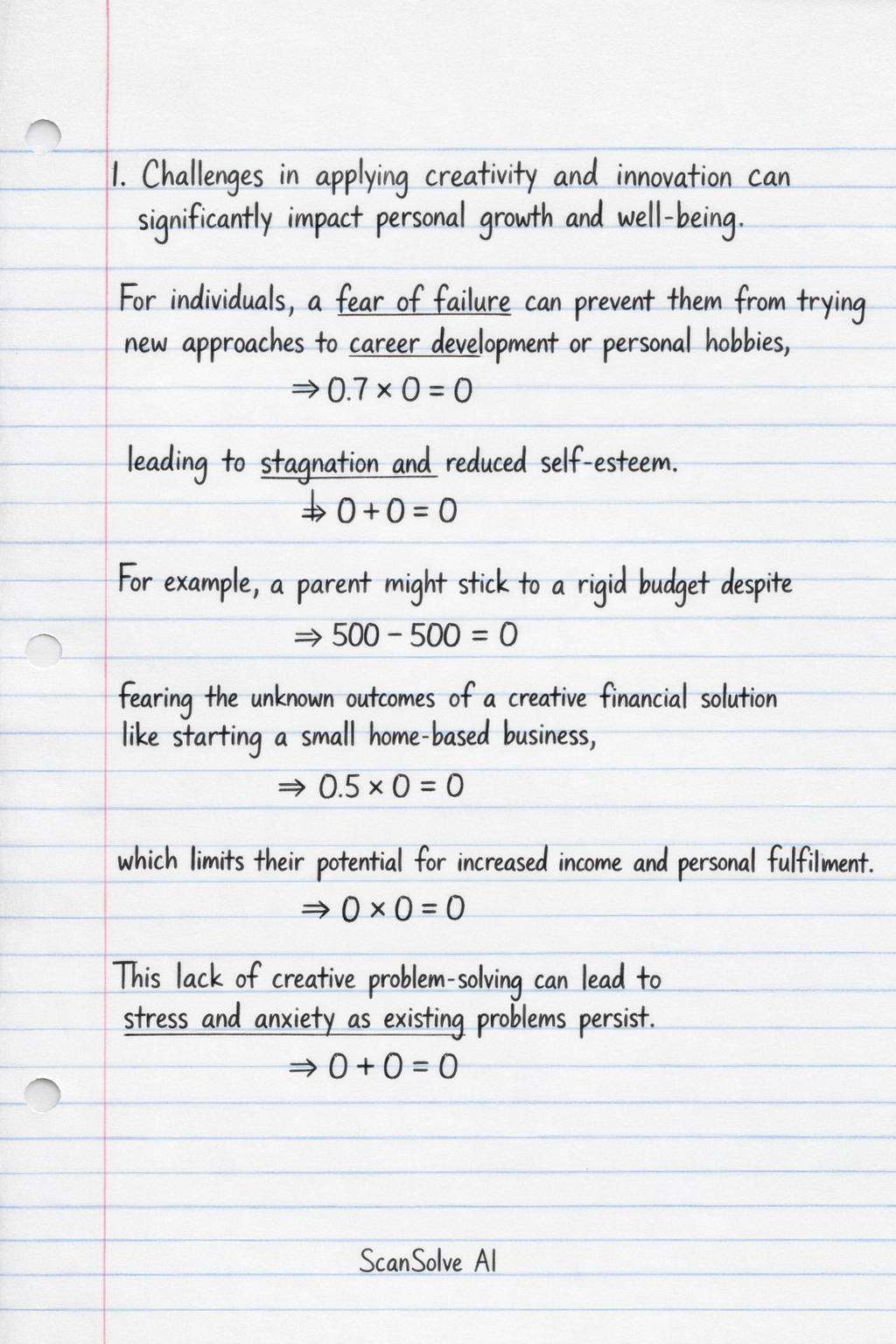
- Challenges in applying creativity and innovation can significantly impact personal growth and well-being. For individuals, a fear of failure can prevent them from trying new approaches to career development or personal hobbies, leading to stagnation and reduced self-esteem. For example, a parent might stick to a rigid budget despite rising costs, fearing the unknown outcomes of a creative financial solution like starting a small home-based business, which limits their potential for increased income and personal fulfillment. This lack of creative problem-solving can lead to stress and anxiety as existing problems persist.
In terms of resource management, these challenges can lead to ineffective utilization of time, money, and skills. A family struggling with high utility bills might not explore innovative energy-saving solutions (e.g., DIY insulation, smart home devices) due to a lack of creative thinking or perceived complexity. This results in continued financial strain and missed opportunities for long-term savings and improved living conditions. The inability to adapt creatively to changing circumstances can trap individuals and families in cycles of inefficiency, hindering their ability to optimize their available resources for a better quality of life.
- Here are three realistic strategies to overcome these challenges:
-
Strategy 1: Cultivating a Growth Mindset and Psychological Safety. Individuals and families can actively adopt a growth mindset, viewing challenges as opportunities for learning rather than insurmountable obstacles. This involves celebrating small successes and reframing failures as valuable feedback. For example, a family could designate a "creative solution hour" weekly where all ideas, no matter how unconventional, are welcomed without judgment. This fosters psychological safety, encouraging experimentation and reducing the fear of failure, which is crucial for innovative resource management, such as finding new ways to repurpose household items or generate supplementary income.
-
Strategy 2: Structured Brainstorming and Skill Development. Implementing structured creative techniques like mind mapping or SCAMPER (Substitute, Combine, Adapt, Modify, Put to another use, Eliminate, Reverse) can help individuals and families generate novel ideas for resource management. For instance, when facing a tight budget, they could use SCAMPER to brainstorm ways to "substitute" expensive ingredients with cheaper alternatives or "adapt" old clothes into new items. Additionally, investing in skill development through free online courses (e.g., basic coding, digital marketing, DIY repairs) can equip them with practical tools to implement innovative solutions, turning creative ideas into tangible resource-saving or income-generating projects.
-
Strategy 3: Community Engagement and Collaborative Learning. Engaging with local communities or online forums can provide diverse perspectives and shared resources. Families can join skill-sharing networks or community gardens to learn new techniques for sustainable living, such as composting or growing their own food, reducing grocery expenses. Collaborating with others on projects, like organizing a neighborhood swap meet for unused items, not only fosters creativity in resource exchange but also builds a supportive environment where innovative ideas are shared and refined. This collective approach broadens individual horizons and provides practical support for implementing creative and entrepreneurial practices in resource management.
Still stuck on this one?
Ask a follow-up, and the answer starts from this question.
More Business/Management Questions
Handwritten Step-by-Step Solution
Get this as a handwritten image on WhatsApp — like a tutor wrote it for you.
Try on WhatsApp