
We read your photo as:
Discuss reasons why people change jobs and suggest strategies for employers to retain staff.
ScanSolve AI Answer
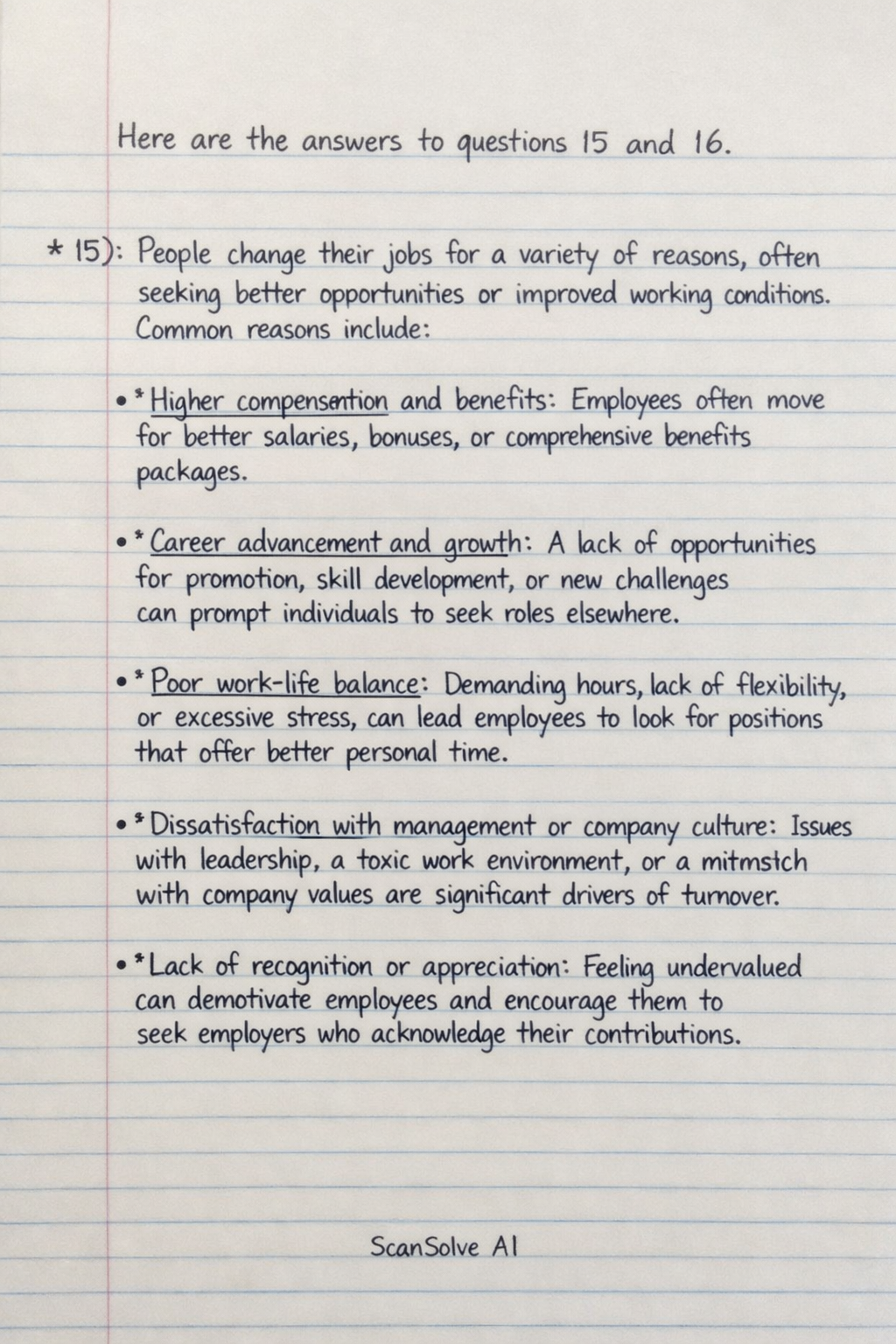
Here are the answers to questions 15 and 16.
15) People change their jobs for a variety of reasons, often seeking better opportunities or improved working conditions. Common reasons include:
- Higher compensation and benefits: Employees often move for better salaries, bonuses, or comprehensive benefits packages.
- Career advancement and growth: A lack of opportunities for promotion, skill development, or new challenges can prompt individuals to seek roles elsewhere.
- Poor work-life balance: Demanding hours, lack of flexibility, or excessive stress can lead employees to look for positions that offer better personal time.
- Dissatisfaction with management or company culture: Issues with leadership, a toxic work environment, or a mismatch with company values are significant drivers of turnover.
- Lack of recognition or appreciation: Feeling undervalued can demotivate employees and encourage them to seek employers who acknowledge their contributions.
- Relocation or personal reasons: Family commitments, health issues, or a desire to move to a different location can necessitate a job change.
As an employer, strategies to retain staff would include:
- Competitive compensation and benefits: Regularly review and adjust salaries and benefits to remain attractive in the market.
- Provide growth and development opportunities: Offer training programs, mentorship, and clear career paths to help employees advance.
- Foster a positive work culture: Promote a supportive, inclusive, and respectful environment where employees feel valued and engaged.
- Recognize and reward performance: Implement systems for acknowledging achievements and providing incentives for good work.
- Promote work-life balance: Offer flexible working arrangements, remote work options, and adequate time off to support employees' personal lives.
- Effective leadership and communication: Ensure managers are well-trained, provide regular feedback, and maintain open lines of communication.
- Employee engagement initiatives: Involve employees in decision-making, solicit their feedback, and create opportunities for team building.
16) The case study describes Ramesh Thapa's career path, including his BBA degree, his position as a Marketing Executive, and his 18-month professional break to care for his seriously ill father, driven by Nepali cultural values. However, the specific questions related to this case study are not visible in the provided image. Therefore, I cannot provide answers to the questions that follow the case.
Still stuck on this one?
Ask a follow-up, and the answer starts from this question.
More Business/Management Questions
Handwritten Step-by-Step Solution
Get this as a handwritten image on WhatsApp — like a tutor wrote it for you.
Try on WhatsApp