
We read your photo as:
Discuss the relevance of the internet in the promotion and positioning of Kenya as a tourist destination.
Business/Management
ScanSolve AI Answer
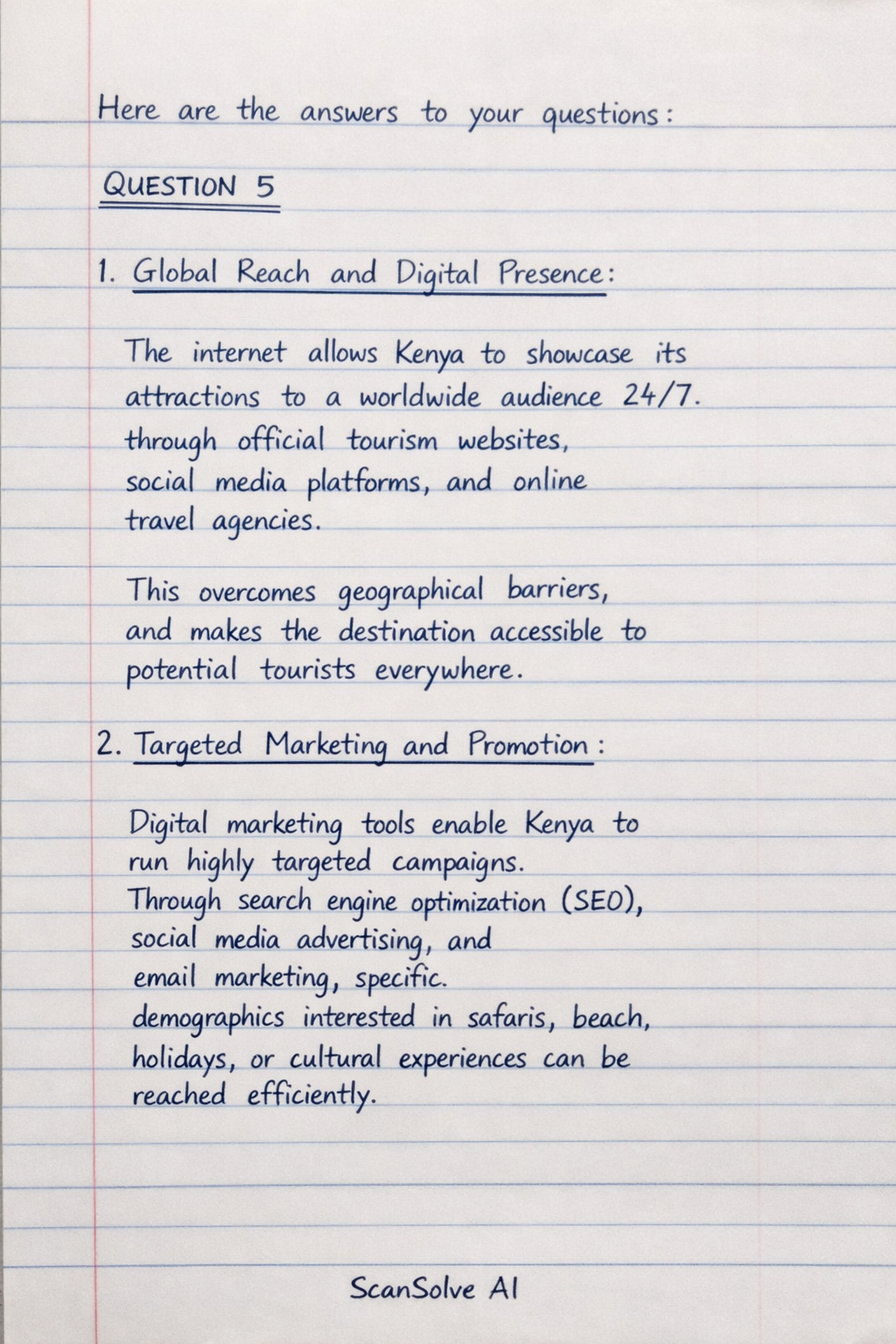
Here are the answers to your questions:
QUESTION 5
The internet is highly relevant in the promotion and positioning of Kenya as a tourist destination due to its global reach and interactive capabilities.
- Global Reach and Digital Presence: The internet allows Kenya to showcase its attractions to a worldwide audience 24/7 through official tourism websites, social media platforms, and online travel agencies. This overcomes geographical barriers and makes the destination accessible to potential tourists everywhere.
- Targeted Marketing and Promotion: Digital marketing tools enable Kenya to run highly targeted campaigns. Through search engine optimization (SEO), social media advertising, and email marketing, specific demographics interested in safaris, beach holidays, or cultural experiences can be reached efficiently.
- Rich Content and Engagement: The internet facilitates the sharing of high-quality photos, videos, virtual tours, and blogs that immerse potential visitors in Kenya's diverse offerings. User-generated content, such as reviews and travel stories, further builds trust and authenticity, encouraging engagement.
- Direct Booking and E-commerce: Tourists can research, compare, and directly book flights, accommodation, safaris, and other activities online. This streamlines the travel planning process, offers convenience, and often provides competitive pricing, making it easier for visitors to plan their trips.
- Brand Building and Positioning: A consistent online presence helps Kenya build a strong brand identity, positioning itself as a premier destination for specific types of tourism (e.g., wildlife safaris, eco-tourism, cultural immersion). This involves highlighting unique selling propositions and communicating key messages about safety, sustainability, and unique experiences.
- Real-time Information and Customer Service: Official websites and social media channels provide real-time updates on travel advisories, events, and attractions. Online chat support and comprehensive FAQs offer immediate customer service, addressing queries and concerns promptly, which enhances visitor confidence.
QUESTION 6
A Destination Management System (DMS) can significantly improve the management of tourism in a destination in several ways:
- Centralized Information Management: A DMS serves as a single, comprehensive database for all tourism-related information, including attractions, accommodations, activities, events, and local services. This ensures consistent, up-to-date information is available to tourists, tour operators, and local businesses, simplifying planning and access.
- Enhanced Marketing and Promotion: DMS provides tools for content management, website development, social media integration, and email marketing. This enables destinations to create and disseminate targeted marketing campaigns, showcase their offerings effectively, and reach specific market segments with personalized messages.
- Streamlined Booking and Reservation Systems: By integrating booking engines for various tourism products (e.g., hotels, tours, car rentals), a DMS simplifies the reservation process for tourists. It allows for real-time availability updates, dynamic pricing, and secure online payments, improving efficiency for both visitors and service providers.
- Improved Visitor Experience and Services: A DMS can offer features like interactive maps, personalized itinerary planners, and multilingual support, enhancing the overall visitor experience. By providing easy access to relevant information and services, it helps tourists navigate the destination and make the most of their trip.
- Data-Driven Decision Making: A DMS collects valuable data on visitor demographics, booking patterns, popular attractions, and feedback. This data is crucial for market research, identifying trends, and making informed decisions regarding infrastructure development, resource allocation, and the development of sustainable tourism strategies.
Was this helpful?
Still stuck on this one?
Ask a follow-up, and the answer starts from this question.
Got a different question?Ask your own question
More Business/Management Questions
QUsing relevant examples, discuss the conditions necessary for spatial interaction to occur and their…QDiscuss the strategies for improving urban development in Kenya.QTwo consequences of increased domestic tourism: - Economic boost (job creation & increased revenue…QDiscuss the population structure of Kenya and give its implications on economic development.QExplain factors influencing industry location in Kenya, identify industries on a map, and list…
Browse by topic:Marketing
Handwritten Step-by-Step Solution
Get this as a handwritten image on WhatsApp — like a tutor wrote it for you.
Try on WhatsApp