
We read your photo as:
Define the following terms a) Budget b) Personal budget c) Budgeting 3. Explain 7 Importance of budgeting in day-to-day-life 4. Identify 6 tips on how to spend money wisely.
ScanSolve AI Answer
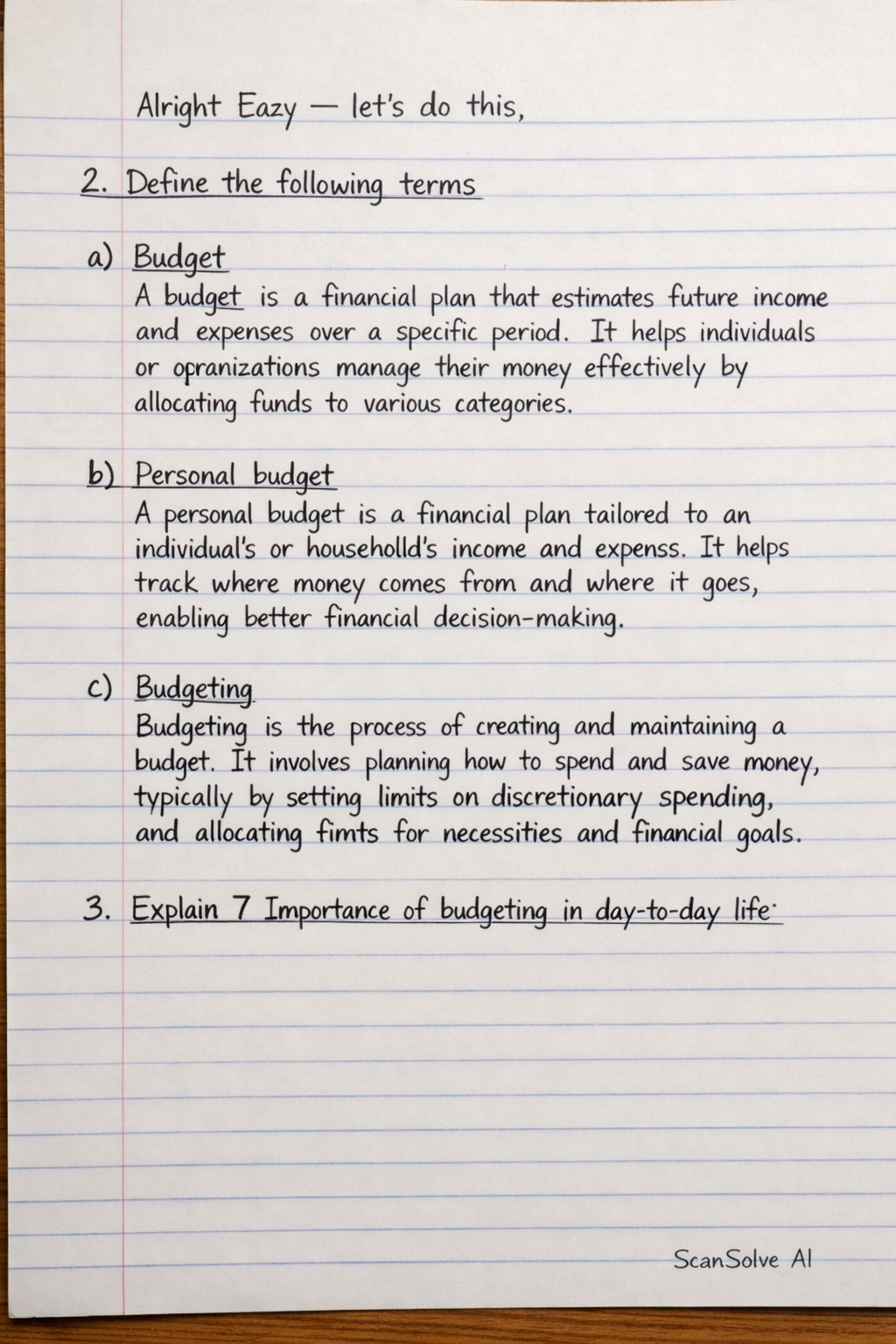
2. Define the following terms
a) Budget
A budget is a financial plan that estimates future income and expenses over a specific period. It helps individuals or organizations manage their money effectively by allocating funds to various categories.
b) Personal budget
A personal budget is a financial plan tailored to an individual's or household's income and expenses. It helps track where money comes from and where it goes, enabling better financial decision-making.
c) Budgeting
Budgeting is the process of creating and maintaining a budget. It involves planning how to spend and save money, typically by setting limits on discretionary spending and allocating funds for necessities and financial goals.
3. Explain 7 Importance of budgeting in day-to-day-life
- Achieves financial goals: Budgeting helps you save for specific goals like a down payment, education, or retirement.
- Avoids debt: By tracking spending, you can prevent overspending and accumulating unnecessary debt.
- Identifies spending habits: It reveals where your money is actually going, allowing you to make informed adjustments.
- Provides financial control: A budget gives you a clear picture of your financial situation, empowering you to make conscious choices.
- Prepares for emergencies: It encourages setting aside funds for unexpected expenses, creating a financial safety net.
- Reduces financial stress: Knowing your financial standing and having a plan can significantly lower anxiety about money.
- Improves decision-making: With a budget, you can prioritize needs over wants and make smarter purchasing decisions.
4. Identify 6 tips on how to spend money wisely.
- Track your spending: Know exactly where your money goes by recording all transactions.
- Create a budget: Plan how you will allocate your income to different categories of expenses and savings.
- Prioritize needs over wants: Distinguish between essential items and discretionary purchases.
- Shop smart: Compare prices, look for sales, and use coupons to get the best value.
- Avoid impulse purchases: Give yourself time to consider if an item is truly needed before buying it.
- Save regularly: Set up automatic transfers to a savings account to build an emergency fund and reach financial goals.
Still stuck on this one?
Ask a follow-up, and the answer starts from this question.
More Business/Management Questions
Handwritten Step-by-Step Solution
Get this as a handwritten image on WhatsApp — like a tutor wrote it for you.
Try on WhatsApp