
We read your photo as:
Explain the functions of feedback, types of formal communication, methods of storing info, and methods of upward communication.
ScanSolve AI Answer
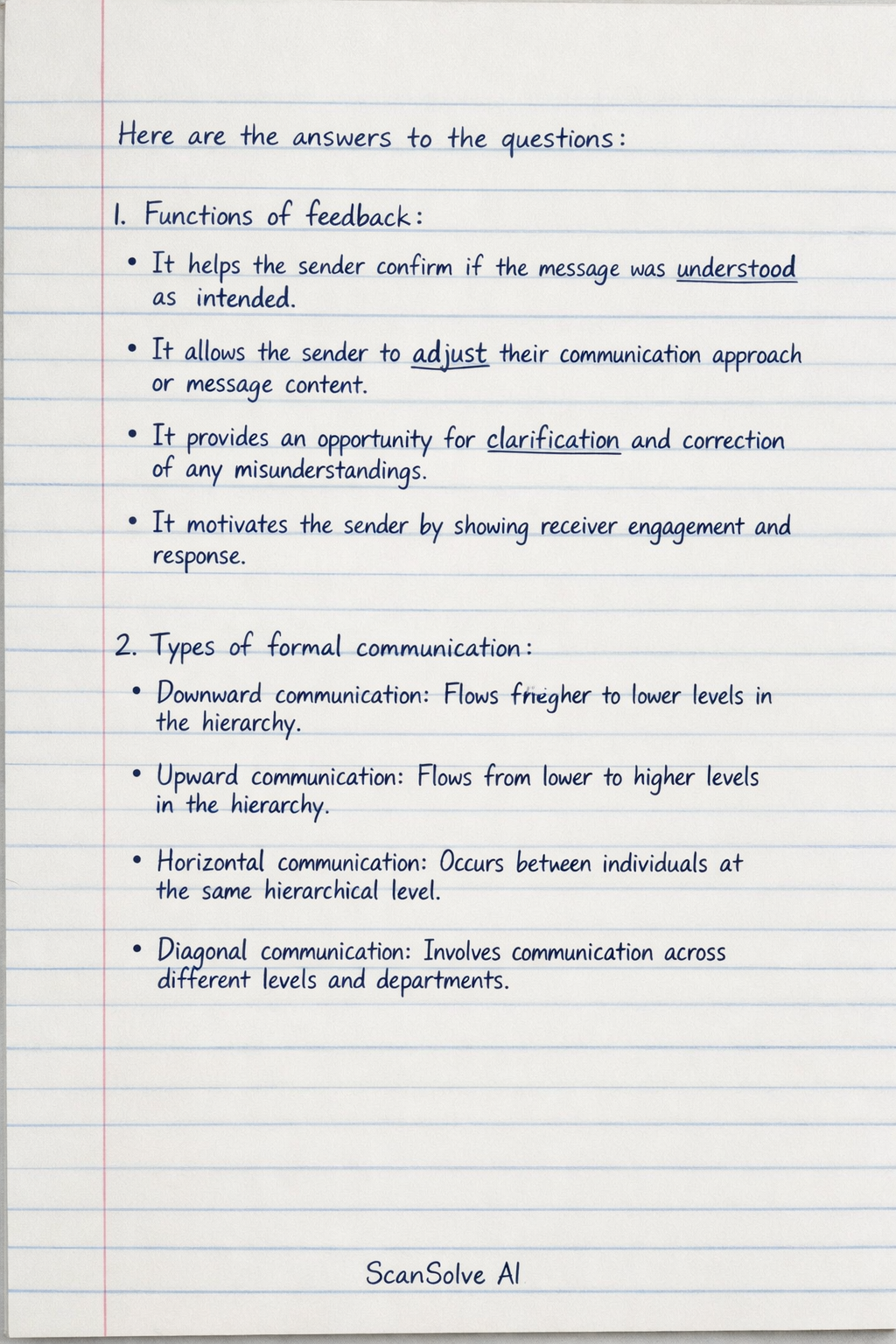
Here are the answers to the questions:
-
Functions of feedback:
- It helps the sender confirm if the message was understood as intended.
- It allows the sender to adjust their communication approach or message content.
- It provides an opportunity for clarification and correction of any misunderstandings.
- It motivates the sender by showing receiver engagement and response.
-
Types of formal communication:
- Downward communication: Flows from higher to lower levels in the hierarchy.
- Upward communication: Flows from lower to higher levels in the hierarchy.
- Horizontal communication: Occurs between individuals at the same hierarchical level.
- Diagonal communication: Involves communication across different levels and departments.
-
Methods of storing information in an organization:
- Physical files: Paper documents stored in cabinets or archives.
- Digital databases: Structured electronic collections of data.
- Cloud storage: Data stored on remote servers accessible via the internet.
- Document Management Systems (DMS): Software for managing and tracking electronic documents.
-
Methods of upward communication:
- Suggestion boxes: Employees submit ideas or feedback.
- Employee surveys: Formal questionnaires to gather opinions.
- Performance reports: Subordinates provide updates on their work.
- Grievance procedures: Formal channels for employees to raise concerns.
-
Barriers to effective communication (apart from language barrier):
- Physical barriers: Noise, distance, faulty equipment.
- Psychological barriers: Emotions, attitudes, prejudices, lack of attention.
- Organizational barriers: Poor structure, unclear roles, information overload.
- Cultural barriers: Differences in values, beliefs, and social norms.
-
Reasons why using courteous language is important when dealing with customers:
- It builds rapport and trust with the customer.
- It creates a positive impression of the organization.
- It helps to de-escalate tense situations and resolve conflicts.
- It encourages customer loyalty and repeat business.
-
Elements of the communication process:
- Sender: Originator of the message.
- Message: The information being conveyed.
- Channel: The medium used to transmit the message.
- Receiver: The person who interprets the message.
-
Factors that can make a listener lose concentration during a presentation:
- Distractions: External noise or internal thoughts.
- Lack of interest: The topic is not engaging or relevant.
- Information overload: Too much information presented too quickly.
- Poor delivery: Monotone voice, lack of eye contact, or disorganized content from the speaker.
-
Apps that an organization can use to hold online meetings:
- Zoom
- Microsoft Teams
- Google Meet
- Cisco Webex
-
Factors a sender should consider when selecting an appropriate medium for communication:
- Nature of the message: Is it complex, sensitive, or routine?
- Urgency: Does the message need immediate delivery?
- Audience: Who is the receiver and what is their preferred method?
- Cost and resources: What are the financial and logistical implications?
Still stuck on this one?
Ask a follow-up, and the answer starts from this question.
More Business/Management Questions
Handwritten Step-by-Step Solution
Get this as a handwritten image on WhatsApp — like a tutor wrote it for you.
Try on WhatsApp