
We read your photo as:
Explain the importance of ethics in vocational and professional life.
ScanSolve AI Answer
Step-by-step solution
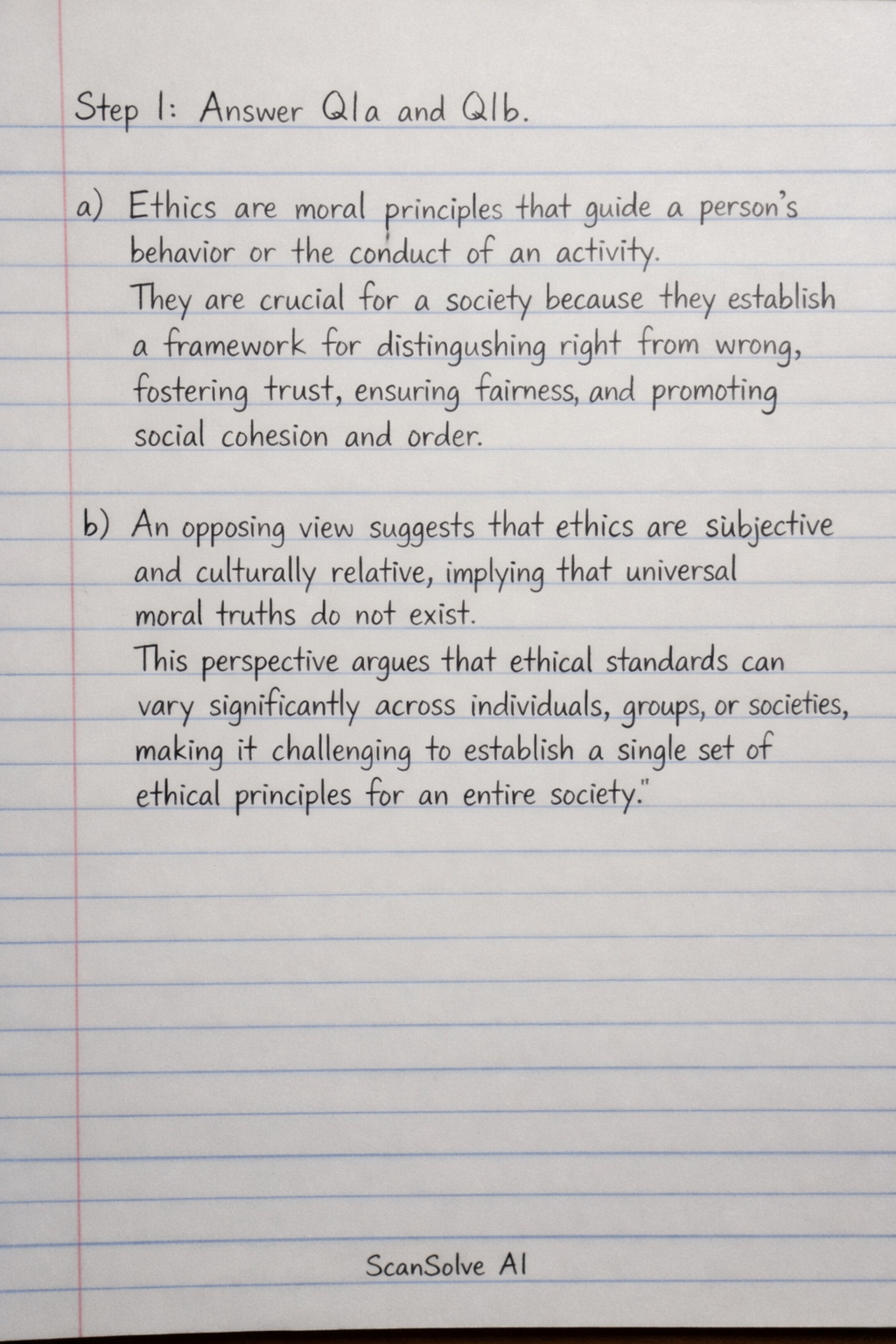
6 stepsAnswer Q1a and Q1b.
a) Ethics are moral principles that guide a person's behavior or the conduct of an activity. They are crucial for a society because they establish a framework for distinguishing right from wrong, fostering trust, ensuring fairness, and promoting social cohesion and order.
b) An opposing view suggests that ethics are subjective and culturally relative, implying that universal moral truths do not exist. This perspective argues that ethical standards can vary significantly across individuals, groups, or societies, making it challenging to establish a single set of ethical principles for an entire society.
Answer Q2.
a) Ethical issues for The police:
- Corruption and bribery
- Excessive use of force
- Racial profiling and discrimination
- Abuse of power
- Lack of accountability for misconduct
b) Ethical issues for The school:
- Cheating and plagiarism among students
- Teacher misconduct or favoritism
- Bullying and harassment
- Discrimination based on background or ability
- Misuse of school funds or resources
c) Ethical issues for The Parliament:
- Corruption and conflicts of interest
- Abuse of legislative power
- Lack of transparency in decision-making
- Misrepresentation of constituents' interests
- Nepotism and cronyism
d) Ethical issues for The medical system:
- Patient confidentiality breaches
- Informed consent violations
- Resource allocation dilemmas (e.g., who receives treatment)
- Medical errors and negligence
- End-of-life care decisions and patient autonomy
Answer Q3a and Q3b.
a) Cultural values and beliefs of two ethnic groups in Sierra Leone:
b) Five characteristics of an ethical leader:
- Integrity: Ethical leaders act consistently with their values and principles, even under pressure.
- Honesty: They are truthful and transparent in their communications and actions, building trust.
- Fairness: They treat all individuals equitably, making impartial decisions and avoiding favoritism.
- Respect: They value the dignity and rights of others, fostering an inclusive and supportive environment.
- Responsibility: They take ownership of their decisions and their impact, holding themselves and their team accountable.
Answer Q4a and Q4b.
a) When a worker discovers a colleague falsifying company records, the ethical issues include dishonesty, fraud, breach of trust, and potential legal and financial repercussions for the company. The worker should first document the evidence discreetly, then report the issue to a superior or Human Resources department, following company policy. This action upholds integrity and protects the company from harm.
b) Social responsibility is vital for promoting community development by encouraging organizations and individuals to contribute positively to society. This involves investing in local infrastructure, creating employment opportunities, supporting education and healthcare initiatives, and implementing sustainable environmental practices. These actions lead to improved living standards, economic growth, and enhanced well-being for community members.
Answer Q5a and Q5b.
a) As a vocational graduate, I would demonstrate ethical behavior in my profession by consistently upholding honesty and integrity in all tasks, ensuring confidentiality of client or company information, and maintaining a high level of professional competence through continuous learning. I would also respect colleagues and clients, avoiding any conflicts of interest and always prioritizing the well-being and best interests of those I serve.
b) Ethical decision-making helps solve workplace challenges by guiding individuals and teams toward fair, transparent, and responsible solutions. It fosters trust among colleagues and with clients, reduces the likelihood of legal issues, and improves overall morale. By considering the impact of decisions on all stakeholders, ethical choices lead to sustainable outcomes and a positive work environment.
Answer Q6a and Q6b.
a) A situation where personal interest may conflict with professional responsibilities is when a manager is responsible for hiring for a position and a close family member applies. The manager's personal interest in helping their family member could conflict with their professional responsibility to hire the most qualified candidate based solely on merit. This conflict can be managed by the manager disclosing the relationship to their superiors, recusing themselves from the hiring process, and allowing an impartial committee or another manager to make the hiring decision.
b) The importance of ethics in vocational and professional life cannot be overstated. Ethics build trust with clients, colleagues, and the public, which is essential for a strong professional reputation and successful career. They ensure fairness and integrity in all dealings, preventing misconduct and promoting a respectful work environment. Adhering to ethical standards also contributes to the overall credibility and positive impact of one's profession on society.
Still stuck on this one?
Ask a follow-up, and the answer starts from this question.
More Business/Management Questions
Handwritten Step-by-Step Solution
Get this as a handwritten image on WhatsApp — like a tutor wrote it for you.
Try on WhatsApp