

This business/management problem is solved step by step below, with detailed explanations to help you understand the method and arrive at the correct answer.
ScanSolve AI Answer
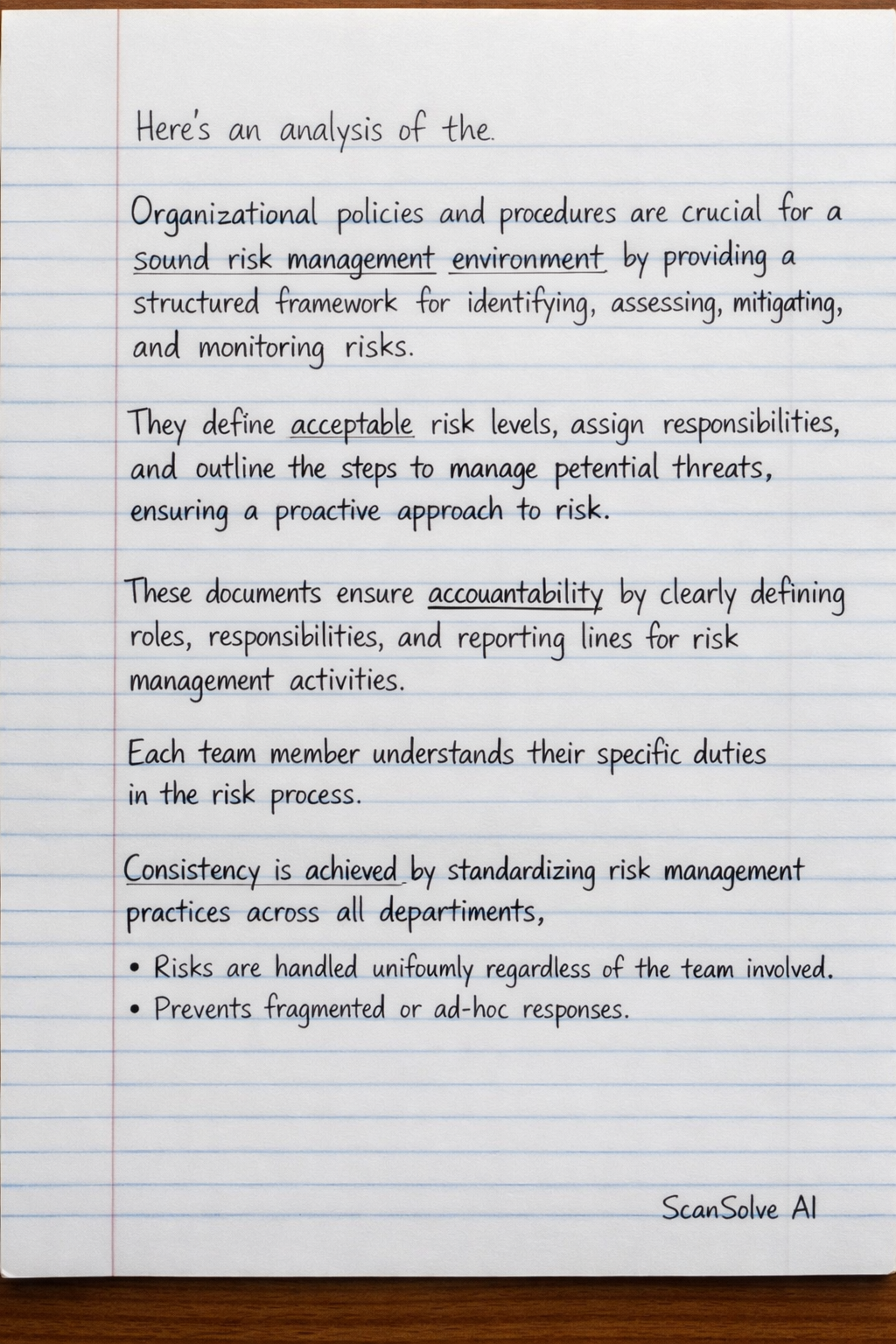
Organizational policies and procedures are crucial for a sound risk management environment by providing a structured framework for identifying, assessing, mitigating, and monitoring risks. They define acceptable risk levels, assign responsibilities, and outline the steps to manage potential threats, ensuring a proactive approach to risk. These documents ensure accountability by clearly defining roles, responsibilities, and reporting lines for risk management activities. Each team member understands their specific duties in the risk process. Consistency is achieved by standardizing risk management practices across all departments, ensuring that risks are handled uniformly regardless of the team involved, which prevents fragmented or ad-hoc responses. If these procedures are bypassed or outdated, a unit faces several potential consequences. These include increased exposure to unmanaged risks, leading to financial losses, reputational damage, legal penalties, and operational disruptions. Lack of clear guidance can also result in inconsistent risk handling, internal conflicts, and a breakdown of accountability, ultimately undermining the organization's overall stability and objectives. Send me the next one 📸