
We read your photo as:
What are the four common areas of self-improvement and the 6 steps of developing a program development plan?
ScanSolve AI Answer
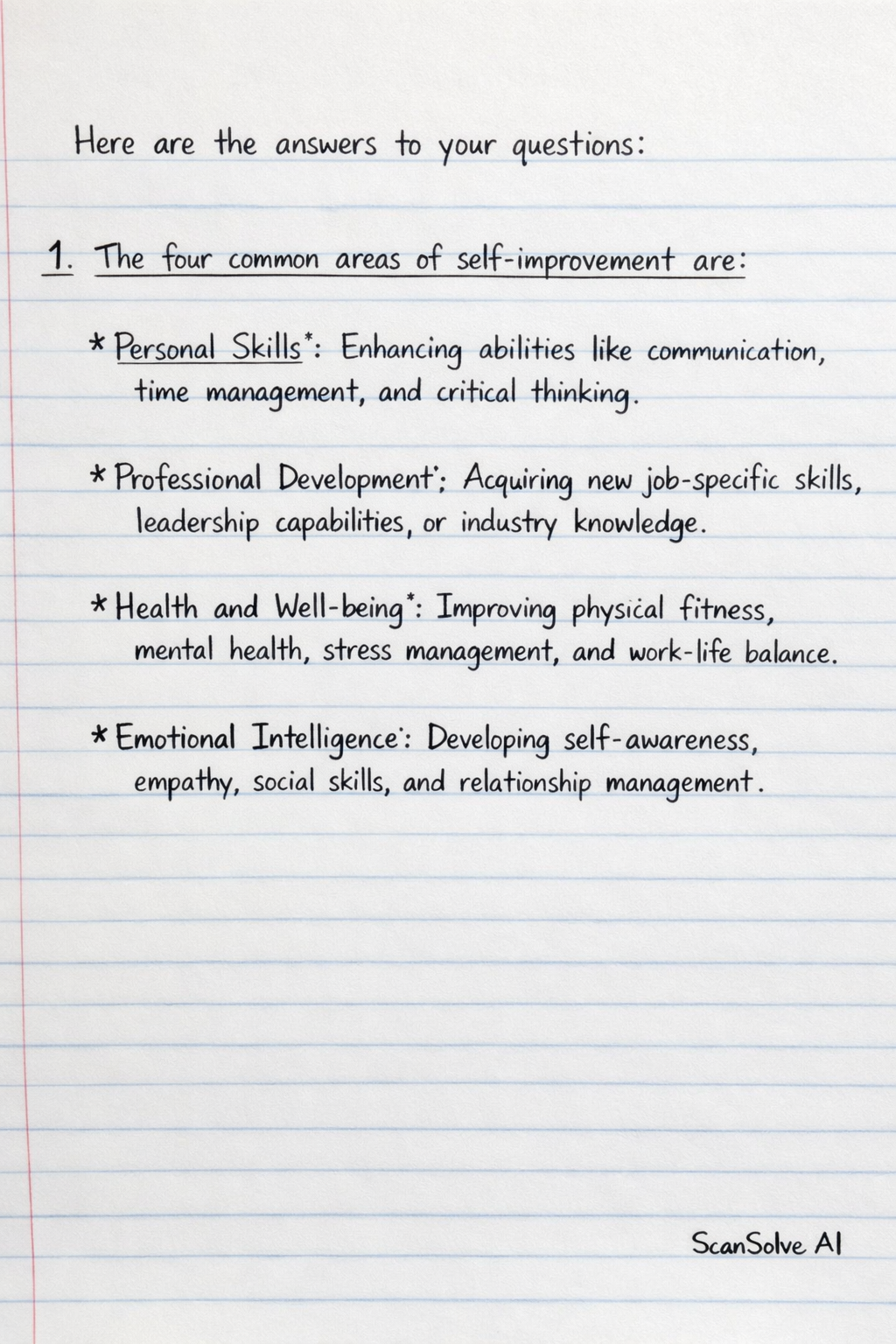
Here are the answers to your questions:
-
The four common areas of self-improvement are:
- Personal Skills: Enhancing abilities like communication, time management, and critical thinking.
- Professional Development: Acquiring new job-specific skills, leadership capabilities, or industry knowledge.
- Health and Well-being: Improving physical fitness, mental health, stress management, and work-life balance.
- Emotional Intelligence: Developing self-awareness, empathy, social skills, and relationship management.
-
The 6 steps of developing a program development plan are:
- Needs Assessment: Identify the problem or opportunity the program will address and the target audience.
- Goal Setting: Define clear, measurable, achievable, relevant, and time-bound (SMART) goals and objectives.
- Program Design: Outline the specific activities, content, methods, and resources required for the program.
- Implementation Planning: Detail the timeline, roles, responsibilities, and logistical steps for program execution.
- Budgeting and Resource Allocation: Secure and allocate the necessary financial, human, and material resources.
- Evaluation Plan: Establish metrics and methods to monitor progress, measure outcomes, and assess program effectiveness.
-
Assuming "DIT bin" refers to a specific organizational or program context, Teams Mentoring involves experienced individuals (mentors) providing guidance, support, and knowledge to less experienced team members (mentees). This process aims to foster skill development, career growth, and integration within the team, enhancing overall team performance and individual capabilities.
-
- Usefulness of Teams: Teams are useful because they promote collaboration, bring together diverse skills and perspectives, facilitate shared problem-solving, and can lead to increased innovation and productivity. They distribute workload and foster a sense of collective responsibility.
- Effective Feedback: Effective feedback is specific, timely, actionable, and constructive. It focuses on observable behaviors and their impact, rather than personal traits, and is delivered with the intent to help the recipient improve.
-
- DIT bin Colleagues Feedback: In a "DIT bin" context, this refers to the input and observations shared among peers or team members regarding each other's performance, contributions, and collaborative behaviors. It helps individuals understand their impact on the team and identify areas for improvement.
- Customer Feedback: This is information provided by external customers about their experiences with products, services, or interactions. It is vital for identifying areas of improvement, enhancing customer satisfaction, and informing business decisions.
-
The steps to improve training and development in the workplace are:
- Conduct a Needs Assessment: Identify specific skill gaps and development requirements within the workforce.
- Set Clear Learning Objectives: Define what employees should be able to know or do after completing the training.
- Design Relevant and Engaging Programs: Create training content and delivery methods that are tailored to the identified needs and learning styles.
- Implement Training Effectively: Deliver programs using qualified trainers, appropriate resources, and conducive learning environments.
- Provide Ongoing Support and Reinforcement: Offer opportunities for practice, coaching, and application of new skills in the workplace.
- Evaluate Training Effectiveness: Measure the impact of training on employee performance, productivity, and organizational goals.
-
This question cannot be answered as the module title is not provided in the image.
-
- DIT bin Goal Objective: In a "DIT bin" context, the goal objective refers to the specific, measurable targets and aims that the "DIT bin" initiative or program seeks to achieve, aligning with broader organizational strategies.
- Duties of Responsibility: These are the specific tasks, roles, and accountabilities assigned to individuals or teams within the "DIT bin" framework to ensure the successful execution and achievement of its objectives.
- Collaborative Efforts: This refers to the collective work, cooperation, and shared contributions among individuals, teams, or departments within the "DIT bin" to achieve common goals, leveraging diverse skills and resources.
Still stuck on this one?
Ask a follow-up, and the answer starts from this question.
More Business/Management Questions
Handwritten Step-by-Step Solution
Get this as a handwritten image on WhatsApp — like a tutor wrote it for you.
Try on WhatsApp