
We read your photo as:
What are the logical steps for identifying and analyzing the context of organization? Arrange the following the correct sequence, beginning with the first step.
ScanSolve AI Answer
Step-by-step solution
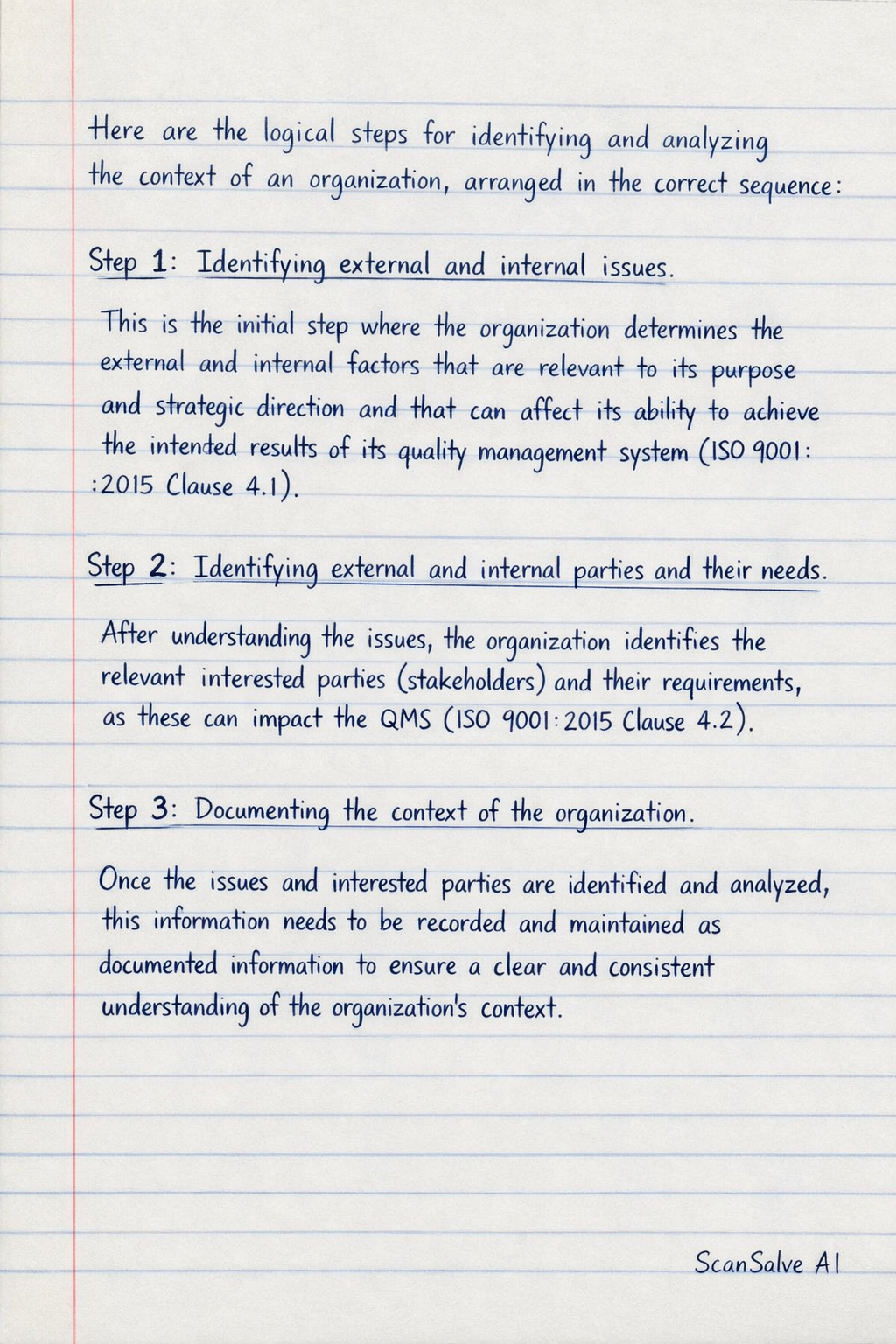
4 stepsHere are the logical steps for identifying and analyzing the context of an organization, arranged in the correct sequence:
Identifying external and internal issues.
This is the initial step where the organization determines the external and internal factors that are relevant to its purpose and strategic direction and that can affect its ability to achieve the intended results of its quality management system (ISO 9001:2015 Clause 4.1).
Identifying external and internal parties and their needs.
After understanding the issues, the organization identifies the relevant interested parties (stakeholders) and their requirements, as these can impact the QMS (ISO 9001:2015 Clause 4.2).
Documenting the context of the organization.
Once the issues and interested parties are identified and analyzed, this information needs to be recorded and maintained as documented information to ensure a clear and consistent understanding of the organization's context.
Periodic review and monitoring.
The context of the organization is dynamic and can change over time. Therefore, it must be periodically reviewed and monitored to ensure its continued relevance and effectiveness, allowing for necessary updates and adjustments.
The correct sequence is:
- Identifying external and internal issues.
- Identifying external and internal parties and their needs.
- Documenting the context of the organization.
- Periodic review and monitoring.
Still stuck on this one?
Ask a follow-up, and the answer starts from this question.
More Business/Management Questions
Handwritten Step-by-Step Solution
Get this as a handwritten image on WhatsApp — like a tutor wrote it for you.
Try on WhatsApp