
We read your photo as:
What is percolation segregation and how can it be minimized?
ScanSolve AI Answer
Section I
4. What do you understand by the term, "Percolation Segregation" and mention four approaches to minimise segregation
Percolation segregation is a type of particle segregation that occurs in powder mixtures where smaller particles sift or "percolate" down through the voids between larger particles. This typically happens when a powder bed is subjected to vibration, agitation, or movement, leading to an uneven distribution of particle sizes within the mixture. This phenomenon can significantly impact the uniformity and quality of pharmaceutical products.
Four approaches to minimize segregation:
- Reduce particle size differences: Aim for a narrow particle size distribution in the mixture to minimize the ability of smaller particles to sift through larger ones.
- Granulation: Convert fine powders into larger, more uniform granules. This reduces the surface area for segregation and improves flow properties.
- Add a binding agent: Incorporate a small amount of a liquid or solid binder to make particles adhere to each other, forming aggregates that are less prone to segregation.
- Minimize handling and vibration: Reduce the number of transfer steps and minimize vibration during storage, transport, and processing of powder mixtures.
- Ordered mixing: Adhere fine particles to the surface of larger particles, creating a more stable and less segregating mixture.
Section II
5. a. Write and name the equation that describes all the factors that affect the rate of filtration (2 marks)
The equation that describes the factors affecting the rate of filtration is often derived from Darcy's Law and is commonly expressed as:
Where:
- = Rate of filtration (volume of filtrate per unit time)
- = Area of the filter medium
- = Pressure difference across the filter medium and filter cake
- = Viscosity of the filtrate
- = Resistance of the filter cake
- = Resistance of the filter medium
5. b. Write short notes on how the factors mentioned above affects the rate of filtration (8 marks)
- Filter Area (): The rate of filtration is directly proportional to the filter area. A larger filter area provides more pathways for the liquid to pass through, thus increasing the filtration rate.
- Pressure Difference (): The rate of filtration is directly proportional to the pressure difference across the filter. A higher pressure difference acts as a greater driving force, pushing the liquid through the filter more quickly.
- Viscosity of Filtrate (): The rate of filtration is inversely proportional to the viscosity of the filtrate. More viscous liquids flow more slowly through the filter medium and cake, reducing the filtration rate.
- Resistance of Filter Cake (): The rate of filtration is inversely proportional to the resistance of the filter cake. As solids accumulate on the filter medium, they form a cake that increases resistance to flow. A thicker or more compact (less porous) cake will significantly slow down filtration. This resistance is influenced by the specific resistance of the cake () and the amount of solids () accumulated.
- Resistance of Filter Medium (): The rate of filtration is inversely proportional to the resistance of the filter medium itself. A filter medium with smaller pores or a denser structure offers higher resistance, leading to a slower filtration rate.
6. a. List the recent advancements in methods used for crude drug extraction (2 marks)
Recent advancements in methods used for crude drug extraction include:
- Supercritical Fluid Extraction (SFE): Uses supercritical fluids (e.g., ) as solvents, offering high selectivity and easy solvent removal.
- Microwave-Assisted Extraction (MAE): Uses microwave energy to heat the solvent and plant matrix, enhancing extraction efficiency and reducing extraction time.
- Ultrasound-Assisted Extraction (UAE): Employs ultrasonic waves to create cavitation, disrupting cell walls and improving solvent penetration, leading to faster and more efficient extraction.
- Pressurized Liquid Extraction (PLE) / Accelerated Solvent Extraction (ASE): Uses solvents at elevated temperatures and pressures to increase solubility and mass transfer, significantly reducing extraction time and solvent volume.
- Enzyme-Assisted Extraction (EAE): Uses enzymes to break down plant cell walls, facilitating the release of target compounds and improving extraction yields.
Still stuck on this one?
Ask a follow-up, and the answer starts from this question.
More Chemistry Questions
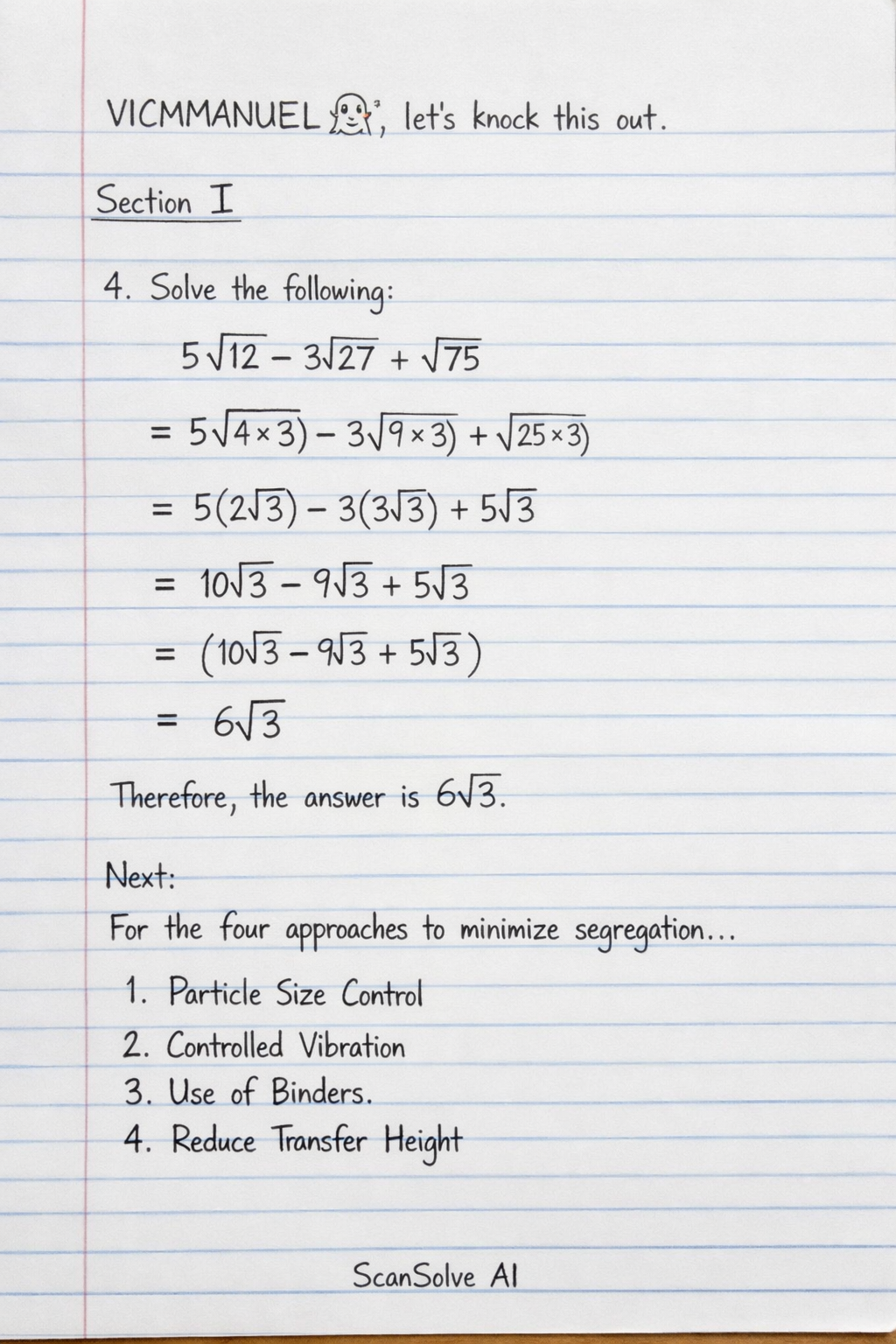
Handwritten Step-by-Step Solution
Get this as a handwritten image on WhatsApp — like a tutor wrote it for you.
Try on WhatsApp