
We read your photo as:
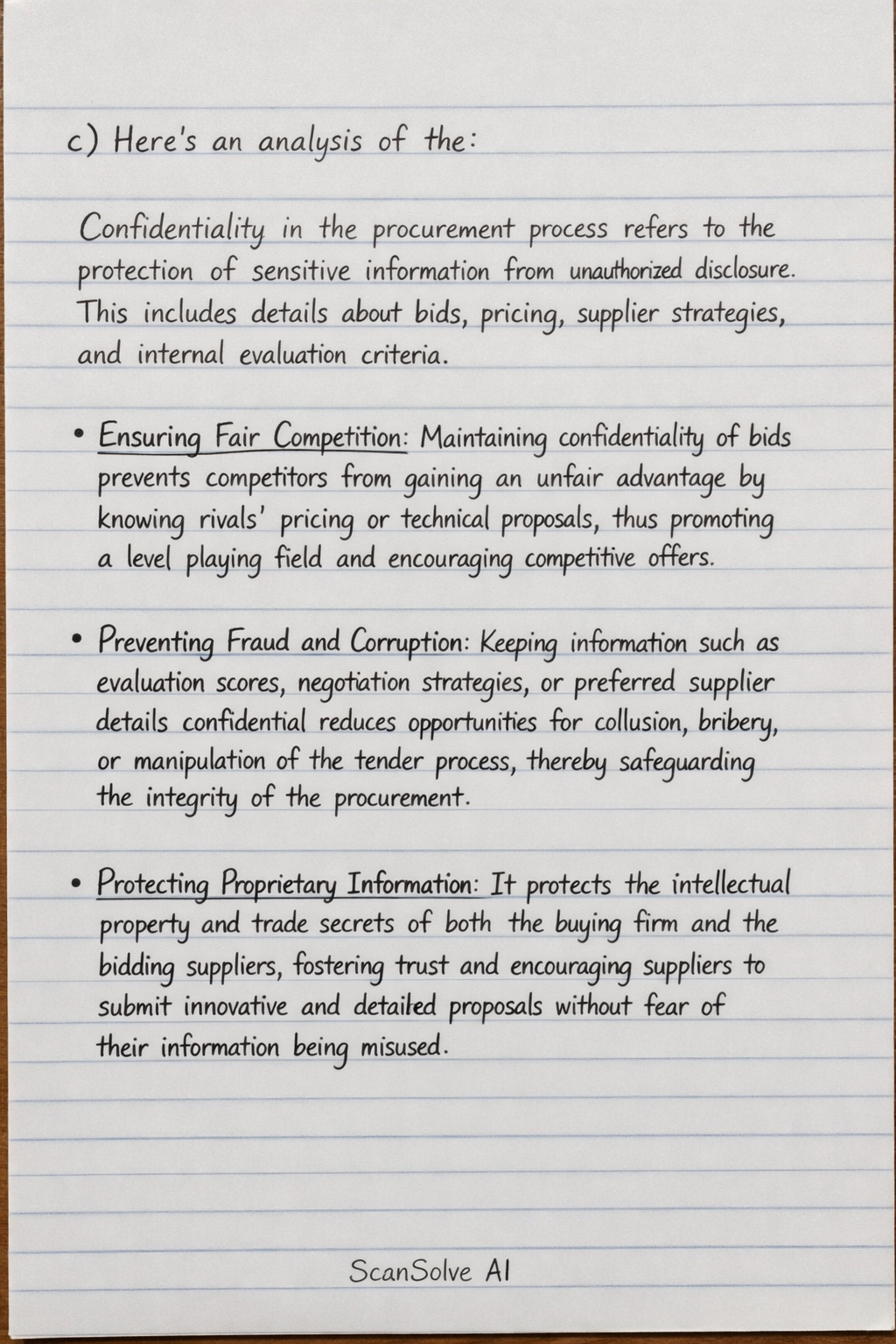
c) Confidentiality in the procurement process refers to the protection of sensitive information from unauthorized disclosure. This includes details about bids, pricing, supplier strategies, and in
ScanSolve AI Answer
c) Confidentiality in the procurement process refers to the protection of sensitive information from unauthorized disclosure. This includes details about bids, pricing, supplier strategies, and internal evaluation criteria.
Its relevance in the procurement process includes:
- Ensuring Fair Competition: Maintaining confidentiality of bids prevents competitors from gaining an unfair advantage by knowing rivals' pricing or technical proposals, thus promoting a level playing field and encouraging competitive offers.
- Preventing Fraud and Corruption: Keeping information such as evaluation scores, negotiation strategies, or preferred supplier details confidential reduces opportunities for collusion, bribery, or manipulation of the tender process, thereby safeguarding the integrity of the procurement.
- Protecting Proprietary Information: It protects the intellectual property and trade secrets of both the buying firm and the bidding suppliers, fostering trust and encouraging suppliers to submit innovative and detailed proposals without fear of their information being misused.
3.a) An entity tender committee can ensure integrity in a procurement process through the following five ways:
-
Establish Clear and Transparent Bidding Procedures: The committee must define and communicate unambiguous rules, timelines, and evaluation criteria to all potential bidders. This ensures that all participants understand the process, reducing ambiguity and opportunities for favoritism or manipulation.
-
Implement Strict Conflict of Interest Policies: Committee members must declare any potential conflicts of interest with bidding suppliers and recuse themselves from relevant discussions or decisions. This prevents personal biases or relationships from influencing the evaluation and award process, ensuring impartiality.
-
Utilize Objective and Measurable Evaluation Criteria: The committee should develop and apply pre-defined, quantifiable criteria for evaluating bids, rather than subjective judgments. This ensures that decisions are based on merit (e.g., price, quality, delivery time, technical specifications) and are defensible, reducing the risk of arbitrary selections.
-
Maintain Comprehensive Documentation and Audit Trails: All stages of the procurement process, including communications, evaluations, decisions, and justifications, must be meticulously documented. This creates an audit trail that allows for scrutiny and accountability, deterring unethical practices and facilitating investigations if integrity issues arise.
-
Enforce Strict Adherence to Procurement Laws and Policies: The committee must ensure that all procurement activities comply with national procurement acts, regulations, and the entity's internal policies. This legal and policy framework provides a robust structure for ethical conduct and fair practice, serving as a deterrent against misconduct.
3.b) Here are five elements in the procurement cycle and their relevance to the procurement process:
-
Need Recognition and Specification: This initial stage involves identifying a requirement for goods, services, or works and clearly defining its specifications. Its relevance is paramount as it ensures that the firm procures exactly what is needed, preventing unnecessary purchases, reducing waste, and ensuring the procured item effectively meets operational demands.
-
Supplier Sourcing and Selection: This element involves identifying potential suppliers, assessing their capabilities, and selecting the most suitable ones to invite for bids. Its relevance lies in ensuring that the firm engages with competent, reliable, and financially stable suppliers who can meet quality, delivery, and ethical standards, thereby mitigating supply chain risks.
-
Tendering/Quotation and Bid Submission: This stage involves formally inviting selected suppliers to submit their proposals or bids based on the defined specifications. Its relevance is to foster competition among suppliers, allowing the firm to receive multiple offers, compare prices, quality, and terms, and ultimately secure the best value for money.
-
Bid Evaluation and Award: This involves systematically assessing the submitted bids against pre-determined criteria and selecting the winning supplier. Its relevance is to ensure that the selection process is fair, transparent, and objective, leading to the award of a contract to the most qualified and economically advantageous bidder, aligning with the firm's objectives.
-
Contract Management and Performance Monitoring: After the contract is awarded, this element involves overseeing the supplier's performance, managing the relationship, and ensuring adherence to contractual terms. Its relevance is to ensure that the supplier delivers as promised, resolve any issues that arise, and maintain the quality and timeliness of supply throughout the contract period, maximizing the value derived from the procurement.
Still stuck on this one?
Ask a follow-up, and the answer starts from this question.
More Computer Science Questions
Handwritten Step-by-Step Solution
Get this as a handwritten image on WhatsApp — like a tutor wrote it for you.
Try on WhatsApp