
We read your photo as:
How does IT improve communication among healthcare workers and enhance patient care?
Computer Science
ScanSolve AI Answer
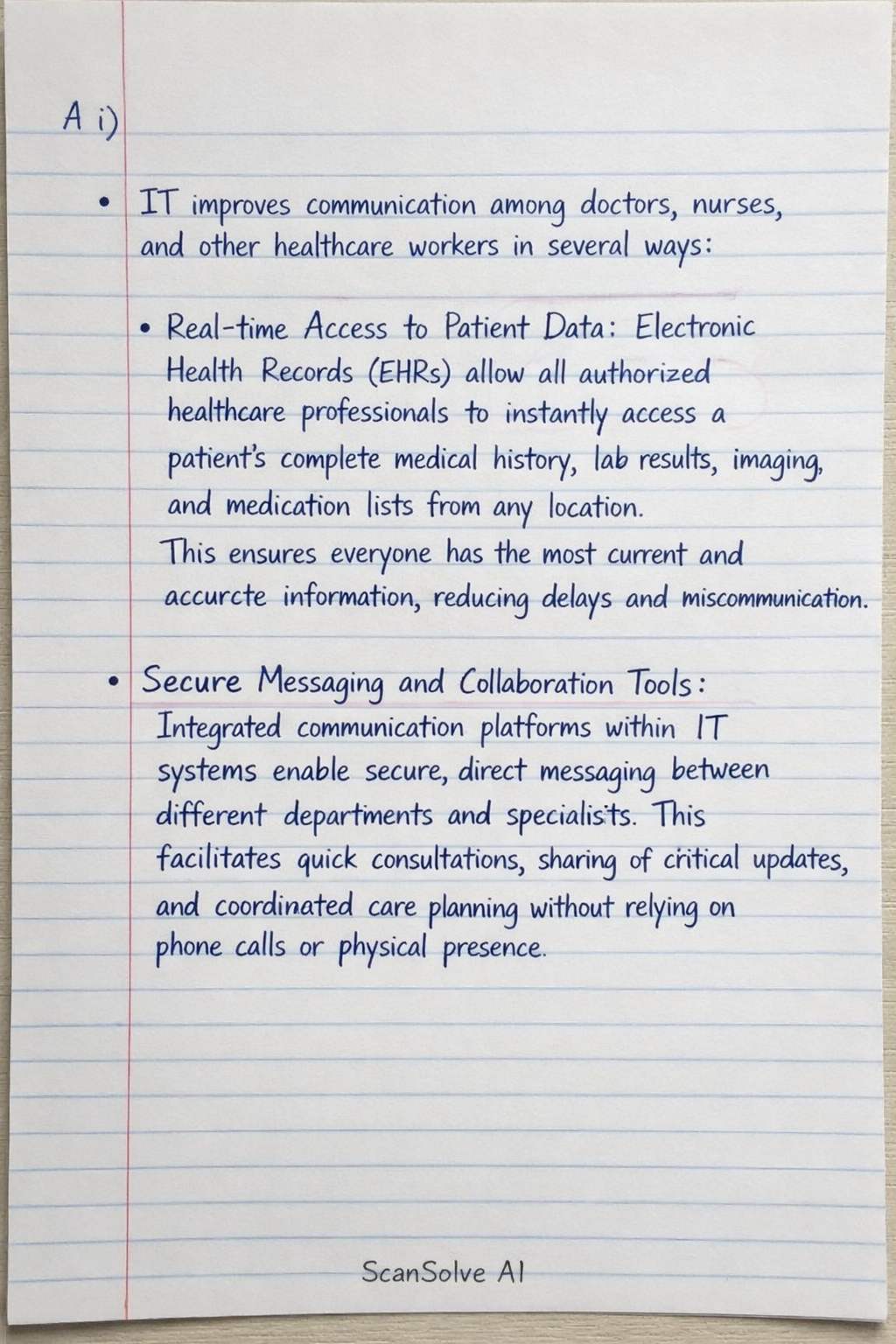
A i)
IT improves communication among doctors, nurses, and other healthcare workers in several ways:
- Real-time Access to Patient Data: Electronic Health Records (EHRs) allow all authorized healthcare professionals to instantly access a patient's complete medical history, lab results, imaging, and medication lists from any location. This ensures everyone has the most current and accurate information, reducing delays and miscommunication.
- Secure Messaging and Collaboration Tools: Integrated communication platforms within IT systems enable secure, direct messaging between different departments and specialists. This facilitates quick consultations, sharing of critical updates, and coordinated care planning without relying on phone calls or physical presence.
- Automated Alerts and Notifications: IT systems can automatically generate alerts for critical lab values, potential drug interactions, changes in patient status, or upcoming appointments. These automated notifications ensure that relevant healthcare workers are immediately informed of vital information, preventing delays in intervention and improving patient safety.
- Standardized Documentation: Digital templates and structured data entry in EHRs ensure consistent and complete patient records. This reduces ambiguity and misinterpretation that can arise from handwritten notes or varied documentation styles, leading to clearer communication across the care team.
- Telemedicine and Remote Monitoring: IT enables virtual consultations and remote monitoring of patients, allowing specialists to communicate with patients and primary care providers regardless of geographical distance. This expands access to specialized care and facilitates ongoing communication for chronic disease management and follow-up.
A ii)
As the nurse leader, to reduce resistance and ensure successful adoption of the Electronic Patient Record (EPR) system, I would apply the following key change-management principles:
- Communicate the "Why" and Vision: Clearly articulate the long-term benefits of the EPR system, focusing on improved patient safety, reduced medication errors, better coordinated care, and enhanced data accuracy. Explain how these benefits ultimately make nurses' jobs more effective and less prone to critical mistakes, directly addressing the misconception that the "faster" paper system is superior in overall care delivery.
- Involve and Empower Nurses: Create a guiding coalition by involving influential nurses in the planning and implementation process. Seek their input on workflow design and identify "super-users" who can champion the system and provide peer support. This fosters ownership and reduces feelings of being dictated to, making them part of the solution.
- Provide Comprehensive and Tailored Training: Offer extensive, hands-on training sessions that simulate real-world nursing scenarios. Focus on demonstrating how the EPR, once mastered, can actually improve efficiency and reduce time spent on administrative tasks in the long run, directly countering the "paper is faster" belief. Ensure ongoing support and refresher courses are available.
- Address Concerns and Gather Feedback: Establish open channels for nurses to voice their concerns about the EPR's usability, speed, and impact on their workflow. Actively listen to feedback, acknowledge their frustrations, and commit to addressing issues or providing solutions. This demonstrates that their input is valued and helps in refining the system or support mechanisms.
- Celebrate Early Wins and Reinforce Success: Recognize and reward nurses who successfully adopt and utilize the EPR system. Share positive stories and data demonstrating how the EPR has improved patient outcomes or streamlined processes. This reinforces the benefits, builds momentum for wider adoption, and helps shift perceptions about the system's value.
Was this helpful?
Still stuck on this one?
Ask a follow-up, and the answer starts from this question.
Got a different question?Ask your own question
More Computer Science Questions
QHow ICT tools used to enhanced CommunicationQHow is the computer applied in healthcare? Give me a short answerQHow ICT tools are used to enhance communication? ICT tools used to enhance communication q. vasnanQDescribe Information Technology (IT) and its impact on four areas of everyday life, such as…QHow has technology changed the way we communicate?
Handwritten Step-by-Step Solution
Get this as a handwritten image on WhatsApp — like a tutor wrote it for you.
Try on WhatsApp