
We read your photo as:
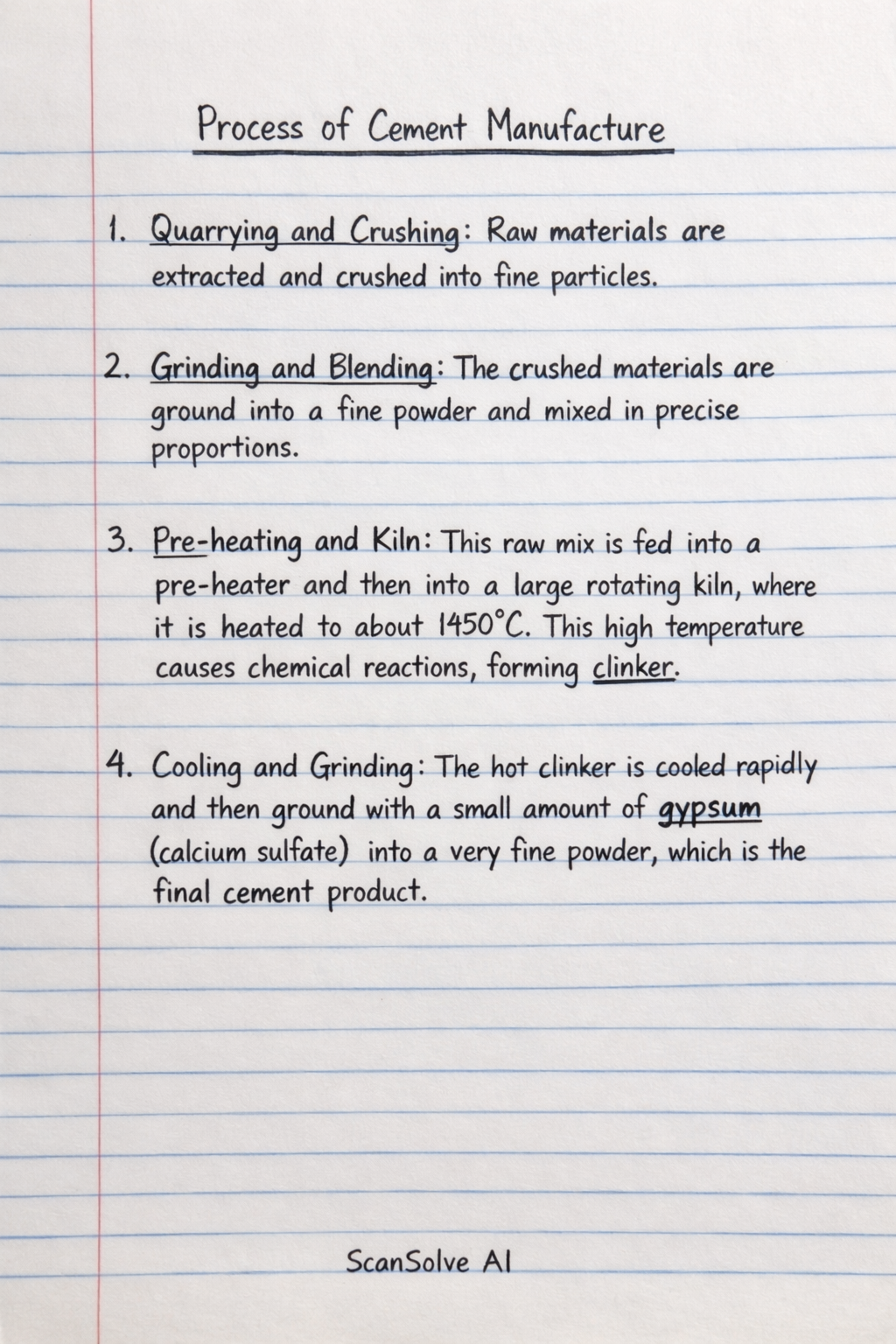
Process of Cement Manufacture
Computer Science
ScanSolve AI Answer
Here is advice on the process of cement manufacture, its side effects, mitigation, and social benefits:
Process of Cement Manufacture
Cement is primarily made from limestone (calcium carbonate) and clay (silica, alumina, iron oxide).
- Quarrying and Crushing: Raw materials are extracted and crushed into fine particles.
- Grinding and Blending: The crushed materials are ground into a fine powder and mixed in precise proportions.
- Pre-heating and Kiln: This raw mix is fed into a pre-heater and then into a large rotating kiln, where it is heated to about . This high temperature causes chemical reactions, forming clinker.
- Cooling and Grinding: The hot clinker is cooled rapidly and then ground with a small amount of gypsum (calcium sulfate) into a very fine powder, which is the final cement product.
Side Effects
- Environmental Pollution: Cement production is energy-intensive and releases significant amounts of carbon dioxide () from both the burning of fuel and the decomposition of limestone. It also releases dust, nitrogen oxides (), and sulfur dioxide ().
- Resource Depletion: Large quantities of raw materials like limestone and clay are consumed, leading to quarrying and habitat destruction.
- Health Risks: Exposure to cement dust can cause respiratory problems, skin irritation, and eye damage for workers and nearby communities.
Mitigation
- Dust Control: Implement dust collection systems (e.g., bag filters) at all stages of production.
- Emissions Reduction: Use alternative fuels with lower carbon content, improve energy efficiency, and install technologies like selective catalytic reduction for and scrubbers for .
- Sustainable Sourcing: Explore using industrial by-products (e.g., fly ash, slag) as partial substitutes for raw materials.
- Worker Safety: Provide personal protective equipment (PPE) like masks, gloves, and safety goggles, and ensure proper ventilation.
Social Benefits
- Improved Learning Environment: Plastered walls and floors reduce dust and lice, creating a healthier and more conducive atmosphere for students, leading to better concentration and reduced absenteeism.
- Cost Savings: Manufacturing cement locally can significantly reduce construction costs for the school, allowing funds to be reallocated to other educational needs.
- Skill Development: The process can provide practical training and employment opportunities for community members, fostering local expertise in construction materials.
- Community Empowerment: Producing their own materials gives the school and community greater control over their infrastructure development and promotes self-reliance.
Was this helpful?
Still stuck on this one?
Ask a follow-up, and the answer starts from this question.
Got a different question?Ask your own question
More Computer Science Questions
Handwritten Step-by-Step Solution
Get this as a handwritten image on WhatsApp — like a tutor wrote it for you.
Try on WhatsApp