
We read your photo as:
Explain the role of digital governance and technological innovation in improving public service delivery, focusing on efficiency, accessibility, transparency, and accountability.
ScanSolve AI Answer
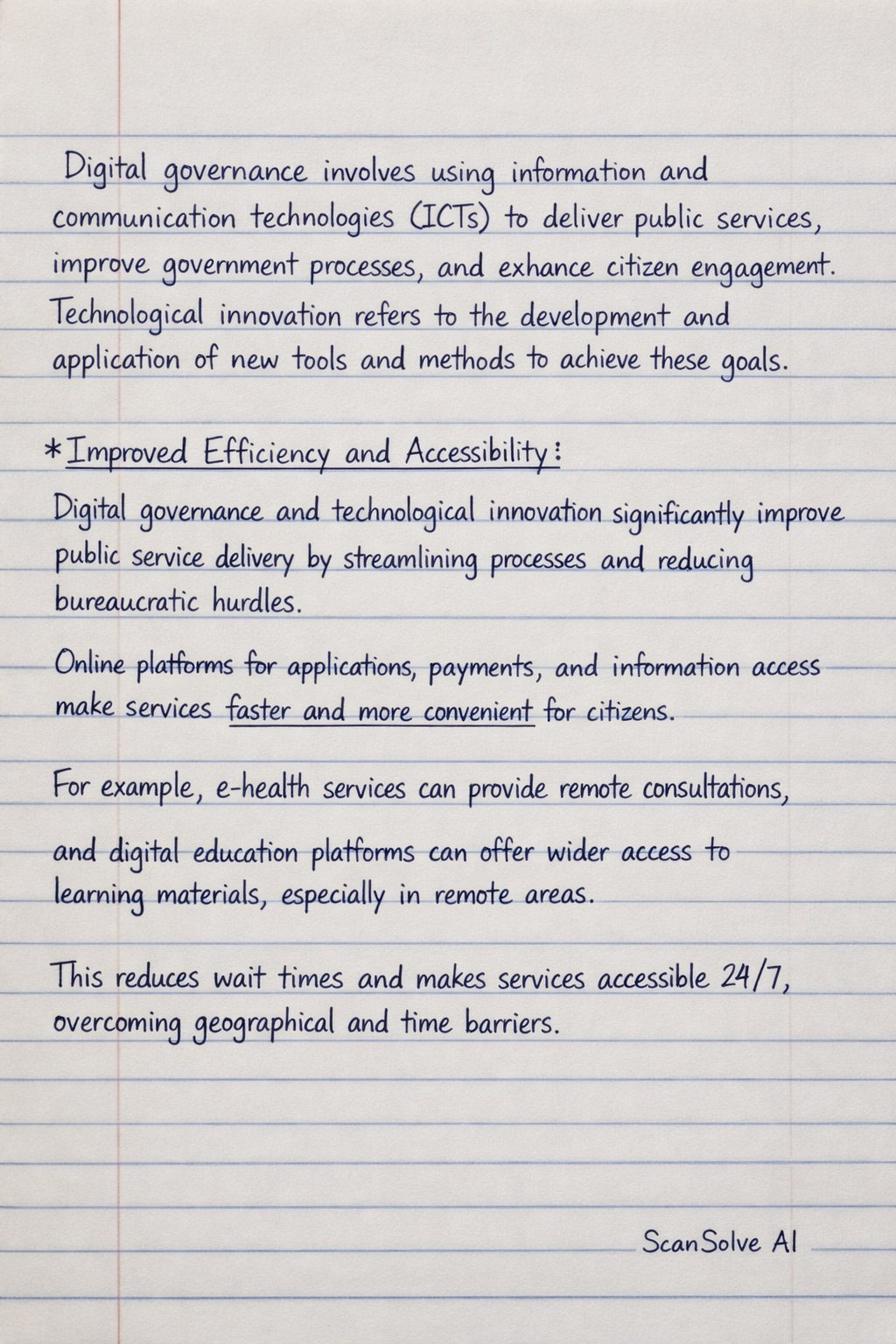
Digital governance involves using information and communication technologies (ICTs) to deliver public services, improve government processes, and enhance citizen engagement. Technological innovation refers to the development and application of new tools and methods to achieve these goals.
Improved Efficiency and Accessibility:
Digital governance and technological innovation significantly improve public service delivery by streamlining processes and reducing bureaucratic hurdles. Online platforms for applications, payments, and information access make services faster and more convenient for citizens. For example, e-health services can provide remote consultations, and digital education platforms can offer wider access to learning materials, especially in remote areas. This reduces wait times and makes services accessible 24/7, overcoming geographical and time barriers.
Enhanced Transparency and Accountability:
Technology fosters greater transparency and accountability in public service delivery. Digital records and online tracking systems allow citizens to monitor the status of their applications or complaints, making government operations more visible. This reduces opportunities for corruption and ensures that public funds are used effectively. Data analytics can also help governments identify service gaps and improve resource allocation, leading to more equitable and responsive public services.
Still stuck on this one?
Ask a follow-up, and the answer starts from this question.
More Computer Science Questions
Handwritten Step-by-Step Solution
Get this as a handwritten image on WhatsApp — like a tutor wrote it for you.
Try on WhatsApp