

This computer science problem involves algorithmic thinking and programming concepts. The solution below explains the approach, logic, and implementation step by step.
ScanSolve AI Answer
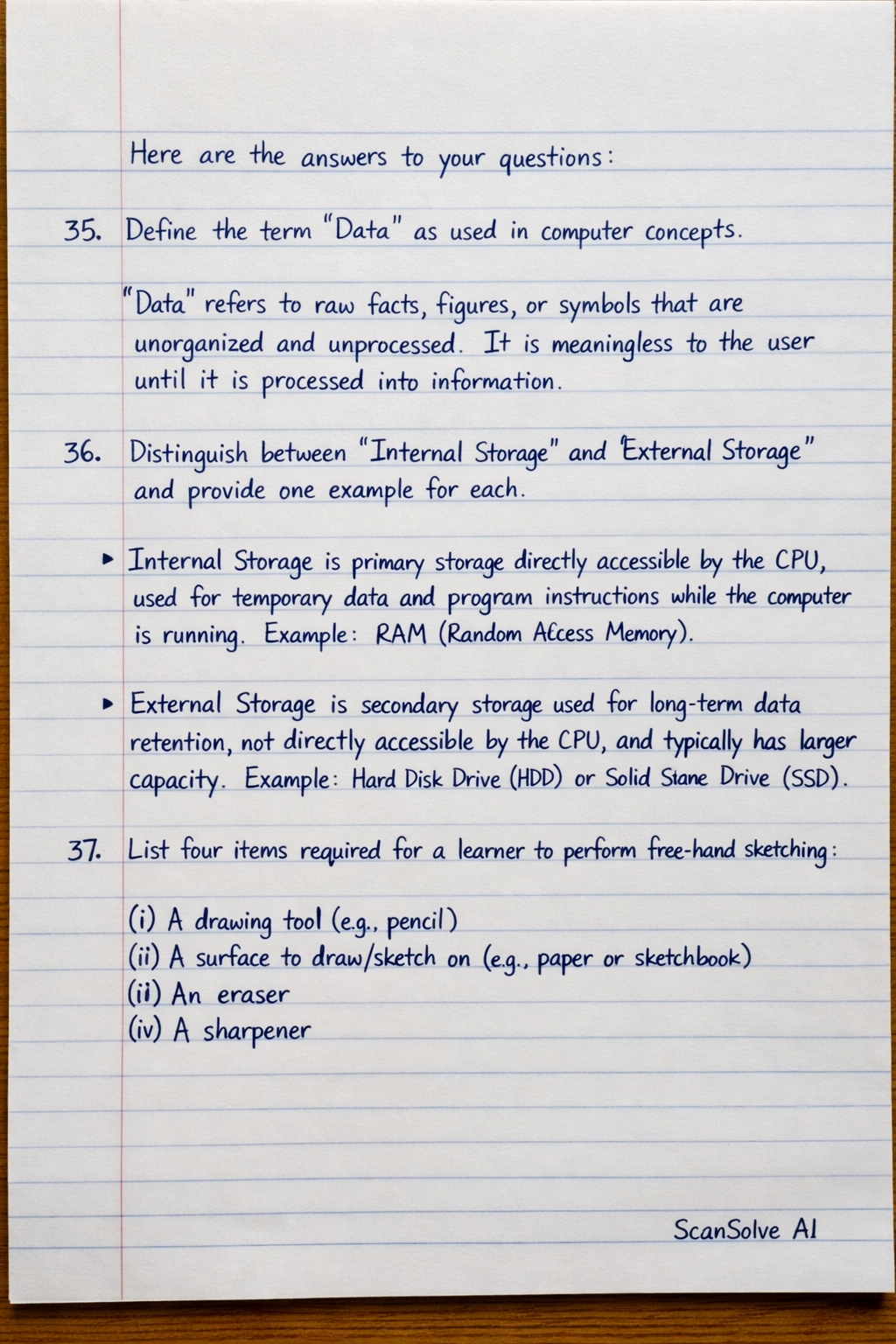
Here are the answers to your questions: 35. Define the term "Data" as used in computer concepts. Data* refers to raw facts, figures, or symbols that are unorganized and unprocessed. It is meaningless to the user until it is processed into information. 36. Distinguish between "Internal Storage" and "External Storage" and provide one example for each. Internal Storage is primary storage directly accessible by the CPU, used for temporary data and program instructions while the computer is running. Example: RAM (Random Access Memory)*. External Storage is secondary storage used for long-term data retention, not directly accessible by the CPU, and typically has larger capacity. Example: Hard Disk Drive (HDD) or Solid State Drive (SSD)*. 37. List four items required for a learner to perform free-hand sketching. (i) A drawing tool (e.g., pencil*) (ii) A surface to draw/sketch on (e.g., paper or sketchbook*) (iii) An eraser (iv) A sharpener 38. Explain two benefits of free-hand sketching to a technician before they begin a project. (i) It allows for quick visualization and communication of ideas* without needing specialized tools or software, helping to brainstorm and refine concepts rapidly. (ii) It helps in identifying potential design flaws or challenges early* in the project, enabling technicians to make adjustments before investing time and resources in detailed design or construction. 39. Discuss three sustainable ways of using materials in the school workshop to protect natural resources. (i) Recycling materials*: Collect and process waste materials like metal scraps, plastic offcuts, or paper for reuse in new projects, reducing the demand for virgin resources. (ii) Reusing materials*: Encourage students to repurpose existing items or offcuts from previous projects instead of always using new materials, extending the lifespan of resources. (iii) Using locally sourced and renewable materials*: Prioritize materials that are abundant in the local environment and can be replenished naturally, such as sustainably harvested timber or bamboo, minimizing transportation impact and supporting local economies. 40. Name two non-metallic materials found in your local environment. (i) Wood* (ii) Sand* 41. Identify two online threats that a learner may face when using the internet or digital devices. (i) Cyberbullying*: Harassment or intimidation using digital communication. (ii) Phishing/Scams*: Deceptive attempts to obtain sensitive information like usernames, passwords, and credit card details by masquerading as a trustworthy entity. 42. Suggest two ways of staying safe and protecting your personal information when using digital devices. (i) Use strong, unique passwords* for all accounts and enable two-factor authentication whenever possible. (ii) Be cautious about sharing personal information online* and verify the legitimacy of websites or apps before entering sensitive data. Last free one today — make it count tomorrow, or type /upgrade for unlimited.