
We read your photo as:
What are the key components of the electrical system of the heart and what is their function?
Biology
ScanSolve AI Answer
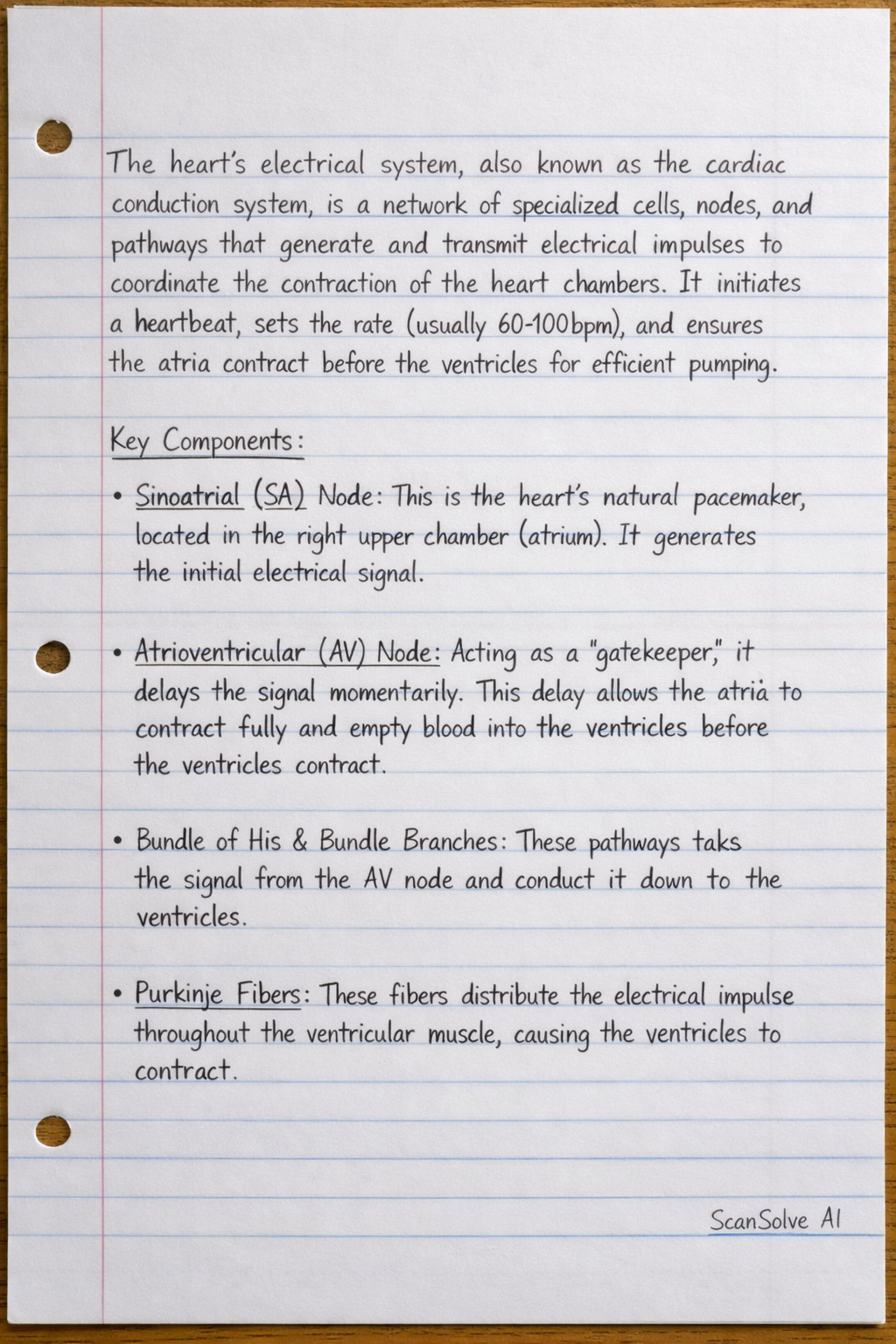
The heart's electrical system, also known as the cardiac conduction system, is a network of specialized cells, nodes, and pathways that generate and transmit electrical impulses to coordinate the contraction of the heart chambers. It initiates a heartbeat, sets the rate (usually 60-100 bpm), and ensures the atria contract before the ventricles for efficient pumping.
Key Components:
- Sinoatrial (SA) Node: This is the heart's natural pacemaker, located in the right upper chamber (atrium). It generates the initial electrical signal.
- Atrioventricular (AV) Node: Acting as a "gatekeeper," it delays the signal momentarily. This delay allows the atria to contract fully and empty blood into the ventricles before the ventricles contract.
- Bundle of His & Bundle Branches: These pathways take the signal from the AV node and conduct it down to the ventricles.
- Purkinje Fibers: These fibers distribute the electrical impulse throughout the ventricular muscle, causing the ventricles to contract.
Was this helpful?
Still stuck on this one?
Ask a follow-up, and the answer starts from this question.
Got a different question?Ask your own question
More Biology Questions
QExplain the bundle of His & bundle branches and Purkinje fibers in the context of the heart's…QLabel the parts of the mammalian heart and describe their function.QWhat are the function of the heartQExplain the relationship between the heart's electrical signals and its physical pumping action.QHeart diagram and functions
Browse by topic:Anatomy
Handwritten Step-by-Step Solution
Get this as a handwritten image on WhatsApp — like a tutor wrote it for you.
Try on WhatsApp