
We read your photo as:
1- List 3 elements to look for during a perineal examination at the beginning of labor.
ScanSolve AI Answer
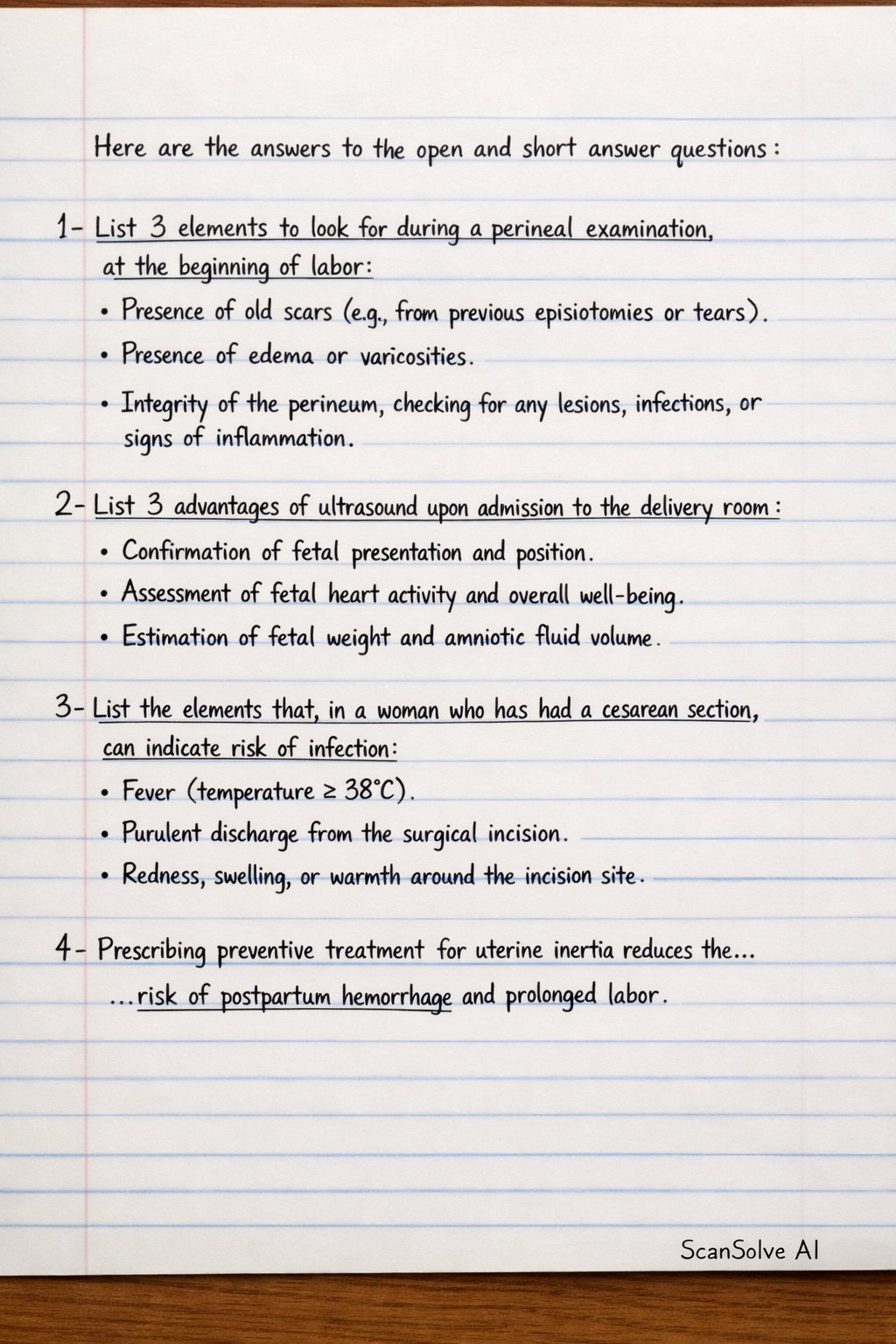
Here are the answers to the open and short answer questions:
1- List 3 elements to look for during a perineal examination at the beginning of labor.
- Presence of old scars (e.g., from previous episiotomies or tears).
- Presence of edema or varicosities.
- Integrity of the perineum, checking for any lesions, infections, or signs of inflammation.
2- List 3 advantages of ultrasound upon admission to the delivery room.
- Confirmation of fetal presentation and position.
- Assessment of fetal heart activity and overall well-being.
- Estimation of fetal weight and amniotic fluid volume.
3- List the elements that, in a woman who has had a cesarean section, can indicate risk of infection.
- Fever (temperature ).
- Purulent discharge from the surgical incision.
- Redness, swelling, or warmth around the incision site.
4- Prescribing preventive treatment for uterine inertia reduces the...
- ...risk of postpartum hemorrhage and prolonged labor.
5- What are the elements that mark the state of death?
- Absence of heartbeat.
- Absence of spontaneous respiration.
- Fixed and dilated pupils.
6- Briefly explain the meaning given to the following terms: Health education, education for health.
- Health education: A process of providing information and teaching skills to individuals and communities to empower them to make informed decisions about their health.
- Education for health: A broader concept encompassing all experiences, planned or unplanned, that influence an individual's or community's beliefs, attitudes, and behaviors regarding health, aiming to create an environment conducive to health.
7- In your assigned locality, what maternal and child health services will you use to successfully carry out this intervention? What steps should be taken into account for... as a strategy to reduce the mortality rate? How will the participants appreciate your activities?
- Maternal and Child Health Services to use:
- Antenatal Care (ANC) services.
- Skilled Birth Attendance (SBA) at delivery.
- Postnatal Care (PNC) for mother and newborn.
- Child immunization programs.
- Family planning services.
- Steps for the strategy to reduce mortality rate:
- Needs Assessment: Identify specific local causes and risk factors for maternal and infant mortality.
- Intervention Planning: Develop targeted programs, such as community health worker training, mobile clinics, and health awareness campaigns.
- Implementation: Deliver services and education, ensuring accessibility, cultural appropriateness, and quality.
- Monitoring and Evaluation: Continuously track progress using key indicators (e.g., ANC attendance, facility birth rates, infant mortality rate) and adapt the strategy as needed.
- How participants will appreciate your activities:
- Increased utilization of maternal and child health services.
- Positive feedback and testimonials from community members.
- Improved health-seeking behaviors and adoption of healthy practices.
- Active participation in community health initiatives and programs.
Still stuck on this one?
Ask a follow-up, and the answer starts from this question.
More Economics Questions
Handwritten Step-by-Step Solution
Get this as a handwritten image on WhatsApp — like a tutor wrote it for you.
Try on WhatsApp