
Economics Homework Help
Step-by-step AI solutions. Ask your own question →
Economics Questions

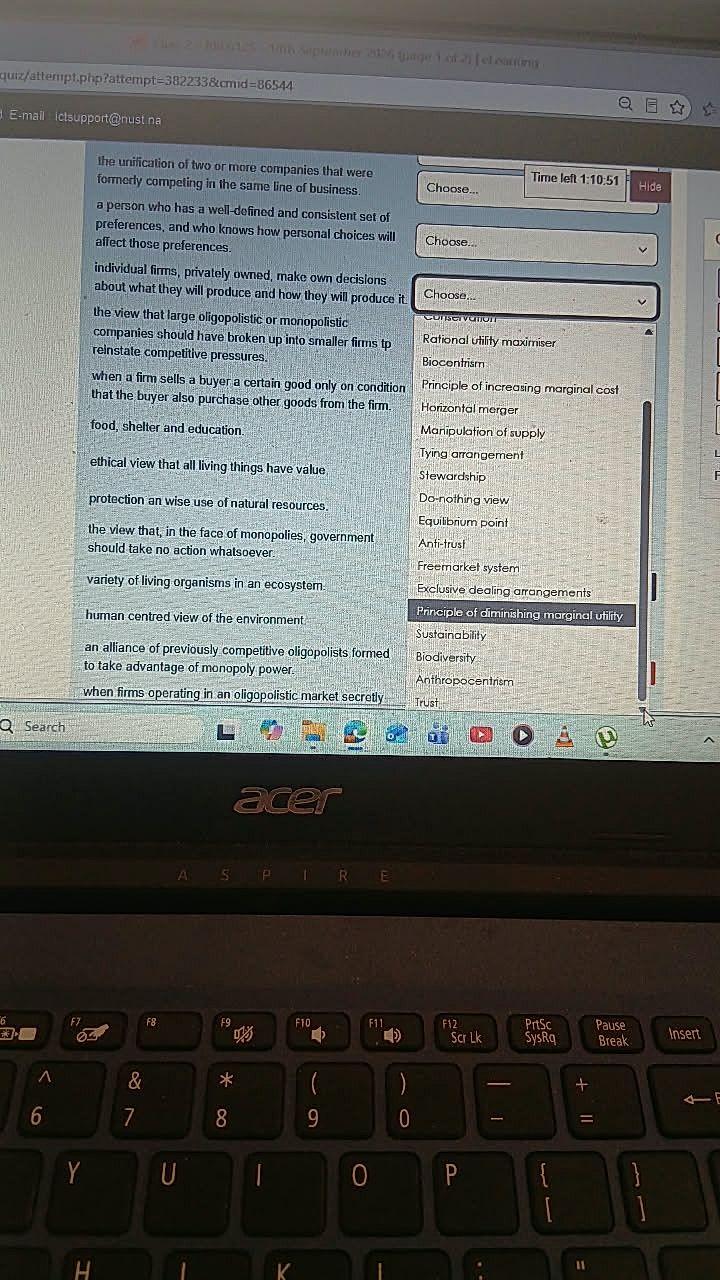
Which of the following terms best describes an alliance of previously competitive oligopolists formed to take advantage…
View Solution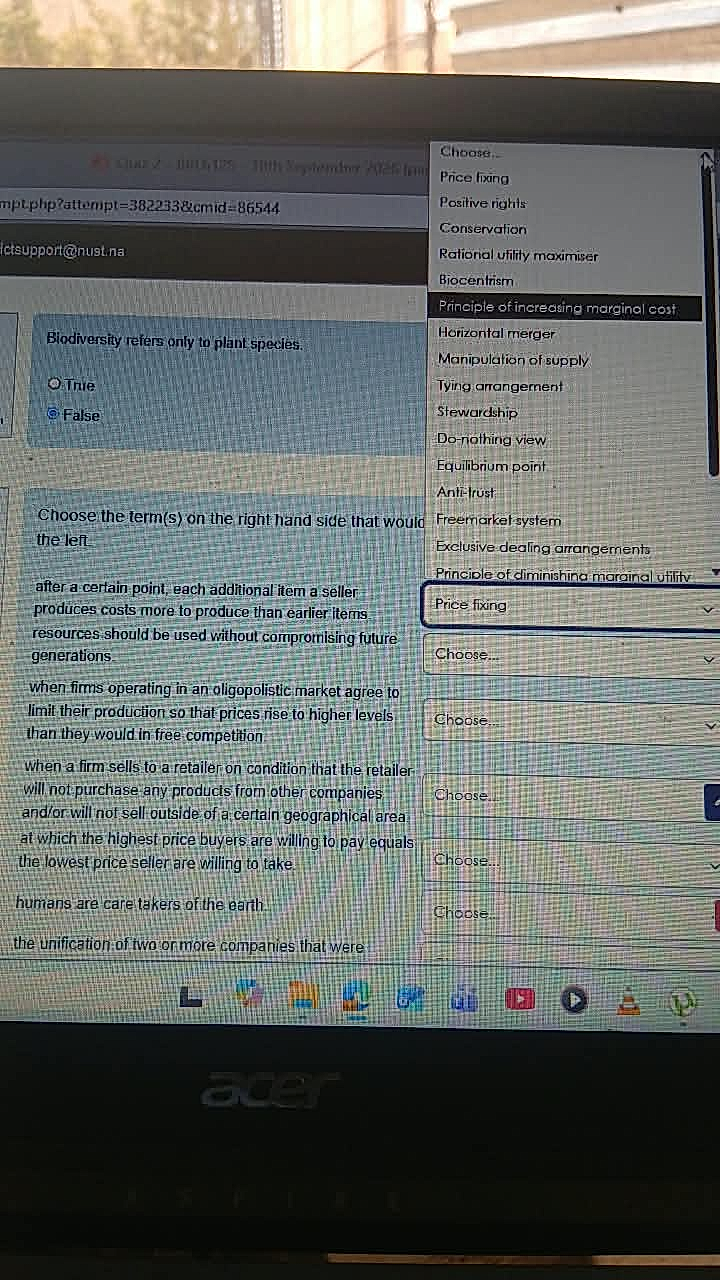
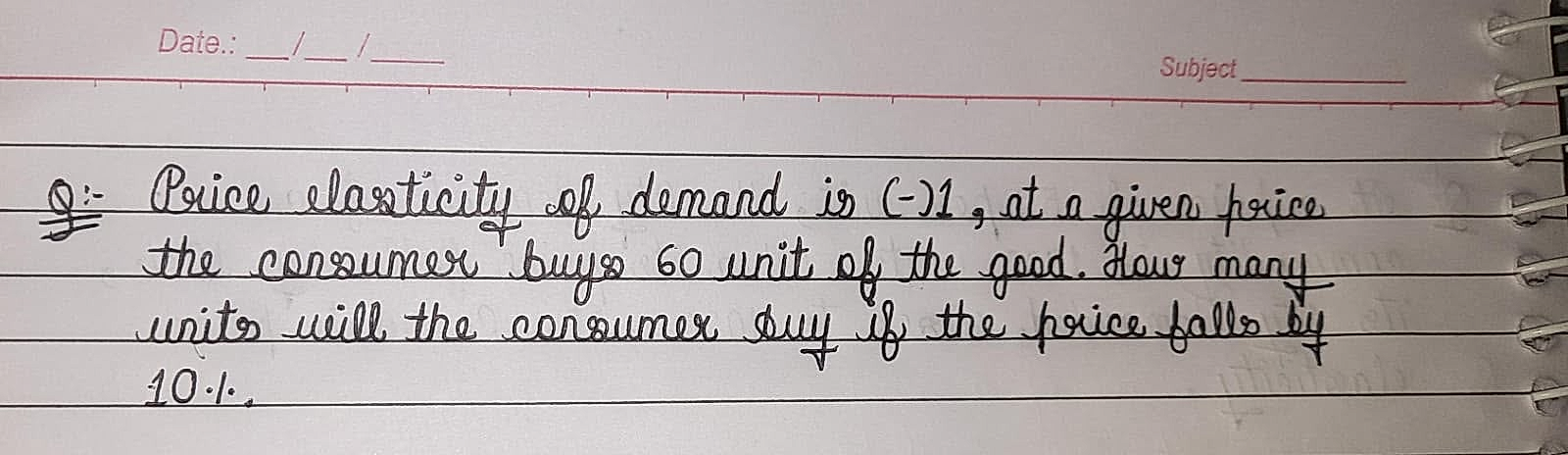
Price elasticity of demand is (-1), at a given price the consumer buys 60 units of the good. How many units will the con…
View Solution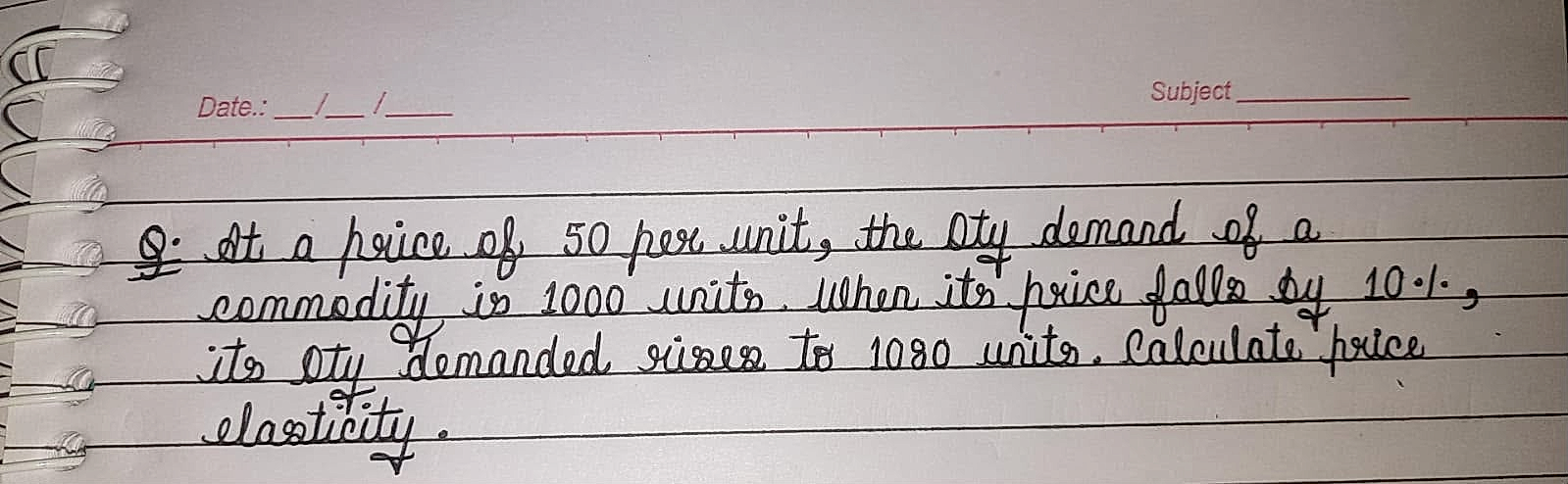
At a price of 50 per unit, the Qty demand of a commodity is 1000 units. When its price falls by 10%, its Qty Demanded ri…
View SolutionWrite me a note and teaching material on Syngas production, Biogas production and utilisation and Hydrogen as a fuel for…
View Solutionexplain environmental participation considering the view of classical and neoclassical economic
View Solutionexplain environmental attitude considering the view of classical and neoclassical economic
View Solutionexplain environmental skills considering the view of classical and neoclassical economic
View Solution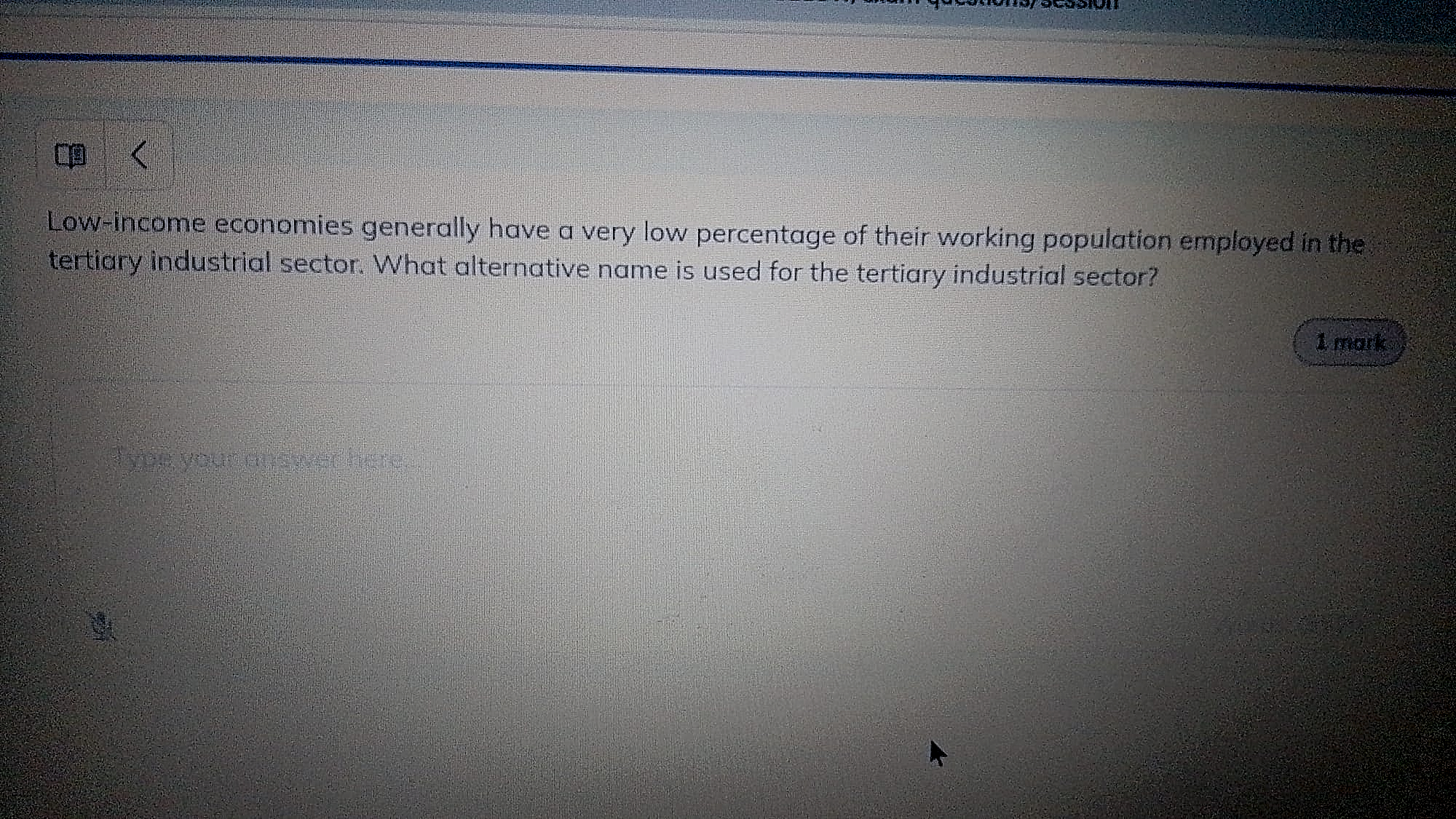
Low-income economies generally have a very low percentage of their working population employed in the tertiary industria…
View Solution
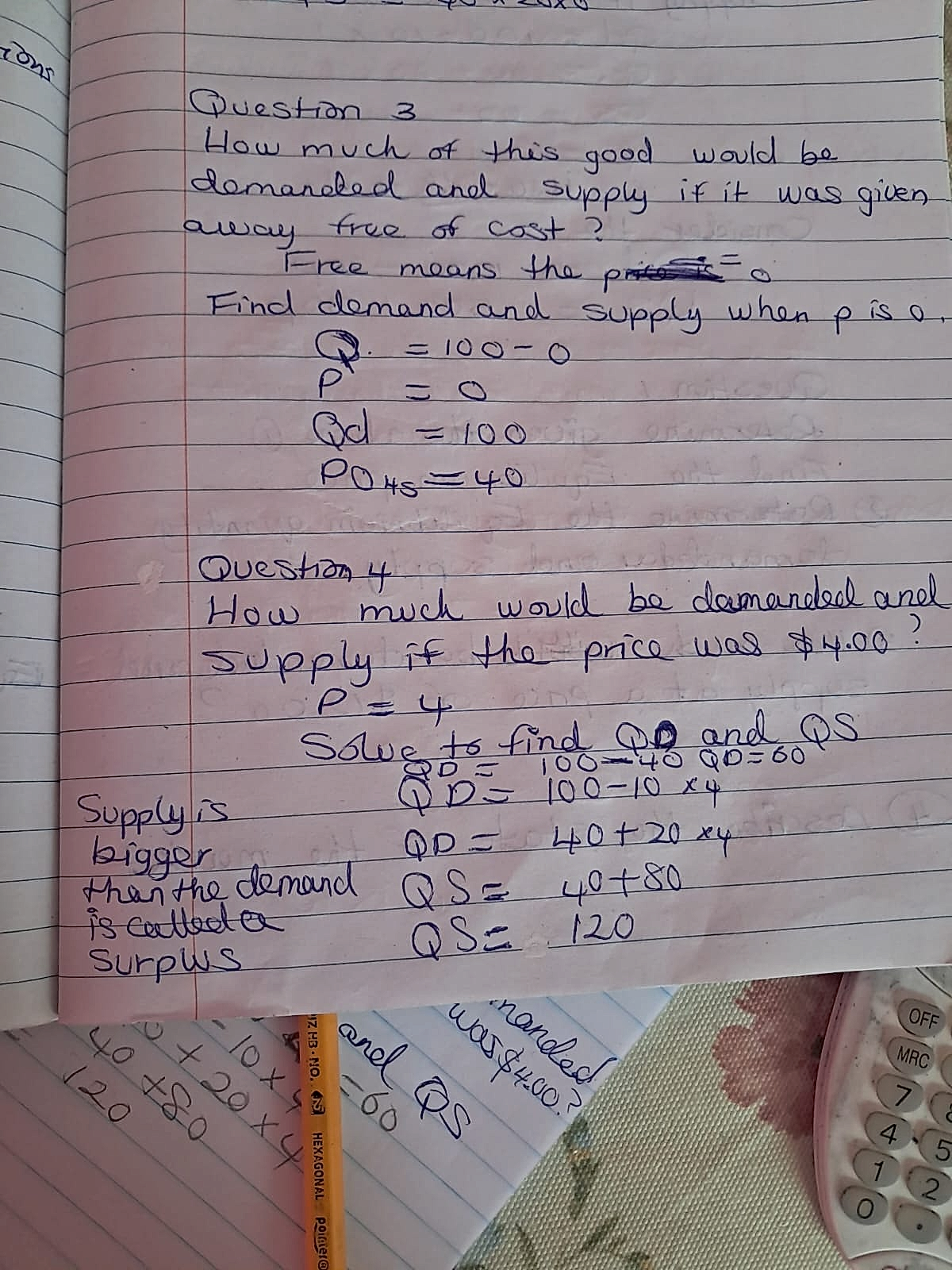
How much of this good would be demanded and supply if it was given away free of cost? Find demand and supply when p is 0…
View SolutionUse the HR Manager’s current salary and, based on your analysis in the previous questions, recommend whether Nala Bank s…
View Solution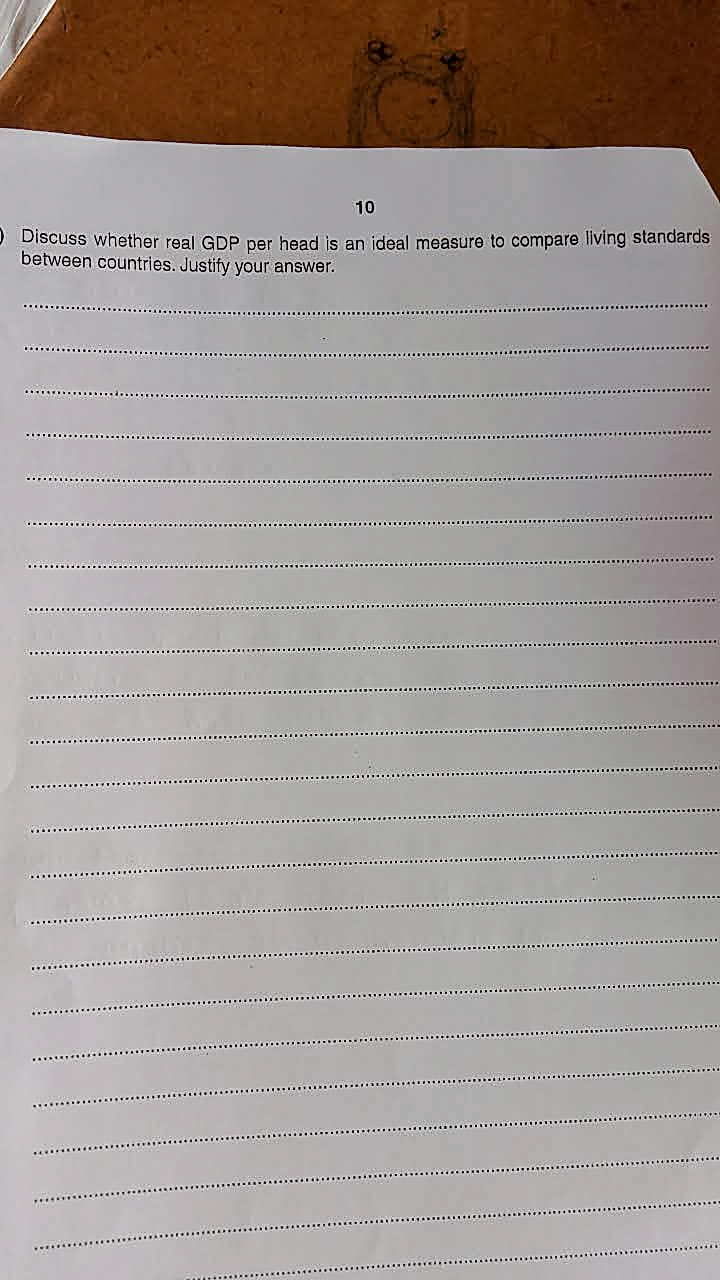
Discuss whether real GDP per head is an ideal measure to compare living standards between countries. Justify your answer…
View Solution
Using a Production Possibility Curve (PPC), analyse the effect of a decrease of some of the resources on an economy.
View Solution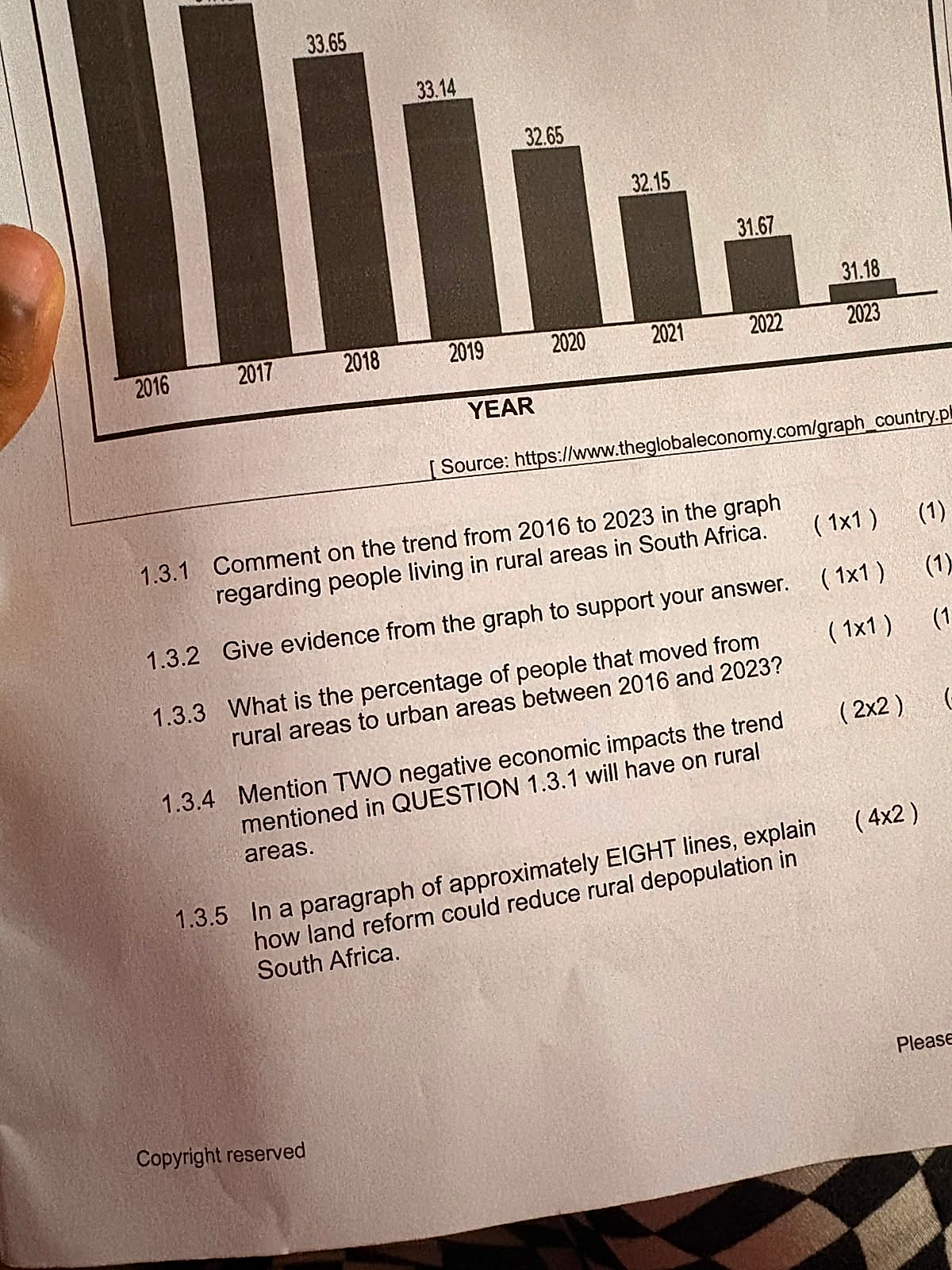
Comment on the trend from 2016 to 2023 in the graph regarding people living in rural areas in South Africa.
View Solution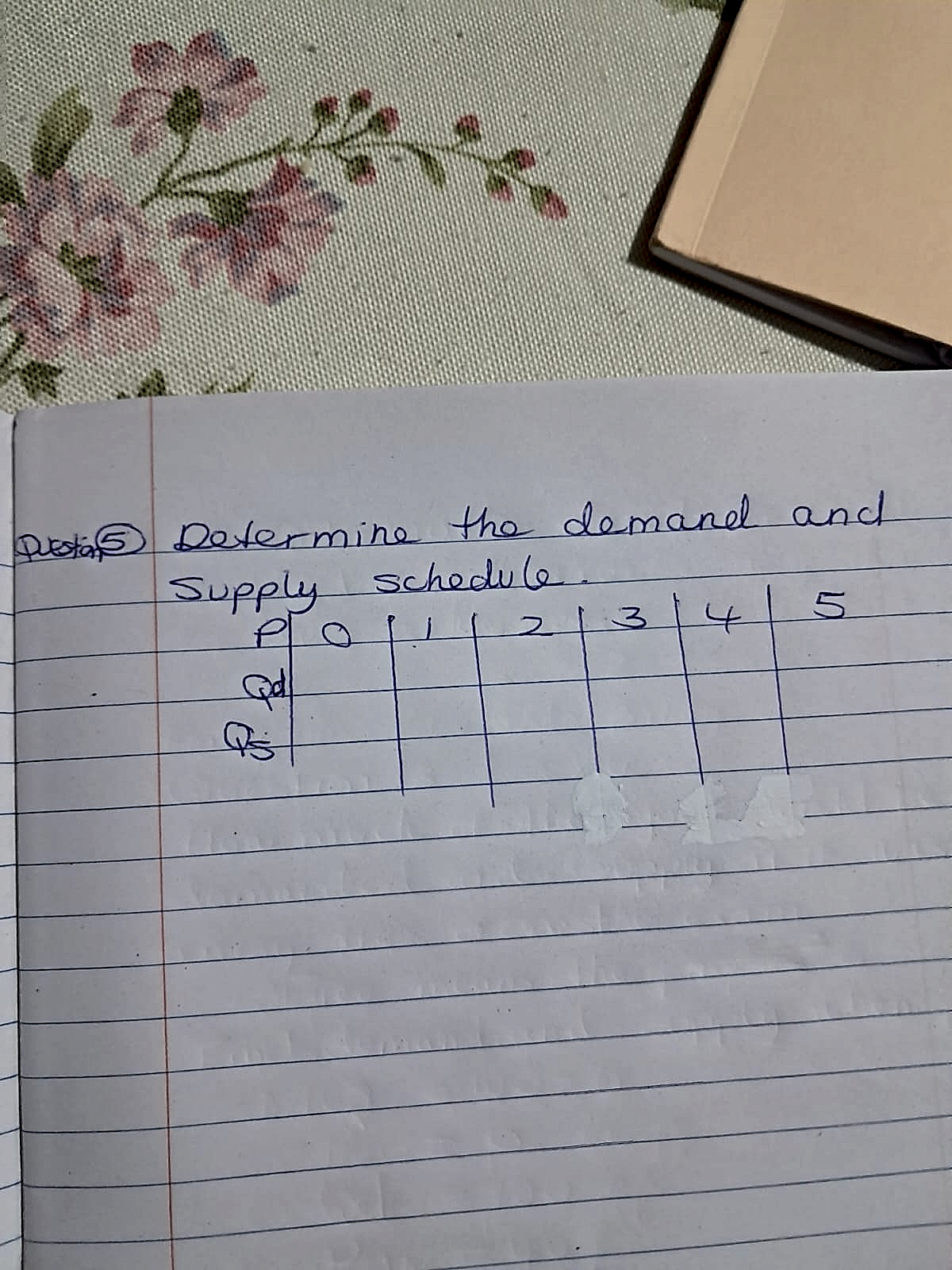
About Economics
Economics studies how individuals, businesses, and governments allocate scarce resources. Microeconomics examines individual markets, pricing, and consumer behavior, while macroeconomics tackles national output, inflation, unemployment, and monetary policy. Economics homework blends graphical analysis, mathematical models, and written explanation — a unique combination that rewards both quantitative and verbal skills.
Popular Topics in Economics
Supply & Demand
Market equilibrium, shifts in supply and demand curves, price elasticity, and government interventions like price floors and ceilings.
GDP & Economic Growth
Measuring national output, components of GDP, real vs. nominal GDP, and determinants of long-run growth.
Monetary Policy
Central bank tools (open market operations, reserve requirements, discount rate), money supply, and interest rate targeting.
Fiscal Policy
Government spending, taxation, budget deficits, the multiplier effect, and crowding out.
Market Structures
Perfect competition, monopoly, monopolistic competition, oligopoly, and game theory basics.
International Trade
Comparative advantage, tariffs, quotas, trade agreements, and balance of payments.
Inflation & Unemployment
CPI, inflation causes, the Phillips curve, types of unemployment, and the natural rate.
Consumer & Producer Theory
Utility maximization, budget constraints, indifference curves, cost curves, and profit maximization.
Externalities & Public Goods
Market failures, Pigouvian taxes, cap-and-trade, free riders, and the role of government.
Aggregate Demand & Supply
The AD-AS model, short-run vs. long-run equilibrium, and economic shocks.
How ScanSolve Helps with Economics
ScanSolve tackles economics problems by identifying the model or framework your question is testing, then working through the analysis systematically. For supply and demand problems, it shifts the correct curve, finds the new equilibrium, and explains the intuition behind the change.
For macro problems, ScanSolve applies the AD-AS model or the money market model, walking through each step: what shifts, which direction, and what happens to price level, output, or interest rates. For micro problems involving cost curves and profit maximization, it sets up the marginal analysis, identifies the profit-maximizing quantity, and calculates economic profit or loss.
Graphs are central to economics, and ScanSolve describes graph changes in detail — which curve shifts, by how much, and where the new equilibrium lands. This makes it especially useful for AP and IB Economics free-response preparation.
Study Tips for Economics
Practice drawing graphs from memory. Supply-demand, AD-AS, money market, Phillips curve — if you can draw and label them without notes, you can answer most economics questions.
Always state the direction of change AND the reason. Saying 'supply shifts left because input costs rose' earns full marks; saying 'supply shifts left' alone often does not.
Connect micro and macro concepts. Understanding that individual firm behavior aggregates into market-level outcomes helps you answer questions that span both areas.
Read current economic news (inflation reports, Fed decisions) and try to explain them using models you have learned. Applying theory to real events deepens understanding.
Get Economics Help on WhatsApp
Send a photo of your economics homework and get step-by-step solutions instantly. No app download needed.
Message Us on WhatsAppFrequently Asked Economics Questions
How can ScanSolve help with Economics homework?
ScanSolve's AI solves economics problems step by step. Snap a photo of your homework or type your question to get instant, detailed solutions with clear explanations.
Is Economics homework help free on ScanSolve?
Yes, ScanSolve offers free economics homework help with step-by-step solutions. Upgrade to Pro at $89.99/year (about $7.50/month) or $9.99/week for unlimited answers and priority support.
What Economics topics does ScanSolve cover?
ScanSolve covers all economics topics including Supply & Demand, GDP & Economic Growth, Monetary Policy, Fiscal Policy, Market Structures. Upload any economics problem and get a step-by-step solution.
Can ScanSolve solve economics problems from a photo?
Yes. Take a photo of your economics homework and ScanSolve's AI will read the problem, identify the method needed, and provide a complete step-by-step solution.
How accurate are ScanSolve's economics solutions?
ScanSolve uses advanced AI to deliver accurate, step-by-step economics solutions. Each answer includes detailed explanations so you can verify the reasoning and learn the method.
Economics Study Guides & Articles
Supply and Demand Explained: Curves, Equilibrium, Shifts & Elasticity
Understand supply and demand with clear explanations of supply and demand curves, market equilibrium, shifts, and price elasticity. Essential economics guide for students.
EconomicsWhat Is GDP? Understanding Gross Domestic Product
Learn what GDP is, how it's calculated, and why it matters. A clear explanation of gross domestic product for economics students with real examples.
EconomicsWhat Is Inflation? Causes, Effects & How It Works
Understand inflation in simple terms — what causes prices to rise, how it affects your money, and what governments do about it. A student-friendly guide.
HistoryWhat Caused World War I? Key Factors Explained
Discover the main causes of World War I including alliances, militarism, imperialism, and nationalism. A clear breakdown for history students.
Explore More Subjects
Have an Economics question?
Get an instant AI-powered step-by-step solution in seconds.