This English question involves literary analysis, grammar, or writing skills. The detailed response below provides a well-structured answer with supporting evidence and clear explanations.
As soon as I got home, I realised I'd left my bag on the train. 2. No sooner __ I realised I'd left my bag on the train.
English

ScanSolve AI Answer
Aquí está la respuesta:
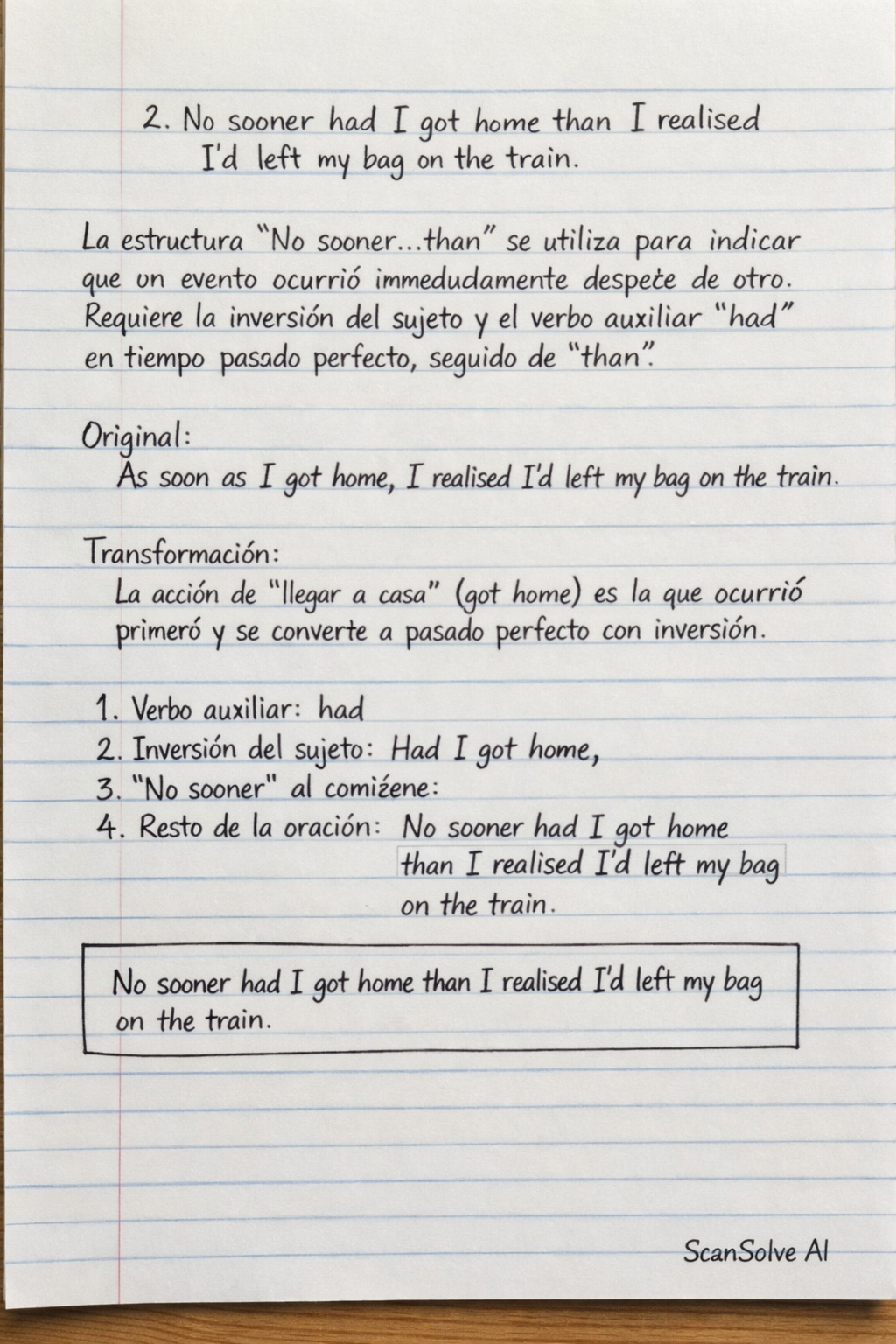
- No sooner had I got home than I realised I'd left my bag on the train.
La estructura "No sooner...than" se utiliza para indicar que un evento ocurrió inmediatamente después de otro. Requiere la inversión del sujeto y el verbo auxiliar "had" en tiempo pasado perfecto, seguido de "than".
- Original: As soon as I got home, I realised I'd left my bag on the train.
- Transformación: La acción de "llegar a casa" (got home) es la que ocurrió primero y se convierte a pasado perfecto con inversión.
La respuesta completa es:
Was this helpful?
Still stuck on this one?
Ask a follow-up, and the answer starts from this question.
Got a different question?Ask your own question
More English Questions
QHe went out abler, the clock the door. 2. we (reach) the station before the train departed. 3. They…QFill in the blank: You were late for an important meeting. You ______ home earlier.QFill in the blanks with the correct prepositions. The pupils travelled the village by bus. After fat…QH2. The bus slowed down immediately, it reached the junction than it broke down. (Rewrite the senten…QIn questions 31-50, re-write the sentences as instructed in brackets. 31. As soon as the cyclist fel…

Handwritten Step-by-Step Solution
Get this as a handwritten image on WhatsApp — like a tutor wrote it for you.
Try on WhatsAppScanSolve AI Answer
Aquí está la respuesta: 2. No sooner had I got home than I realised I'd left my bag on the train. La estructura "No sooner...than" se utiliza para indicar que un evento ocurrió inmediatamente después de otro. Requiere la inversión del sujeto y el verbo auxiliar "had" en tiempo pasado perfecto, seguido de "than". Original: As soon as I got home, I realised I'd left my bag on the train. Transformación: La acción de "llegar a casa" (got home) es la que ocurrió primero y se convierte a pasado perfecto con inversión. La respuesta completa es: No sooner had I got home than I realised I'd left my bag on the train.